
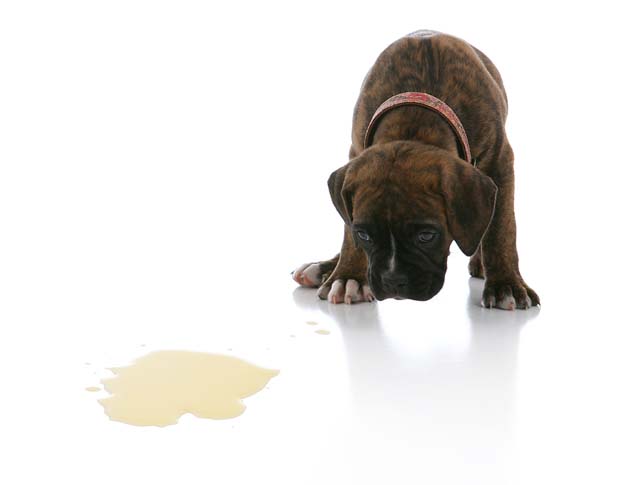
When it comes to house training your puppy, the most important things to remember are patience and consistency.
House training can be simple when you follow a clear plan. However, if you skip steps, you may slow down the process and see delays in your puppy’s progress.
Also remember that puppies are puppies. They will make mistakes, and so will you. If your training is going well and your puppy suddenly has an accident, take a moment to think about whether a step was missed that day. Most puppy accidents are human error and can be prevented with better management.
House Training Your Puppy in 4 Easy Steps
Puppy house training works best when you manage your puppy’s environment, supervise closely, use a crate properly, and get your puppy outside before accidents happen.
Here are four easy steps to help your puppy learn where to potty.
1. Be Reasonable With Your Expectations
Puppies are growing, and so are their bladders. It is important to be realistic about how long your puppy can hold it.
Until around 6 months of age, puppies should not be expected to hold their bladder for long periods of time. They need frequent potty breaks, and you will be able to increase the time gradually as they get older and their bladder develops.
If you are gone all day, you should expect accidents when you get home unless you have a proper plan in place. Puppies need supervision, structure, and realistic expectations.
2. Limit Your Puppy’s Access
Puppies often have accidents by running into another room and eliminating where you cannot see them. By the time you find the mess, it is too late to correct the behaviour fairly.
Reprimanding a puppy after the fact is useless and unfair because the puppy will not understand what they are being corrected for.
For the next couple of weeks, keep your puppy tethered to you with a leash and collar when they are out of the crate. You can attach the leash to your waist with a belt or carabiner, or simply hold the leash handle.
If your puppy is attached to you, you can catch them before or during the act. If you see your puppy about to have an accident, interrupt them, then get them outside right away.
When your puppy eliminates outside, praise them. Make it very clear that going outside is the behaviour you want.
3. Anticipate Potty Breaks Before Accidents Happen
Do not wait until your puppy is already having an accident. Be proactive.
If you know your puppy usually needs to go about 30 minutes after eating or drinking, take them outside after 20 minutes. Get them outside before they even think about going in the house.
Over time, you will be able to extend the time between potty breaks as your puppy learns to hold it. But in the beginning, stay on top of the schedule.
If three hours go by and your puppy has not asked to go out and has not had an accident, take them outside anyway. When they eliminate outside, praise and reward them.
4. Crate Train Your Puppy
If you are not already crate training your puppy, get a properly sized crate.
The crate should be large enough for your puppy to stand up, turn around, and lie down comfortably. It should not be so large that your puppy can eliminate in one corner and sleep in another.
Moving forward, if you are not home or cannot keep your eyes on your puppy, crate them. A crate is one of the most useful tools for house training because it helps prevent accidents when you cannot supervise.
If you need help with crate training, our Private Training programs can help you build a plan that works for your puppy and your home.
Food and Water Management
It can also help to manage your puppy’s access to food and water when you know they are going to be left alone.
Do not leave food or water in the crate unless your veterinarian has advised otherwise. If your puppy is going to be crated or left alone, try to limit access to food and water for about an hour before you leave.
Leaving a puppy alone with a full belly and bladder can lead to accidents.
Common House Training Mistakes
If your puppy is struggling with house training, one of these common mistakes may be slowing progress:
- Giving the puppy too much freedom too soon
- Not supervising closely enough
- Not using a properly sized crate
- Waiting too long between potty breaks
- Correcting after the accident has already happened
- Not rewarding outdoor potty breaks clearly
- Expecting a young puppy to hold it too long
House training is usually much easier when you prevent accidents instead of reacting after they happen.
Need Help With Puppy Training?
House training is one of the first big lessons your puppy needs to learn, but it is only one part of raising a well-mannered dog.
Our dog training programs can help you choose the right option for your puppy’s needs.
For puppies who need one-on-one support with house training, crate training, biting, jumping, leash skills, or basic obedience, our Private Training programs may be the best fit.
If your puppy is ready to learn around other dogs and people, our Group Classes can help build focus, confidence, and manners in a structured setting.
For dogs who need more routine and structured activity during the day, our Day Camp may also be a helpful option.
House training your puppy does not need to be complicated, but it does require consistency.
Be reasonable with your expectations, limit your puppy’s access, anticipate potty breaks, and use a properly sized crate. If you follow these steps and stay consistent, your puppy will have a much better chance of success.
Contact us today if you need help with house training, crate training, or building better puppy habits from the start.
Happy Training!
Katherine
FAQ:
How do I start house training my puppy?
Start by supervising your puppy closely, limiting access inside the house, taking your puppy outside frequently, rewarding outdoor potty breaks, and using a properly sized crate when you cannot supervise.
How long can a puppy hold their bladder?
Young puppies cannot hold their bladder for long periods. Until around 6 months of age, puppies usually need frequent potty breaks and should not be expected to hold it for too long.
Should I correct my puppy after an accident?
No. Correcting after the fact is unfair and ineffective because the puppy will not understand. Focus on better supervision and getting your puppy outside before accidents happen.
Does crate training help with house training?
Yes. A properly sized crate can help prevent accidents when you cannot supervise because most puppies do not want to eliminate where they sleep.
Why does my puppy keep having accidents in another room?
Your puppy likely has too much freedom too soon. Limit access by tethering your puppy to you, blocking off rooms, or using the crate when you cannot watch them closely.