
Great question! Many dog owners wonder, how much exercise does my dog need? The answer depends on your dog’s age, breed, health, size, energy level, and individual personality.
Exercise is one of the first things I ask about when meeting a new client. Whether the concern is house training, leash manners, excessive barking, jumping, or behaviour modification, exercise almost always matters.
In many cases, dogs are not getting enough physical activity or mental stimulation. Sometimes, they are getting no real exercise at all. Unless your dog has a medical issue that prevents exercise, there is a good chance their activity level could be improved.
More appropriate exercise can help create a happier, healthier, and more well-behaved dog. It can also be good for your own health too.
Exercise Is Important, But Balance Matters
 While exercise is very important, there still needs to be balance.
Some dogs can get plenty of exercise and still act hyper, restless, or wild in the house. In those cases, the answer is not always more exercise. The dog may also need to learn how to relax after their needs have been met.
Balanced training is about creating balance as a whole, not just in training methods. Dogs need physical exercise, mental stimulation, structure, and the ability to settle.
For now, let’s focus on the exercise side of things.
How Do You Know How Much Exercise Your Dog Needs?
There are several important factors to consider when figuring out how much exercise your dog needs.
The most obvious factors include:
- Age
- Size
- Health
However, many people forget to consider:
- Breed
- Energy level
- The individual dog in front of them
If you already have your dog, then you need to work with the dog you have and take responsibility for meeting that dog’s needs. If you are still choosing a dog, do your homework first and make sure you are picking a dog that fits your lifestyle.
The Minimum Exercise Most Dogs Need
Let’s start with a basic foundation.
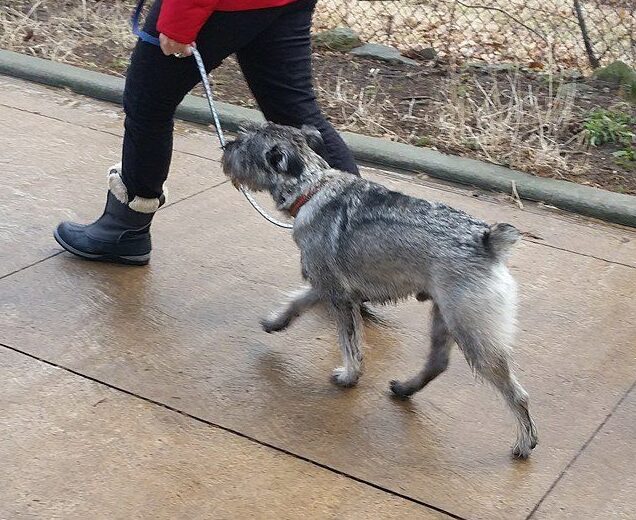
For most healthy dogs, the bare minimum should be two walks per day. Yes, two walks per day.
A good starting point is two 20-minute walks each day. From there, you can adjust based on your dog’s breed, age, health, and energy level.
If you live alone, this means finding at least 40 minutes in your day to walk your dog. If other people live in the home, walking duties can be shared.
Finding 20 minutes at a time to walk your dog is realistic for most people, and both you and your dog can benefit from it.
Breed Makes a Big Difference
Some breeds naturally need more exercise than others.
For example, a Jack Russell Terrier and an Old English Bulldog may both be smaller dogs, but they usually have very different energy levels.
The same is true with large breeds. An English Mastiff and a German Shepherd are both large dogs, but their exercise needs are often very different.
If you have a high-energy breed, two short walks may not be enough. Many high-energy dogs may need at least two 30 to 45-minute walks per day, along with other forms of activity or mental stimulation.
Your Individual Dog Matters Too
Breed can give you a general idea, but your individual dog matters just as much.
You can have a lower-energy Jack Russell Terrier or German Shepherd, although they may be the exception rather than the rule. You can also have a breed that is usually lower energy but still end up with a dog who needs much more activity.
For example, a lower-energy German Shepherd may do well with two 30-minute walks per day. A high-energy German Shepherd may need much more.
Take an honest look at your dog’s actual energy level and adjust from there.
What Counts as Exercise for Dogs?
Walking is one of the best foundations for dog exercise. A structured walk can provide physical movement, mental stimulation, and opportunities to practice manners.
However, walking is not the only way to exercise your dog.
Other helpful forms of exercise and enrichment include:
- Playing fetch
- Playing tug with rules
- Off-leash hiking or exploring in safe areas, only if your dog is trained for it
- Swimming, when safe and appropriate
- Puzzle toys and busy work
- Training games
- Structured play
One thing that does not count as proper exercise is simply putting your dog in the backyard. Backyard time can be fine, but it does not replace walks, training, play, or mental stimulation.
Signs Your Dog May Need More Exercise
If you are unsure whether your dog needs more exercise, look at their behaviour.
Your dog may need more physical activity or mental stimulation if they:
- Constantly look for something to do
- Bark excessively for no clear reason
- Demand attention all the time
- Try to run out the door whenever they get the chance
- Become overly excited or hard to control when you do take them out
- Are overweight
- Dig in the yard
- Act out on days they do not get walked or exercised
- Run around the house endlessly and drive you crazy
If you said yes to any of these, your dog may benefit from more exercise, more structure, or both.
Exercise may not fix every training problem, but it is a very good place to start.
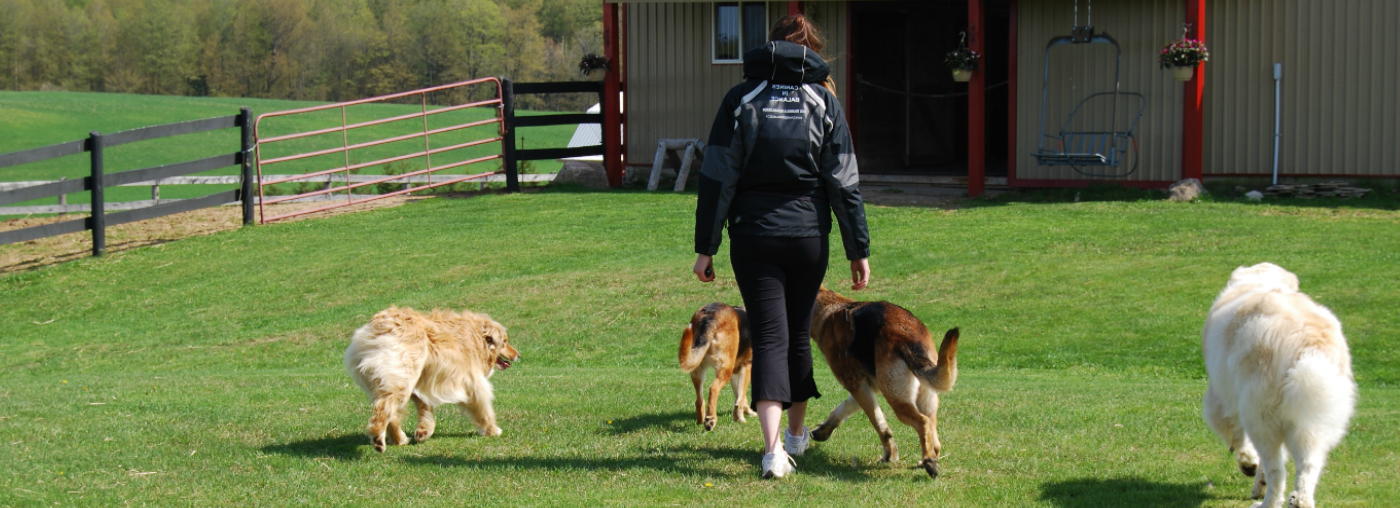
Training Works Better When Your Dog’s Needs Are Met
If you are struggling with your dog’s behaviour, the first step is often making sure your dog is fulfilled mentally and physically.
Once your dog’s basic exercise and stimulation needs are being met, training becomes much more effective.
Our dog training programs can help you choose the right training path for your dog’s needs, whether you are dealing with puppy manners, leash walking, behaviour issues, or impulse control.
If your dog needs one-on-one support with behaviour, leash manners, overexcitement, or structure at home, our Private Training programs may be the best fit.
For dogs who would benefit from learning around other dogs and people, our Group Classes can help build focus, obedience, and confidence around distractions.
If your dog has extra energy and enjoys active learning, Agility can be a fun outlet. For dogs who need mental stimulation and love using their nose, Scent Detection can be a great option.
For dogs who need structured activity during the day, our Day Camp may also help provide exercise, enrichment, and routine.
So, how much exercise does your dog need?
For most healthy dogs, start with two walks per day and adjust based on your dog’s breed, age, health, energy level, and individual needs.
Remember, exercise is not just about making your dog tired. It is about creating a healthier, more fulfilled dog who is better able to learn, relax, and behave well in daily life.
If you are struggling with your dog and want help with training, start by fulfilling your dog with mental and physical exercise. Then, training can be much more successful.
Contact us today if you would like help creating a better training and exercise plan for your dog.
FAQ:
How much exercise does my dog need every day?
Most healthy dogs should start with at least two walks per day. A good starting point is two 20-minute walks, then you can adjust based on your dog’s breed, age, health, and energy level.
Do high-energy dogs need more than two walks a day?
Many high-energy dogs need longer walks, extra play, structured training, and mental stimulation. Some may need two 30 to 45-minute walks per day or more depending on the individual dog.
Does backyard time count as exercise?
No, backyard time does not replace proper exercise. Dogs still need walks, structured play, training, and mental stimulation to stay fulfilled.
Can lack of exercise cause behaviour problems?
Yes. Lack of exercise and mental stimulation can contribute to barking, digging, door bolting, demanding behaviour, restlessness, and other unwanted behaviours.
What if my dog gets lots of exercise but is still hyper?
If your dog gets enough exercise but is still hyper at home, they may need help learning how to relax. Training, structure, and calm behaviour work are important parts of creating balance.