
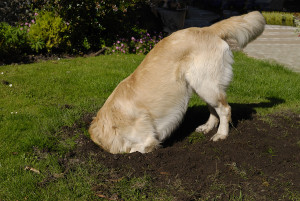
Is Your Dog Digging in the Yard?
Is your dog digging in the yard every chance they get? Do you feel like you cannot leave your dog outside for even two minutes without finding another fresh hole in the grass?
The good news is that dog digging can be improved with the right training plan. The bad news is that it is usually not a quick fix. Digging is often a symptom of a bigger issue, not the main problem itself.
For many dogs, digging is natural, enjoyable, and self-rewarding. Some breeds were even developed to dig, hunt, chase, or work independently. So before we try to stop the behaviour, we need to understand why it is happening.
Why Dogs Dig in the Yard
Dogs may dig for several reasons. Some are bored. Some have too much energy. Some are trying to escape. Others may be looking for a cool place to lie down, chasing smells, or simply entertaining themselves.
The mistake many dog owners make is thinking backyard time counts as exercise. It usually does not. In fact, the backyard is often where the digging problem starts.
If your dog is left outside with nothing structured to do, digging can quickly become their favourite activity.
1. Look at Your Dog’s Exercise Routine
The first question to ask is simple: how much proper exercise does your dog get every day?
Backyard time does not count as structured exercise. Dogs need walks, movement, mental stimulation, and interaction with their owner. A young, high-energy dog who spends most of the day inside, then gets placed in the yard alone, will often find their own way to burn energy.
That is where digging comes in.
Many dogs benefit from at least one long daily walk or two shorter walks, depending on age, breed, health, and energy level. Some dogs also need extra activities like fetch, tug, training games, scent work, or structured play.
If your dog is digging regularly, try increasing their daily exercise and mental stimulation first. Even a 25 percent increase in structured activity can make a noticeable difference for some dogs.
2. Give Your Dog a Job
Dogs need something to do. When we do not give them an appropriate job, they may create one themselves.
Instead of leaving your dog alone in the yard with no direction, give them a task or activity. This could include:
- A game of fetch
- A short obedience training session
- A safe puzzle toy
- A food-dispensing toy
- A supervised game of tug
- A designated digging area
A designated digging area can work well for dogs who truly love to dig. Choose one area of the yard, encourage digging there, and reward your dog for using that space instead of the lawn or garden.
3. Supervise Outdoor Time
If your dog has been practicing the digging habit for a while, you will need to manage the behaviour closely.
For the next couple of weeks, go outside with your dog instead of letting them out alone. You can use a leash if needed. The goal is to stop the digging before it becomes rewarding.
If your dog starts to dig, calmly interrupt the behaviour and redirect them to something appropriate. Ask for a simple command, start a game, or bring them back inside for a short reset.
Do not wait until your dog has already dug a large hole. By that point, the behaviour has already rewarded them.
4. Do Not Rely on Punishment After the Fact
Many owners discover the hole later and then try to correct the dog. Unfortunately, this usually does not work.
Your dog may not connect your correction with the digging that happened earlier. Instead, they may simply become confused or anxious. Training works better when you manage the situation, interrupt the behaviour in the moment, and reward better choices.
Prevention is much more effective than punishment.
5. Make the Yard Less Tempting
If your dog digs in the same spot repeatedly, there may be something interesting there. It could be a smell, soft soil, shade, a fence line, or even small animals moving underneath the ground.
You can try blocking access to favourite digging spots, filling holes properly, placing safe barriers around garden beds, or changing the layout of the area.
Some owners use deterrents, but they should be safe and humane. Avoid anything that could irritate your dog’s nose, eyes, paws, or skin. If you are unsure, speak with a professional trainer before using any deterrent in your yard.
6. Check for Escape Behaviour
If your dog is digging near the fence, the goal may be escape. This needs to be handled carefully.
Fence-line digging can happen because of boredom, separation stress, other animals, people walking by, or excitement outside the yard. In this case, supervision and environmental management are very important.
You may need to block the fence line, reduce visual triggers, increase structured exercise, and work on calm behaviour outdoors.
When to Get Professional Help
If your dog continues digging even after better exercise, supervision, enrichment, and management, it may be time to get help from a trainer.
A professional can look at the full picture and help identify the real reason behind the behaviour. Once the cause is understood, the training plan becomes much clearer.
Final Thoughts
Dog digging is frustrating, but it is also very common. Most dogs are not digging to be bad. They are usually bored, under-exercised, overstimulated, or simply doing something that feels natural and rewarding.
The best approach is to increase exercise, provide mental stimulation, supervise outdoor time, redirect the behaviour, and make the yard easier for your dog to succeed in.
If you need help with training your dog not to dig, contact us for a free evaluation.
Call (226) 641-6832 or email info@thecrunchycanine.ca.
Happy Training!
Katherine