
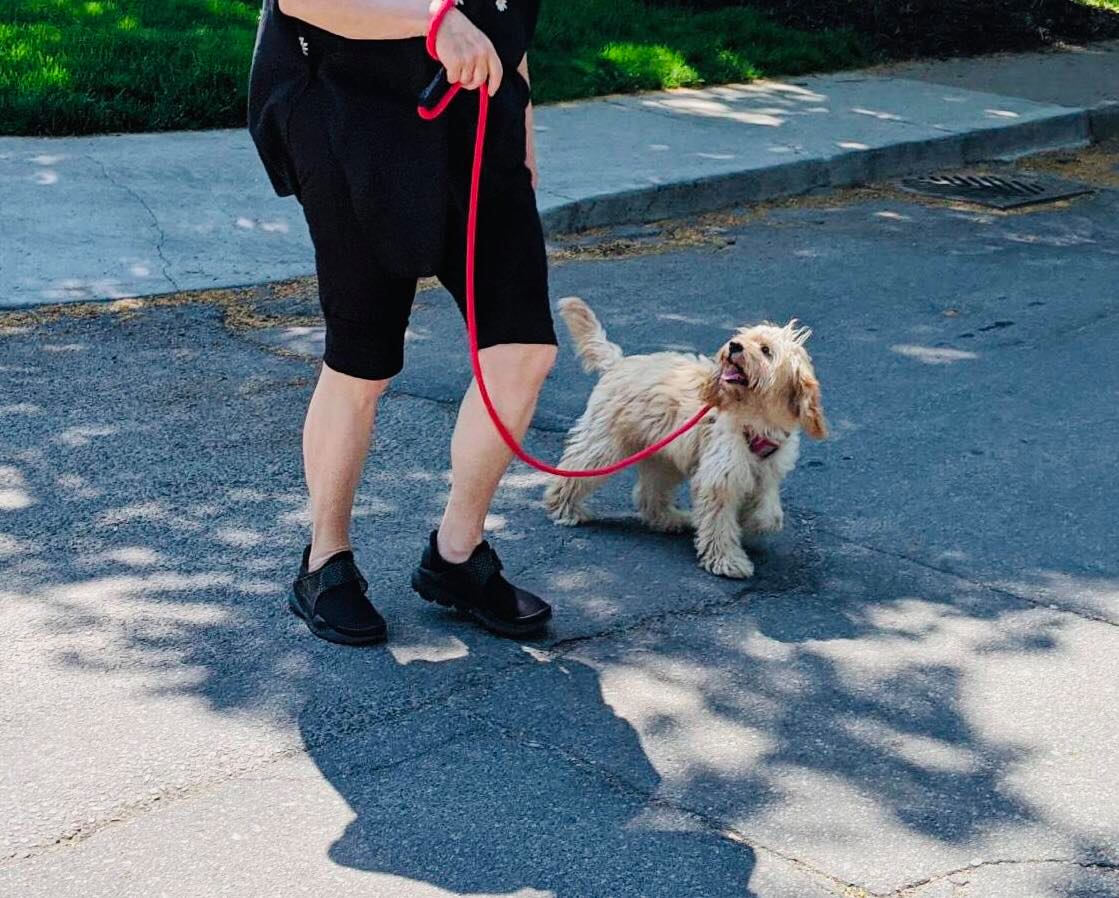
 The flexi lead is one dog walking tool I would not be sad to see disappear.
I will admit something: I have used a flexi lead in the past. So I understand why many dog owners think retractable leashes seem convenient. They look like they give the dog more freedom, more exercise, and less pulling.
Unfortunately, that is not usually what happens. In many cases, flexi leads create more problems than they solve.
Say No to Flexi Leads
Many people buy flexi leads for one of two reasons.
The first reason is that their dog pulls constantly, and they think giving the dog more leash will stop the pulling. The second reason is that they believe their dog needs more freedom and gets more exercise on a retractable leash.
Neither of those reasons is a good reason to use a flexi lead.
Flexi Leads Do Not Usually Fix Pulling
Very rarely does a flexi lead fix pulling.
Instead of pulling 4 or 6 feet ahead of you, the dog often ends up pulling 15 or 20 feet ahead. The behaviour has not changed. The dog has simply been given more distance to practice it.
If your dog pulls on leash, the solution is not more leash. The solution is teaching better leash manners, focus, and communication.
More Freedom Does Not Always Mean Better Exercise
Many owners believe their dog gets more exercise on a flexi lead because they can wander farther away.
However, a structured walk where your dog walks nicely with you can burn both physical and mental energy. Your dog has to think, pay attention, and stay connected instead of wandering all over the place.
A dog who walks politely by your side is not only exercising their body. They are also practicing self-control, focus, and manners.
Why Flexi Leads Can Be Dangerous
There are several reasons I do not like flexi leads.
1. Flexi Leads Can Break
Retractable leashes can break, and I have personally experienced this.
If the leash breaks while your dog is far ahead of you, you may have very little control over what happens next.
2. They Keep Constant Pressure on Your Dog
Because the leash is always retracting, there is often constant pressure on your dog’s neck or body, even when they are not actively pulling.
You can lock the leash, but then that defeats the purpose of using a flexi lead in the first place.
3. You Have Less Control
If your dog is 15 to 20 feet ahead of you, you have very little control over their actions.
A dog on a flexi lead can dart into the road, rush toward another dog, chase a squirrel, approach children, or turn a corner before you can see what is there.
This can be dangerous for your dog and unfair to other people in your neighbourhood.
Flexi Leads Can Put Other People and Dogs at Risk
If your dog turns a corner 20 feet before you, you do not know what they are about to encounter.
There may be another dog around that corner who is nervous, reactive, elderly, injured, or not comfortable with strange dogs rushing toward them. There may be children playing, someone who is afraid of dogs, or another owner simply trying to enjoy a calm walk.
Dog owners have a responsibility to keep their dogs safe and to be courteous to others.
What Leash Should You Use Instead?
For regular walks and training sessions, I prefer a standard 4-foot or 6-foot leash.
A regular leash gives you better control, clearer communication, and more opportunity to teach proper leash manners.
If I am training recall, I may use a flat nylon 20-foot training leash. However, that is different from a flexi lead because it is used intentionally for a specific training purpose.
Better Leash Manners Start With Training
If your dog pulls, wanders, darts toward distractions, or struggles to walk calmly, the answer is not a retractable leash. The answer is training.
Loose leash walking teaches your dog to stay connected, respond to guidance, and walk in a way that is safer and more enjoyable for both of you.
Our dog training programs can help you choose the best training option for your dog’s needs.
For dogs who need one-on-one help with leash pulling, reactivity, overexcitement, or walking skills, our Private Training programs are a great place to start.
If your dog is ready to practice around other dogs and people, our Group Classes can help build focus and manners around distractions.
For active dogs who need more physical and mental outlets, Agility, Scent Detection, or structured Day Camp may also be helpful options.
Final Thoughts
I do not allow clients to use flexi leads during training sessions.
For most dogs, a 4-foot or 6-foot leash is safer, clearer, and more effective for building leash manners. If recall training is needed, a proper long line can be used in a controlled way.
Flexi leads may seem convenient, but they can create safety risks, encourage pulling, and reduce control. If you need help transitioning from a flexi lead to a regular leash, training can help.
Contact us today if you would like help with leash manners, pulling, recall, or safer walks.
Happy Training!
Katherine
FAQ
Are flexi leads bad for dogs?
Flexi leads can create safety and training problems because they allow dogs to get too far ahead, encourage pulling, and reduce owner control during walks.
Do retractable leashes help dogs pull less?
No, retractable leashes rarely fix pulling. In many cases, the dog still pulls but does it farther away from the owner.
What leash is better than a flexi lead?
For regular walks and training, a standard 4-foot or 6-foot leash is usually safer and clearer. For recall training, a flat long line can be used in a controlled way.
Can flexi leads be dangerous near roads?
Yes. A dog on a flexi lead can dart into the road before the owner can stop them, especially if the dog sees another dog, squirrel, person, or distraction.
Can private training help with leash pulling?
Yes. Private training can help teach loose leash walking, better focus, impulse control, and safer walking habits.