
Have a new puppy and struggling with accidents in the house? You are not alone. Potty training your puppy takes consistency, patience, and a clear routine.
The good news is that puppy potty training does not need to be complicated. If you follow a simple plan and stay proactive, you can help your puppy understand where they should go and reduce accidents inside the home.
Here are 4 simple steps for potty training your puppy.
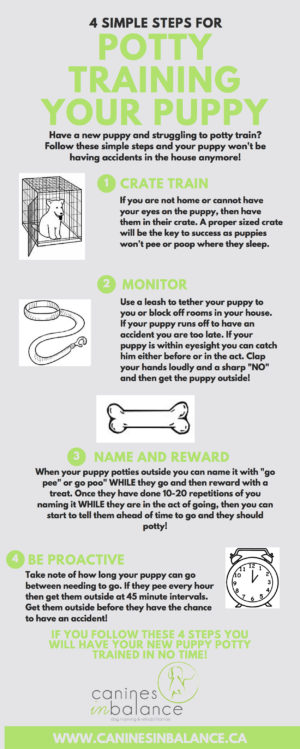
4 Simple Steps for Potty Training Your Puppy
Successful potty training comes down to management, timing, rewards, and prevention. Puppies do not automatically know where they should pee or poop, so it is our job to guide them and set them up for success.
1. Crate Train Your Puppy
If you are not home, or if you cannot keep your eyes on your puppy, your puppy should be safely in their crate.
A properly sized crate is one of the keys to potty training success. Most puppies do not want to pee or poop where they sleep, so crate training can help teach bladder control and prevent accidents when you cannot directly supervise.
The crate should be large enough for your puppy to stand up, turn around, and lie down comfortably, but not so large that they can potty in one corner and sleep in another.
2. Monitor Your Puppy Closely
When your puppy is out of the crate, they should be supervised. You can use a leash to tether your puppy to you, or you can block off rooms in your house so they cannot sneak away.
If your puppy runs off and has an accident, you are already too late. When your puppy stays within eyesight, you have a much better chance of catching them before or during the act.
If you catch your puppy about to have an accident, interrupt them and get them outside right away. The goal is to help your puppy learn that outside is the right place to go.
3. Name and Reward the Behaviour
When your puppy potties outside, name the behaviour while they are doing it. You can say something simple like “go pee” or “go poo” while your puppy is actively going.
As soon as they finish, reward them with a treat, praise, or both.
After about 10 to 20 repetitions of naming the behaviour while your puppy is in the act, you can start saying the cue before they go. Over time, your puppy can begin to understand what the cue means.
4. Be Proactive
Potty training works best when you get your puppy outside before they have the chance to make a mistake.
Pay attention to how long your puppy can usually go between potty breaks. For example, if your puppy tends to pee every hour, take them outside at 45-minute intervals.
Do not wait until your puppy is already having an accident. Get them outside before the accident happens.
Why Puppy Potty Training Requires Consistency
Puppies learn through repetition. The more often your puppy successfully goes outside and gets rewarded, the faster they can understand the routine.
On the other hand, if your puppy is allowed to wander freely and have accidents inside, potty training can take much longer.
Consistency is what helps your puppy learn the rules clearly.
Common Puppy Potty Training Mistakes
If potty training is not going well, one of these common mistakes may be part of the problem:
- Giving the puppy too much freedom too soon
- Not using a properly sized crate
- Waiting too long between potty breaks
- Not rewarding immediately after outdoor potty success
- Letting the puppy sneak away out of sight
- Expecting the puppy to understand without enough repetition
The key is to manage your puppy carefully and make the right behaviour easy to repeat.
Need Help With Puppy Training?
Potty training is one of the first important skills your puppy needs to learn, but it is only one part of raising a well-behaved dog.
If you need help with house training, crate training, biting, jumping, leash manners, or basic obedience, our dog training programs can help you choose the right training option.
For puppies who need one-on-one support, our Private Training programs can help create a plan that fits your puppy and your home.
If your puppy is ready to learn around other dogs and people, our Group Classes can help build confidence, focus, and better manners in a structured environment.
For dogs who need structured activity and routine during the day, our Day Camp may also be a helpful option.
If you follow these 4 steps, you can make potty training much easier for both you and your puppy.
Crate train, monitor closely, name and reward outdoor potty breaks, and be proactive with your schedule. The more consistent you are, the faster your puppy can learn.
Contact us today if you need help with potty training, crate training, or building better puppy habits from the start.
FAQ:
How do I start potty training my puppy?
Start by using a properly sized crate, supervising your puppy closely, taking them outside often, and rewarding them immediately when they potty outside.
How often should I take my puppy outside to potty?
Young puppies need frequent potty breaks. Watch your puppy’s pattern. If they usually pee every hour, take them out before that, such as every 45 minutes.
Should I crate train my puppy for potty training?
Yes. Crate training can be very helpful for potty training because most puppies do not want to pee or poop where they sleep. The crate must be properly sized and used correctly.
What should I do if my puppy has an accident inside?
If you catch your puppy before or during the accident, interrupt them and take them outside immediately. If you find the accident after it happened, clean it properly and focus on better supervision next time.
How long does puppy potty training take?
Every puppy is different. Potty training depends on age, consistency, routine, supervision, crate training, and how often the puppy is successfully rewarded for going outside.