Nov 15, 2015 | Puppy Training
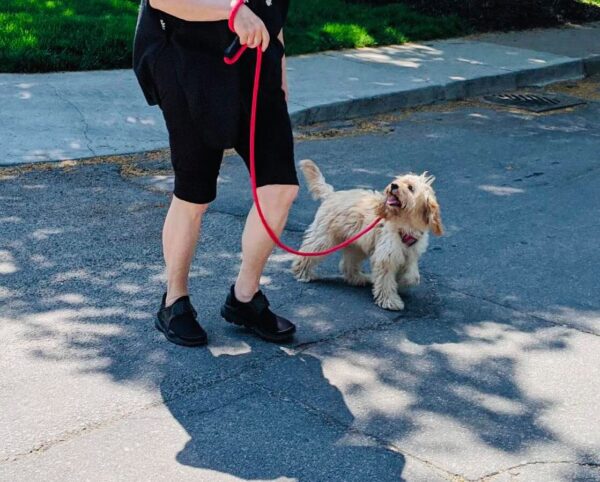
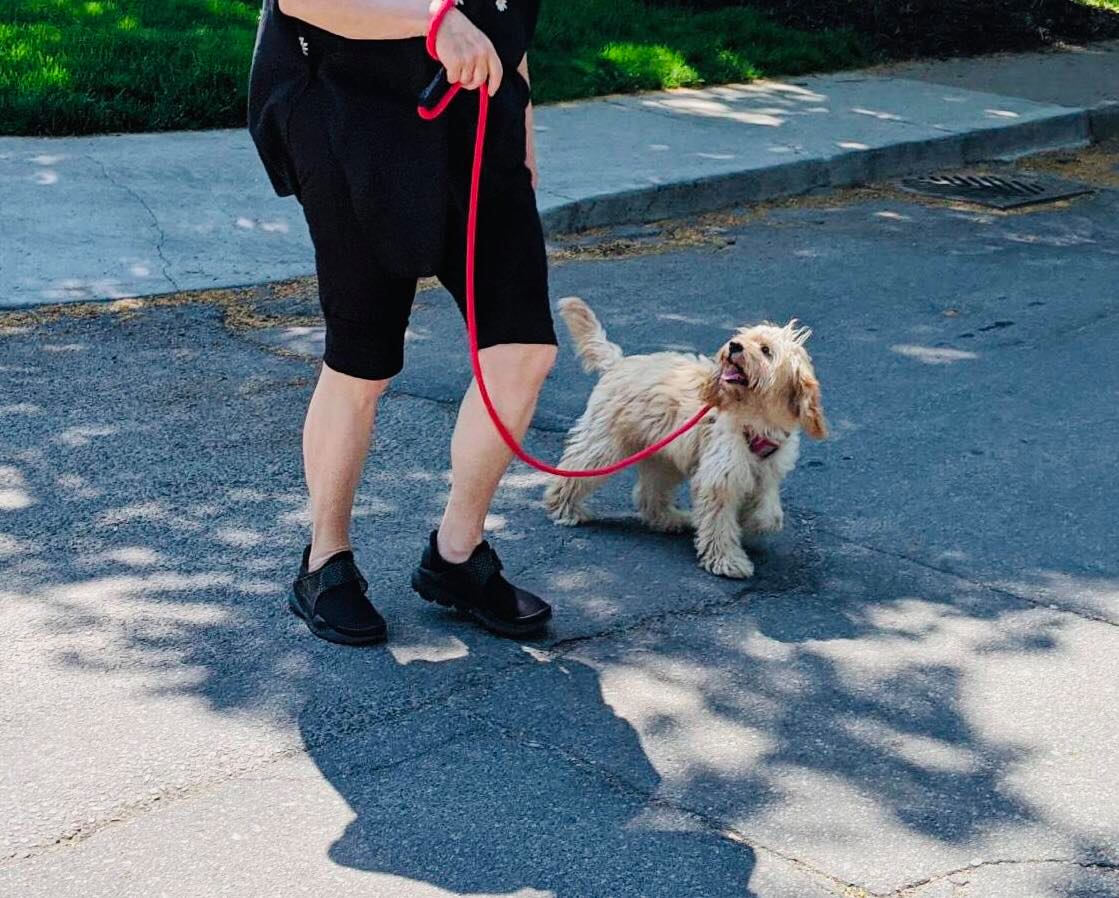
 The flexi lead is one dog walking tool I would not be sad to see disappear.
I will admit something: I have used a flexi lead in the past. So I understand why many dog owners think retractable leashes seem convenient. They look like they give the dog more freedom, more exercise, and less pulling.
Unfortunately, that is not usually what happens. In many cases, flexi leads create more problems than they solve.
Say No to Flexi Leads
Many people buy flexi leads for one of two reasons.
The first reason is that their dog pulls constantly, and they think giving the dog more leash will stop the pulling. The second reason is that they believe their dog needs more freedom and gets more exercise on a retractable leash.
Neither of those reasons is a good reason to use a flexi lead.
Flexi Leads Do Not Usually Fix Pulling
Very rarely does a flexi lead fix pulling.
Instead of pulling 4 or 6 feet ahead of you, the dog often ends up pulling 15 or 20 feet ahead. The behaviour has not changed. The dog has simply been given more distance to practice it.
If your dog pulls on leash, the solution is not more leash. The solution is teaching better leash manners, focus, and communication.
More Freedom Does Not Always Mean Better Exercise
Many owners believe their dog gets more exercise on a flexi lead because they can wander farther away.
However, a structured walk where your dog walks nicely with you can burn both physical and mental energy. Your dog has to think, pay attention, and stay connected instead of wandering all over the place.
A dog who walks politely by your side is not only exercising their body. They are also practicing self-control, focus, and manners.
Book a Consultation
Why Flexi Leads Can Be Dangerous
There are several reasons I do not like flexi leads.
1. Flexi Leads Can Break
Retractable leashes can break, and I have personally experienced this.
If the leash breaks while your dog is far ahead of you, you may have very little control over what happens next.
2. They Keep Constant Pressure on Your Dog
Because the leash is always retracting, there is often constant pressure on your dog’s neck or body, even when they are not actively pulling.
You can lock the leash, but then that defeats the purpose of using a flexi lead in the first place.
3. You Have Less Control
If your dog is 15 to 20 feet ahead of you, you have very little control over their actions.
A dog on a flexi lead can dart into the road, rush toward another dog, chase a squirrel, approach children, or turn a corner before you can see what is there.
This can be dangerous for your dog and unfair to other people in your neighbourhood.
Book a Consultation
Flexi Leads Can Put Other People and Dogs at Risk
If your dog turns a corner 20 feet before you, you do not know what they are about to encounter.
There may be another dog around that corner who is nervous, reactive, elderly, injured, or not comfortable with strange dogs rushing toward them. There may be children playing, someone who is afraid of dogs, or another owner simply trying to enjoy a calm walk.
Dog owners have a responsibility to keep their dogs safe and to be courteous to others.
What Leash Should You Use Instead?
For regular walks and training sessions, I prefer a standard 4-foot or 6-foot leash.
A regular leash gives you better control, clearer communication, and more opportunity to teach proper leash manners.
If I am training recall, I may use a flat nylon 20-foot training leash. However, that is different from a flexi lead because it is used intentionally for a specific training purpose.
Better Leash Manners Start With Training
If your dog pulls, wanders, darts toward distractions, or struggles to walk calmly, the answer is not a retractable leash. The answer is training.
Loose leash walking teaches your dog to stay connected, respond to guidance, and walk in a way that is safer and more enjoyable for both of you.
Our dog training programs can help you choose the best training option for your dog’s needs.
For dogs who need one-on-one help with leash pulling, reactivity, overexcitement, or walking skills, our Private Training programs are a great place to start.
If your dog is ready to practice around other dogs and people, our Group Classes can help build focus and manners around distractions.
For active dogs who need more physical and mental outlets, Agility, Scent Detection, or structured Day Camp may also be helpful options.
Final Thoughts
I do not allow clients to use flexi leads during training sessions.
For most dogs, a 4-foot or 6-foot leash is safer, clearer, and more effective for building leash manners. If recall training is needed, a proper long line can be used in a controlled way.
Flexi leads may seem convenient, but they can create safety risks, encourage pulling, and reduce control. If you need help transitioning from a flexi lead to a regular leash, training can help.
Contact us today if you would like help with leash manners, pulling, recall, or safer walks.
Happy Training!
Katherine
FAQ
Are flexi leads bad for dogs?
Flexi leads can create safety and training problems because they allow dogs to get too far ahead, encourage pulling, and reduce owner control during walks.
Do retractable leashes help dogs pull less?
No, retractable leashes rarely fix pulling. In many cases, the dog still pulls but does it farther away from the owner.
What leash is better than a flexi lead?
For regular walks and training, a standard 4-foot or 6-foot leash is usually safer and clearer. For recall training, a flat long line can be used in a controlled way.
Can flexi leads be dangerous near roads?
Yes. A dog on a flexi lead can dart into the road before the owner can stop them, especially if the dog sees another dog, squirrel, person, or distraction.
Can private training help with leash pulling?
Yes. Private training can help teach loose leash walking, better focus, impulse control, and safer walking habits.
Nov 10, 2015 | Puppy Training
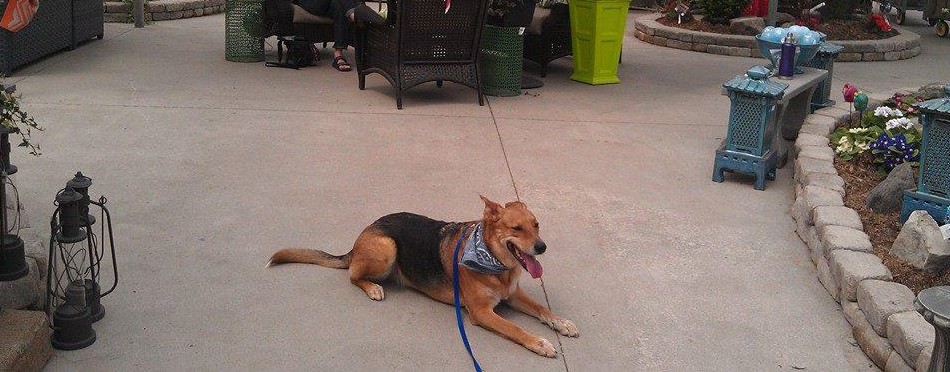
When training your dog, it is important to make sure your dog can perform a command in different situations, not just in one quiet place at home. A dog may sit perfectly in the living room, but struggle outside when there are people, smells, sounds, or other dogs nearby.
That is where the 3 D’s of dog training come in. These three training components help your dog understand commands more clearly and respond reliably, no matter where they are.
What Are the 3 D’s of Dog Training?
The 3 D’s are:
- Duration
- Distance
- Distraction
Each one should be introduced gradually. The key is not to make training too difficult too quickly. Build one skill at a time, reward success, and help your dog understand what you are asking.
1. Duration
Duration means how long your dog can hold a command, such as sit, down, or stay.
This should usually be the first thing you practice. For example, before asking your dog to sit while you walk away or while there are distractions around, your dog should first be able to hold the sit while you are standing right beside them.
A good test is to ask your dog for a sit or down and see whether they can hold it for around two minutes without needing correction. Stay close to your dog at first. If they can hold the position calmly, they may be ready to move on to the next step.
2. Distance
Once your dog understands duration, you can begin working on distance.
Distance means how far away you can move from your dog while they continue to hold the command. Start small. Ask your dog to sit or down, then take only one or two steps away. If your dog stays in position, return and reward them.
Over time, slowly increase the space between you and your dog. Do not rush this stage. If your dog keeps breaking the command, the distance may be too difficult. Go back a few steps and make it easier again.
3. Distraction
The final D is distraction. This is often the most challenging part of dog training.
Your dog may listen well inside your home, but outside there may be people, traffic, other dogs, squirrels, food smells, or exciting sounds. These distractions can make it harder for your dog to focus.
Start with low-level distractions first. For example, practice in a quiet backyard before trying a busy park. Once your dog can respond well around mild distractions, slowly increase the challenge.
The goal is to help your dog learn that the command still means the same thing, even when the environment changes.
Why the 3 D’s Matter
Many dogs understand commands in one place but struggle in new environments. This does not always mean the dog is being stubborn. Often, it simply means they have not practiced the command with enough duration, distance, or distraction.
By training with the 3 D’s in mind, you help your dog build confidence and consistency. Your dog learns to listen not only at home, but also on walks, at the park, around visitors, or in other everyday situations.
Helpful Dog Training Tips
- Practice one D at a time.
- Keep training sessions short and positive.
- Reward your dog when they make the right choice.
- Do not increase difficulty too quickly.
- If your dog makes a mistake, make the exercise easier and try again.
Book a Consultation
The 3 D’s of dog training — duration, distance, and distraction — are simple but powerful tools. When practiced properly, they help your dog become more reliable, focused, and confident.
Be patient, stay consistent, and remember that every dog learns at their own pace. Small steps done well will always lead to better long-term results.
Happy training!
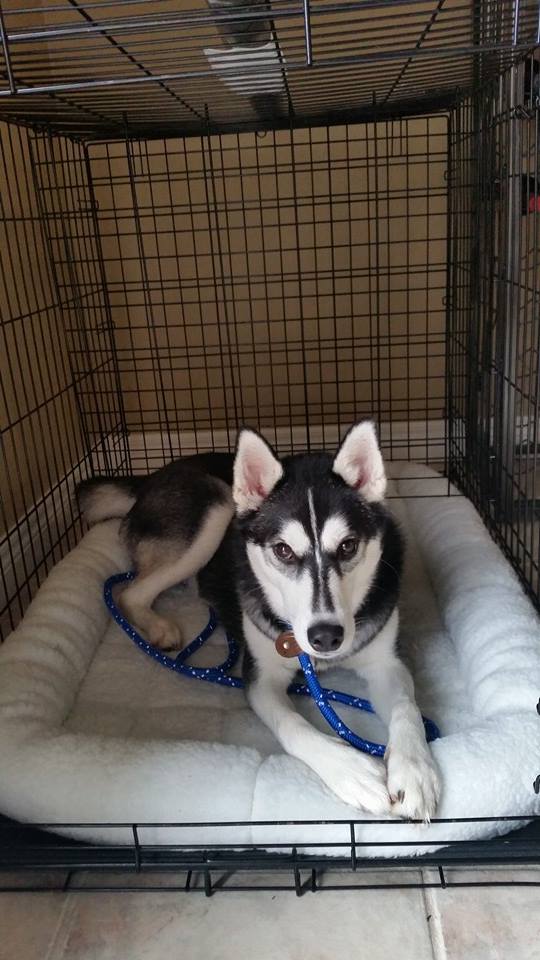
Nov 8, 2015 | Puppy Training
Crate training is one of the most helpful skills you can teach your puppy. When introduced properly, a crate becomes a safe, calm space where your puppy can rest, relax, and feel secure.
A crate should never be used as punishment. Instead, it should feel like your puppy’s personal den — a comfortable place for downtime, naps, overnight sleeping, and safe confinement when you cannot directly supervise them.
Crate training can also be useful later in life. If your dog ever needs to stay overnight at the veterinarian, travel, board, or recover from a procedure, being comfortable in a crate can make the experience much less stressful.
Why Crate Training Is Important
Crate training helps puppies learn structure, calm behaviour, and independence. It can also support house training because most puppies naturally avoid soiling the area where they sleep.
A crate can help with:
- Keeping your puppy safe when you are not home
- Preventing chewing or destructive behaviour when unsupervised
- Building a consistent rest routine
- Supporting house training
- Helping your puppy feel secure in a small space
- Preparing your dog for vet stays, travel, or boarding
The goal is to help your puppy see the crate as a safe and positive place.
Choose the Right Crate Size
Your puppy’s crate should be big enough for them to stand up, turn around, and lie down comfortably. However, it should not be so large that they can use one side as a bathroom area and the other side for sleeping.
If your puppy is still growing, choose a crate with a divider. This allows you to adjust the space as your puppy gets bigger.
Be Careful With Bedding
Soft bedding can make the crate more comfortable, but it is not always suitable for every puppy.
If your puppy chews, shreds, or swallows bedding, remove it for safety. You can reintroduce bedding later once your puppy is calmer and less likely to destroy it.
Safety should always come first.
Start With Short Crate Sessions
Begin crate training while you are home. This helps your puppy learn that going into the crate does not always mean you are leaving.
Start with very short sessions. Guide your puppy to the crate and use a simple cue such as:
“In your crate.”
Encourage your puppy to enter calmly. Once they go inside, reward them with a treat or praise. Close the door for a short moment, then open it again.
At first, keep the session very short — even one minute is enough.
Teach a Calm Release
When you open the crate door, do not allow your puppy to rush out. If they try to push past you, calmly close the door again and wait.
When your puppy stays calm, looks at you, or waits politely, use a release word such as:
“OK.”
Then allow them to come out.
This teaches your puppy that calm behaviour opens the door, not pushing, barking, or rushing.
Feed Meals in the Crate
Feeding your puppy in the crate is a great way to build a positive association.
Place your puppy’s food bowl inside the crate and allow them to eat there. This helps the crate feel familiar, rewarding, and safe.
After the meal, follow the same calm release rule. Open the door only when your puppy is settled.
Slowly Increase Crate Time
Once your puppy is comfortable with short sessions, begin increasing the time gradually.
You can start with a few minutes, then slowly build up to longer periods. Stay nearby at first, then move around the house while your puppy remains in the crate.
The goal is to teach your puppy that being in the crate is normal and relaxing.
What If Your Puppy Whines or Barks?
Some whining is normal in the beginning, especially if your puppy is still learning. Try not to immediately let your puppy out every time they make noise, because this can teach them that barking or whining opens the crate door.
Instead, wait for a brief moment of quiet before releasing them.
You can also help prevent crate frustration by making sure your puppy has had:
- A potty break
- Enough exercise
- A chance to drink water
- A calm environment
- A safe chew or crate-safe toy, if appropriate
If your puppy is panicking, drooling heavily, trying to escape, or becoming extremely distressed, they may need a slower crate training plan.
Start Leaving the House
After your puppy has practiced crate time while you are home, you can begin leaving the house for short periods.
Keep your departure calm. Avoid emotional goodbyes or making a big fuss. Simply guide your puppy into the crate, use your cue, reward them, and leave quietly.
When you return, stay calm as well. Do not rush to the crate with excitement. Wait until your puppy is settled before opening the door.
This helps your puppy understand that departures and returns are normal parts of the day.
Keep Arrivals Calm
When you come home, avoid giving your puppy immediate high-energy attention. Instead, let them out calmly and take them outside for a potty break if needed.
Once they are relaxed, you can give affection and attention.
This helps reduce overexcitement and teaches your puppy that calm behaviour gets rewarded.
Common Crate Training Mistakes to Avoid
Avoid using the crate as punishment. Your puppy should never feel that the crate is a place they go when they are “bad.”
Also avoid leaving your puppy in the crate for too long. Puppies need frequent potty breaks, play, training, and social interaction.
Do not rush the process. Some puppies learn quickly, while others need more time and patience.
Book a Consultation
Crate training takes consistency, patience, and the right approach. When done properly, your puppy can learn to love their crate and see it as a safe place to rest.
Start small, reward calm behaviour, and build the time gradually. With practice, your puppy can become comfortable, confident, and relaxed in their crate.
If you need help with crate training your puppy, contact The Crunchy Canine today.
Call: 905-869-1170
Email: info@thecrunchycanine.ca
Happy Training!

Nov 2, 2015 | Puppy Training
People often call their dogs their “fur babies” or “four-legged kids.” I understand why. Dogs are family, and they bring so much love into our homes. But as dog trainers, we sometimes hear those phrases and worry that the dog is being treated more like a baby than a dog.
That usually means too much affection, not enough structure, and very few clear expectations. And while love is important, love alone does not create a calm, confident, well-mannered dog.
So here is the funny part: I actually do wish more people would treat their dogs like their kids. Not by humanizing them, but by giving them guidance, routine, boundaries, and accountability.
Kids Are Loved, But They Still Have Rules
Think about the average day of a 10-year-old child. They wake up, get ready for school, eat breakfast, brush their teeth, get dressed, pack their bag, and head out for the day. At school, they learn, listen, socialize, and follow rules. When they come home, they may have homework, chores, dinner, and a bedtime routine.
As children get older, their responsibilities grow. They are expected to make better choices. They are held accountable when they behave inappropriately. We do not let children run through life doing whatever they want simply because we love them.
Now compare that to the average day of many young dogs. The dog wakes up, gets let outside, gets fed, pulls their human around the block, sniffs everything, jumps on people, barks out the window, and receives affection whenever they ask for it.
Then the human goes to work, and the dog is either left loose to make their own choices or, hopefully, given a safe crate or structured space. In the evening, the same pattern repeats.
Somewhere in that routine, many dogs receive plenty of love, but not enough leadership.
Dogs Need Structure To Feel Secure
Dogs are not children, and they should not be treated exactly like humans. However, they do need many of the same things children need: consistency, clear rules, calm guidance, and predictable routines.
A dog who is never asked to wait, settle, walk politely, or control their impulses will often become frustrated, pushy, anxious, or reactive. Not because they are bad, but because no one has taught them how to live calmly in a human world.
Life is not always a party. Your dog does not need constant entertainment or unlimited freedom. Your dog needs to understand when it is time to play, when it is time to relax, and what behaviour is expected in different situations.
If your dog struggles with manners, confidence, leash walking, or calm behaviour at home, professional support can help. You can learn more about our private in-home dog training or explore our dog training programs.
It Is Okay To Ask More From Your Dog
It is okay to ask your dog to be calm while you eat dinner. It is okay to ask your dog not to jump on guests. It is okay to ask your dog to wait at the door instead of rushing outside. It is okay to expect polite leash walking instead of being dragged down the street.
These expectations are not mean. In fact, they are kind. Structure helps dogs relax because they know what to do.
When dogs have no rules, they make their own decisions. And many of those decisions are not the ones we want inside a busy household.
Book a Consultation
Four Simple Ways To Add More Structure Today
1. Use the “Nothing In Life Is Free” approach
This means your dog should offer calm, polite behaviour before receiving something they want. Before meals, ask for a sit and wait. Before affection, ask your dog to sit quietly instead of pushing into your space. Before getting on furniture, your dog should be invited.
This does not mean removing affection. It means teaching your dog that good choices create good things.
2. Add two structured walks every day
A structured walk is not the same as being pulled around the block. Your dog should learn to walk calmly beside you, pay attention, and follow your pace.
Sniffing and exploring can still be part of the walk, but it should not be the entire walk. A balanced walk gives your dog both mental and physical exercise.
3. Teach your dog to relax on “place”
The “place” command teaches your dog to go to a bed, mat, or raised cot and stay there calmly. This is extremely useful when you are cooking, eating dinner, answering the door, having guests over, or simply needing your dog to settle.
Teaching place can completely change life at home because it gives your dog a clear job: go there, stay there, and relax.
If your puppy or adult dog needs help learning calm behaviour, our online dog training courses may be a helpful place to start.
4. Ask your dog to wait at thresholds
Doors, gates, crates, cars, and stairs are all great places to practice impulse control. Instead of letting your dog bolt through, ask them to sit and wait. Open the door only when they are calm.
This small habit builds patience and teaches your dog to look to you for direction.
Love Your Dog, But Lead Your Dog Too
Your dog can be deeply loved and still have rules. Your dog can be part of the family and still be expected to behave politely. In fact, the more structure you give your dog, the more freedom they can safely earn.
So yes, treat your dog more like your kid. Give them love, but also give them boundaries. Give them affection, but also give them responsibility. Give them freedom, but only after they have learned how to handle it.
That is how you raise a calmer, happier, more confident dog.
If you are unsure where to begin, visit our dog training FAQ or contact The Crunchy Canine to find the right training option for your dog.
Oct 30, 2015 | Dog Training
Does it feel like your dog ignores everything you say? You’re not alone. One of the most common frustrations dog owners experience is asking their dog to do something and getting no response at all.
The good news is that your dog is not being stubborn or trying to challenge you. In most cases, there is a simple explanation for why your dog isn’t listening.
Whether you have a young puppy or an older dog, understanding the reasons behind their behaviour can help you communicate more effectively and build a stronger relationship.
Here are the top three reasons your dog may not be listening to you—and what you can do about it.
1. Your Dog Doesn’t Understand What You’re Asking
Imagine travelling to a country where you don’t speak the language. You step off the plane, and someone immediately starts giving you instructions in a language you’ve never heard before.
You would probably look confused. If they repeated the same words louder or more often, you still wouldn’t understand.
That’s exactly how your dog feels when you ask for a behaviour they haven’t learned yet.
If you tell your dog to “sit” before teaching them what the word means, you’re essentially speaking a foreign language.
Dogs don’t automatically understand verbal commands. They learn through repetition, consistency, and clear communication.
When introducing a new cue:
- Teach the behaviour first using a lure, hand signal, or reward.
- Say the verbal cue only after your dog consistently performs the behaviour.
- Reward your dog immediately when they get it right.
- Keep training sessions short and positive.
Remember, your dog isn’t ignoring you—they may simply not understand what you’re asking.
2. Your Dog Doesn’t Think You Mean It
Have you ever asked your child to clean their room while they continued watching television?
You ask once. Nothing happens. You ask again. Still nothing.
If there are no consequences for ignoring the request, your child quickly learns that they don’t need to respond right away.
Dogs learn in much the same way.
If you ask your dog to sit and they walk away, but you don’t follow through, they learn that the cue is optional.
Consistency is one of the most important parts of dog training.
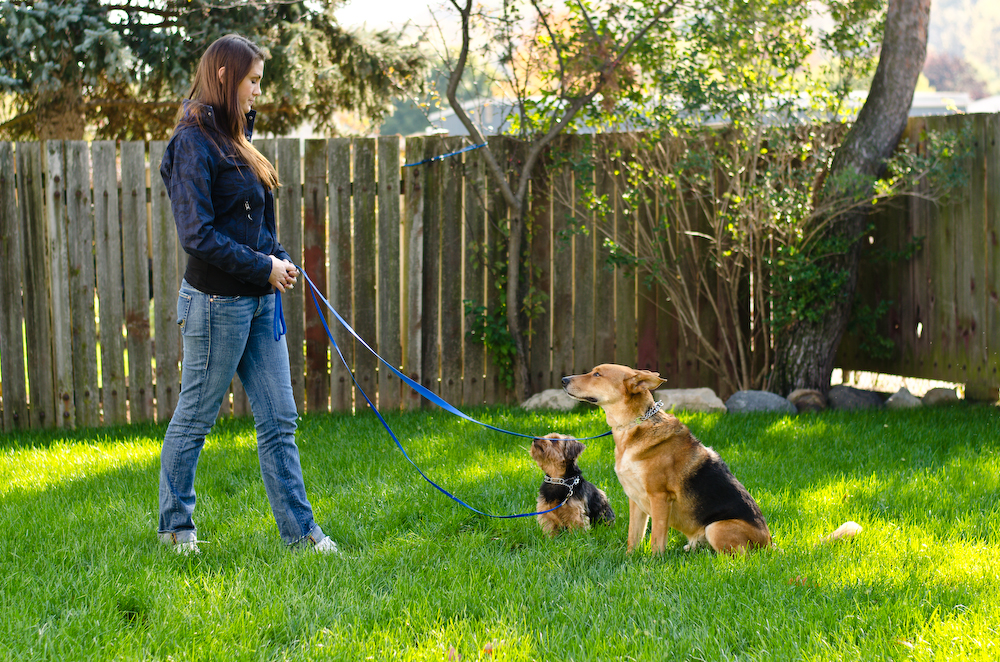
When you give a cue, make sure you’re in a position to help your dog succeed. If your dog tends to wander off or ignore commands, use a leash during training sessions so you can gently guide them into the correct behaviour.
This doesn’t mean forcing or punishing your dog. Instead, it means setting clear expectations and following through every time.
Here are a few ways to build consistency:
- Only give a cue once.
- Avoid repeating commands over and over.
- Practice in a low-distraction environment.
- Reward successful responses consistently.
- Use a leash when necessary to prevent your dog from disengaging.
When you say a cue, make sure you mean it. Over time, your dog will learn that listening pays off.
3. You’re Asking for Too Much Too Soon
Even when your dog understands a command and knows you expect them to respond, they may still struggle if the situation is too challenging.
This is where the three D’s of dog training come into play:
- Duration: How long your dog can perform a behaviour.
- Distance: How far away you are from your dog.
- Distraction: What’s happening around your dog.
For example, your dog may sit perfectly in your living room. However, asking for the same behaviour at a busy park surrounded by people, dogs, and exciting smells is a completely different challenge.
Successful training happens gradually.
Start by practising new skills in a quiet environment with minimal distractions. Once your dog is successful, slowly increase the difficulty by adjusting only one of the three D’s at a time.
You might:
- Increase the length of time your dog holds a sit.
- Take a few steps farther away before rewarding.
- Add mild distractions, such as practising outdoors.
If you increase duration, distance, and distraction all at once, your dog is more likely to fail.
Be patient and progress at your dog’s pace.
Book a Consultation
Practice Makes Progress
Training isn’t a one-time event. It’s an ongoing process that requires consistency, patience, and repetition.
The more opportunities your dog has to practise in different environments, the more reliable their responses will become.
If your dog isn’t listening, ask yourself these questions:
- Do they understand what I’m asking?
- Have I been consistent with my expectations?
- Am I asking for more than they can handle right now?
By addressing these three common issues, you’ll set your dog up for success and strengthen your communication.
With time, practice, and positive reinforcement, your dog can become a more attentive and responsive companion.
Happy training!
Katherine
Canines In Balance
Hamilton, Ontario