Sep 5, 2017 | Puppy Training
Dog Emergency Kit Checklist: Are You Prepared for an Emergency?
Are you prepared for an emergency with your dog?
When natural disasters such as hurricanes, flooding, or wildfires happen, it is easy to think, “It will never happen to us.” However, taking a small amount of time to prepare a dog emergency kit can give you peace of mind and help keep your pet safe if an emergency does occur.
There are many resources available for home disaster kits, including DIY kits and pre-made emergency kits. But if you have pets, it is important to plan for their needs as well.
What to Include in a Dog Emergency Kit
In addition to your regular home disaster kit, you should prepare the following items for your dog or pet:
- Spare leash and collar or harness with ID: Include your dog’s name, your name, your contact information, and a secondary emergency contact if possible. This is especially important if you do not have access to your phone during an emergency.
- First aid supplies: Your own first aid kit may cover many basic needs, but it is a good idea to add a few extra rolls of gauze and some vet wrap for your pet.
- Two weeks’ worth of food: Dry or canned food is fine. If you pack canned food, remember to include a can opener. Pet food has a shelf life, so check expiry dates and replace it regularly if it is not used.
- Clean drinking water: In addition to the water you need for yourself and your family, make sure you have enough clean water for your dog.
- Stainless steel bowls: Pack durable food and water bowls that are easy to clean.
- Medication: If your pet requires medication, make sure you always have an emergency supply available.
- Medical records: If you need to board your dog during an emergency, most facilities will require proof of vaccinations.
- A crate or X-pen if possible: A crate or exercise pen can help keep your dog safe and contained if you need to evacuate or stay somewhere unfamiliar.
- Blanket or spare bed: A familiar blanket or bed can help your dog feel more comfortable during a stressful situation.
How to Store Your Pet Emergency Supplies
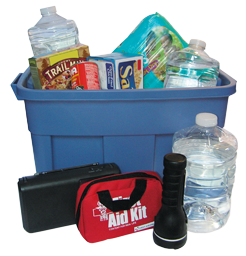
We highly recommend purchasing a large tote, such as a Rubbermaid bin, to store all of your dog emergency kit items together in one place.
Place a large label or sticker on the front of the tote so it is easy to identify quickly. In an emergency, you do not want to waste time searching for supplies around the house.
Create an Emergency Plan for Your Pet
Having a dog emergency kit is important, but having a plan is just as important. During an emergency, you may be stressed, scared, or in a rush, so it is best to make decisions ahead of time.
Here are a few questions to consider when creating an emergency plan for your dog:
- If you are not home and your area is evacuated, can a neighbour or trusted person get your pets?
- If possible, who will go home to get the pets if your family needs to evacuate?
- Where will you go if you are evacuated?
- Is your dog crate trained or kennel trained if they need to stay at a boarding facility?
- If an evacuation is expected or possible, who can stay home from work so pets do not get left behind?
Why Emergency Preparation Matters for Dog Owners
When an emergency happens, most people are running on fear and adrenaline. Having supplies ready and a plan in place gives you one less thing to worry about.
Preparing ahead of time can help you act more calmly, protect your dog, and make the situation easier for your whole family.
Need Help Preparing Your Dog for Emergencies?
Training can also play an important role in emergency preparedness. A dog who is comfortable with a crate, leash, collar, car travel, and basic handling will usually be easier to manage during stressful situations.
If your dog struggles with crate training, leash skills, or nervous behaviour, our private dog training programs can help your dog become more confident and easier to manage in everyday life and emergency situations.
Book a Consultation
Frequently Asked Questions
What should be in a dog emergency kit?
A dog emergency kit should include a spare leash and collar, ID information, food, water, bowls, medication, medical records, first aid supplies, a crate or X-pen, and a blanket or spare bed.
How much dog food should I keep for an emergency?
It is a good idea to keep at least two weeks’ worth of dog food in your emergency kit. Check expiry dates regularly and replace the food when needed.
Why are medical records important in a pet emergency kit?
If your dog needs to stay at a boarding facility, kennel, or emergency shelter, you may need to show proof of vaccinations or other medical records.
Should my dog be crate trained for emergencies?
Yes, crate training can be very helpful in an emergency. If your dog needs to travel, stay at a kennel, or remain safely contained, crate training can reduce stress and make the situation easier.
Aug 29, 2017 | Puppy Training
Do you have a Doodle? Doodles are known for their adorable coats, but they also need regular grooming to stay comfortable, healthy, and mat-free.
Professional grooming appointments are important, but what you do at home between appointments can make a big difference. With a simple routine, you can help keep your Doodle’s coat in better condition and make grooming less stressful for your dog.
How to Groom Your Doodle Between Grooming Appointments
If you are wondering how to groom your Doodle at home, the key is consistency. Doodle coats can become tangled or matted quickly, especially if they are curly, wavy, or fluffy.
Here are a few simple grooming tips to help your Doodle stay clean, comfortable, and easier to manage between professional grooming visits.
Brush Your Doodle Regularly
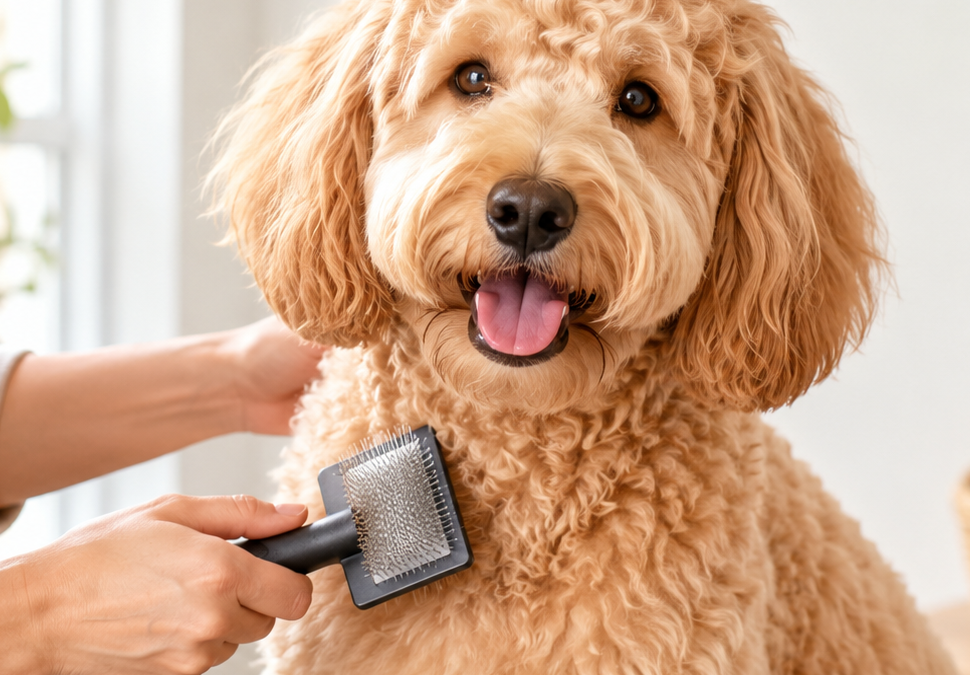
 Regular brushing is one of the most important parts of Doodle grooming. Brushing helps prevent mats, removes loose hair, and keeps the coat healthier.
Pay close attention to areas that commonly tangle, such as:
- Behind the ears
- Under the collar or harness area
- Under the legs
- Chest and belly
- Tail and back legs
These areas can mat quickly, so checking them often can help prevent uncomfortable knots from forming.
Check for Mats and Tangles
Mats are not just a cosmetic issue. They can pull on your dog’s skin and become uncomfortable or painful over time.
When grooming your Doodle at home, gently separate the coat and check close to the skin. A dog may look fluffy on the outside while still having tight mats underneath.
If you find a small tangle, gently work through it with the proper grooming tools. If you find a tight mat close to the skin, it is best to contact a professional groomer rather than trying to cut it out yourself.
Keep Grooming Sessions Short and Positive
If your Doodle is still a puppy or is not used to grooming, keep sessions short and calm. You do not need to groom the entire dog in one session.
Start with a few minutes of brushing, then give your dog a break. This helps your Doodle learn that grooming is a normal and positive part of life.
You can reward calm behaviour with praise, treats, or a short play session.
Get Your Doodle Comfortable With Handling
Good grooming starts with good handling skills. Practice gently touching your Doodle’s paws, ears, tail, face, and body so they become more comfortable being handled.
This can help make brushing, nail trims, ear checks, and professional grooming appointments much easier.
Check Your Doodle’s Ears
Doodles can be prone to ear issues, especially if their ears trap moisture or hair. Between grooming appointments, check your dog’s ears for redness, odor, or extra buildup.
If you notice discomfort, scratching, a bad smell, or unusual discharge, contact your veterinarian.
Do Not Forget the Paws and Nails
Your Doodle’s paws can collect dirt, debris, and small tangles. Check between the paw pads and around the feet regularly.
Nails should also be maintained between grooming appointments. Long nails can affect your dog’s comfort and movement, so ask your groomer or veterinarian how often your dog’s nails should be trimmed.
Stay on a Professional Grooming Schedule
At-home grooming is helpful, but it does not replace professional grooming. Doodles usually need regular grooming appointments to keep their coat manageable and healthy.
Your groomer can help recommend the best schedule based on your Doodle’s coat type, lifestyle, and grooming needs.
Learning how to groom your Doodle between grooming appointments can help prevent mats, reduce stress, and keep your dog more comfortable.
A simple routine of brushing, checking for tangles, handling practice, ear checks, and paw care can make a big difference for both you and your Doodle.
If your puppy struggles with grooming, handling, or staying calm, our private dog training programs can help build confidence and teach better cooperation during everyday care.
Book a Consultation
FAQ:
How often should I brush my Doodle?
Many Doodles benefit from brushing several times a week, and some may need daily brushing depending on their coat type and length.
Why does my Doodle get matted so easily?
Doodle coats are often curly or wavy, which can trap loose hair and create tangles. Without regular brushing, these tangles can quickly turn into mats.
Can I cut out mats at home?
It is best to be very careful with mats, especially if they are close to the skin. If a mat is tight or difficult to remove, contact a professional groomer.
How can I make grooming easier for my puppy?
Keep grooming sessions short, reward calm behaviour, and practice gentle handling of the paws, ears, face, and body. This helps your puppy build confidence over time.
Just don’t let him do that
Jul 18, 2017 | TESTIMONIALS
Jennie and Curtis came to us for help with Jax whose fear was so bad he would almost refuse to go for walks and even when they got him out he was terrified of EVERYTHING. We worked on building his confidence and addressing his reactivity to dogs. He is a work in progress but coming along nicely!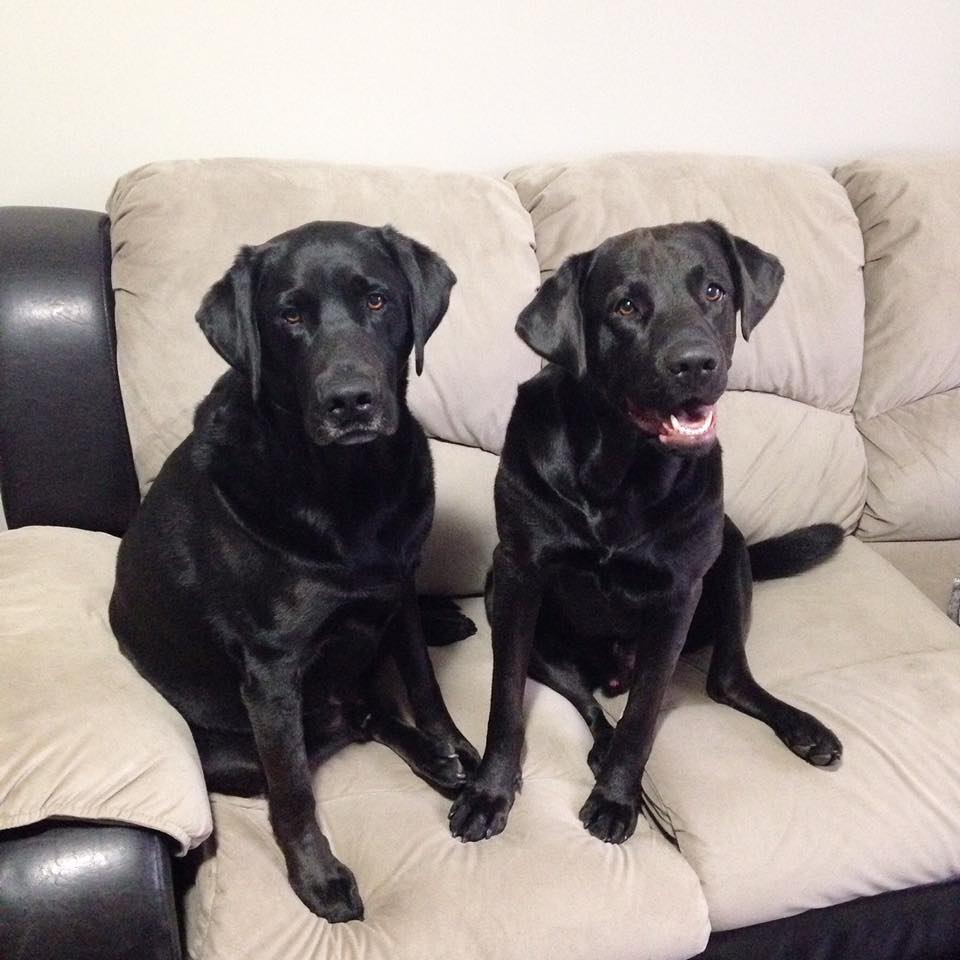
“I have a very nervous dog who wouldn’t even leave the house and would react aggressively to other dogs. Katherine has taught all of us how to deal with many situations and he is now more confident in his day to day life. It will be a long road for him but he has improved a ton. Thank you for everything Katherine!! So helpful and always quick to help us if we had a question. Definitely would recommend Canines in Balance!”
Jennie with Jax and Hudson
Binbrook, Ontario
If you are looking for training in Binbrook, please contact us today!
Jul 18, 2017 | TESTIMONIALS
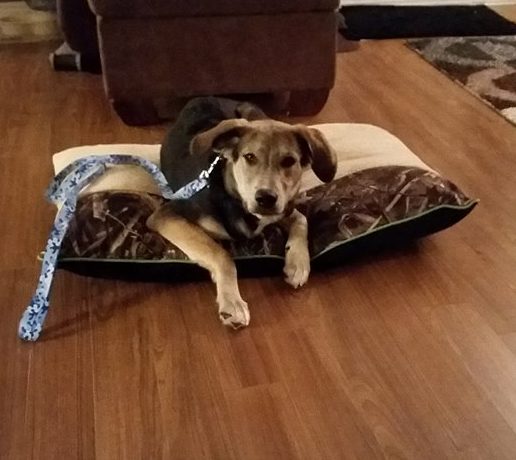
Meaghan called us for help with Bear’s jumping on guests, separation anxiety and overall obedience training. Bear is now reliable off leash, no longer jumping on people and doing much better with his separation anxiety.
“Bear needed a lot more structure and consistency in ways I had trouble understanding due to certain anxieties than I had no previous experience with. Katherine helped me underst
and that he is different, so I can’t expect him to learn the same as other dogs. Once we figured out what worked for him, he is a much more confident and well balanced dog and we are both much happier for it! He has turned into an obedience machine, so reliable and awesome all around. He always had it in him, I just had to learn how to access it and definitely could not have done it without Katherine’s help!”
Meaghan with Bear
Burlington, Ontario
If you are looking for dog training in Burlington, contact us today!
Jul 18, 2017 | TESTIMONIALS
Shirley called us for help with Dexter’s barking in the apartment, reactivity to dogs, and intense prey drive. We focused on desensitizing Dexter to noises in the building, teaching him how to walk past dogs without barking and spinning, and how to harness his prey drive so he can go for a walk without freaking out at all the critters. 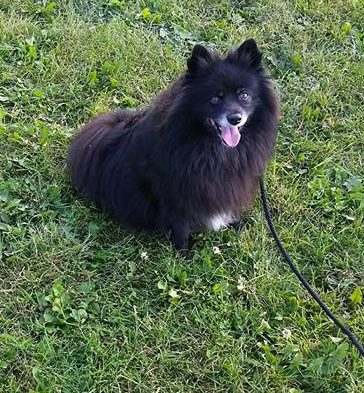
“What I thought was a barking problem, has turned into a dog that just needed a little guidance and leadership from me to understand I am here to protect him. Dexter was a little disruptive to our apartment neighbours, so we have worked on building our relationship so that he can be less anxious with all the noises. Katherine has also worked with me on crittering and teaching Dexter distraction to help with reacting to high energy situations. I feel much more confident now when we are walking that I can handle any situation without getting into the dreaded red zone. Katherine is flexible, down to earth, relatable, and knowledgeable. She teaches you practical exercises to do that are so simple. I am sad our sessions are coming to an end soon, but I look forward to all the other activities available through Canines In Balance. I definitely plan to continue and do more training.”
Shirley with Dexter
Burlington, Ontario
If you are looking for dog training in Burlington, contact us today!