
Jan 18, 2016 | Puppy Training
When it comes to house training your puppy, the most important things to remember are patience and consistency.
House training can be simple when you follow a clear plan. However, if you skip steps, you may slow down the process and see delays in your puppy’s progress.
Also remember that puppies are puppies. They will make mistakes, and so will you. If your training is going well and your puppy suddenly has an accident, take a moment to think about whether a step was missed that day. Most puppy accidents are human error and can be prevented with better management.
House Training Your Puppy in 4 Easy Steps
Puppy house training works best when you manage your puppy’s environment, supervise closely, use a crate properly, and get your puppy outside before accidents happen.
Here are four easy steps to help your puppy learn where to potty.
1. Be Reasonable With Your Expectations
Puppies are growing, and so are their bladders. It is important to be realistic about how long your puppy can hold it.
Until around 6 months of age, puppies should not be expected to hold their bladder for long periods of time. They need frequent potty breaks, and you will be able to increase the time gradually as they get older and their bladder develops.
If you are gone all day, you should expect accidents when you get home unless you have a proper plan in place. Puppies need supervision, structure, and realistic expectations.
2. Limit Your Puppy’s Access
Puppies often have accidents by running into another room and eliminating where you cannot see them. By the time you find the mess, it is too late to correct the behaviour fairly.
Reprimanding a puppy after the fact is useless and unfair because the puppy will not understand what they are being corrected for.
For the next couple of weeks, keep your puppy tethered to you with a leash and collar when they are out of the crate. You can attach the leash to your waist with a belt or carabiner, or simply hold the leash handle.
If your puppy is attached to you, you can catch them before or during the act. If you see your puppy about to have an accident, interrupt them, then get them outside right away.
When your puppy eliminates outside, praise them. Make it very clear that going outside is the behaviour you want.
3. Anticipate Potty Breaks Before Accidents Happen
Do not wait until your puppy is already having an accident. Be proactive.
If you know your puppy usually needs to go about 30 minutes after eating or drinking, take them outside after 20 minutes. Get them outside before they even think about going in the house.
Over time, you will be able to extend the time between potty breaks as your puppy learns to hold it. But in the beginning, stay on top of the schedule.
If three hours go by and your puppy has not asked to go out and has not had an accident, take them outside anyway. When they eliminate outside, praise and reward them.
4. Crate Train Your Puppy
If you are not already crate training your puppy, get a properly sized crate.
The crate should be large enough for your puppy to stand up, turn around, and lie down comfortably. It should not be so large that your puppy can eliminate in one corner and sleep in another.
Moving forward, if you are not home or cannot keep your eyes on your puppy, crate them. A crate is one of the most useful tools for house training because it helps prevent accidents when you cannot supervise.
If you need help with crate training, our Private Training programs can help you build a plan that works for your puppy and your home.
Book a Consultation
Food and Water Management
It can also help to manage your puppy’s access to food and water when you know they are going to be left alone.
Do not leave food or water in the crate unless your veterinarian has advised otherwise. If your puppy is going to be crated or left alone, try to limit access to food and water for about an hour before you leave.
Leaving a puppy alone with a full belly and bladder can lead to accidents.
Common House Training Mistakes
If your puppy is struggling with house training, one of these common mistakes may be slowing progress:
- Giving the puppy too much freedom too soon
- Not supervising closely enough
- Not using a properly sized crate
- Waiting too long between potty breaks
- Correcting after the accident has already happened
- Not rewarding outdoor potty breaks clearly
- Expecting a young puppy to hold it too long
House training is usually much easier when you prevent accidents instead of reacting after they happen.
Need Help With Puppy Training?
House training is one of the first big lessons your puppy needs to learn, but it is only one part of raising a well-mannered dog.
Our dog training programs can help you choose the right option for your puppy’s needs.
For puppies who need one-on-one support with house training, crate training, biting, jumping, leash skills, or basic obedience, our Private Training programs may be the best fit.
If your puppy is ready to learn around other dogs and people, our Group Classes can help build focus, confidence, and manners in a structured setting.
For dogs who need more routine and structured activity during the day, our Day Camp may also be a helpful option.
Book a Consultation
House training your puppy does not need to be complicated, but it does require consistency.
Be reasonable with your expectations, limit your puppy’s access, anticipate potty breaks, and use a properly sized crate. If you follow these steps and stay consistent, your puppy will have a much better chance of success.
Contact us today if you need help with house training, crate training, or building better puppy habits from the start.
Happy Training!
Katherine
FAQ:
How do I start house training my puppy?
Start by supervising your puppy closely, limiting access inside the house, taking your puppy outside frequently, rewarding outdoor potty breaks, and using a properly sized crate when you cannot supervise.
How long can a puppy hold their bladder?
Young puppies cannot hold their bladder for long periods. Until around 6 months of age, puppies usually need frequent potty breaks and should not be expected to hold it for too long.
Should I correct my puppy after an accident?
No. Correcting after the fact is unfair and ineffective because the puppy will not understand. Focus on better supervision and getting your puppy outside before accidents happen.
Does crate training help with house training?
Yes. A properly sized crate can help prevent accidents when you cannot supervise because most puppies do not want to eliminate where they sleep.
Why does my puppy keep having accidents in another room?
Your puppy likely has too much freedom too soon. Limit access by tethering your puppy to you, blocking off rooms, or using the crate when you cannot watch them closely.
Jan 15, 2016 | Puppy Training
What does puppy socialization really mean?
When people get a new puppy or dog, they are often told, “You need to socialize them right away.” While that advice is well-intentioned, many people misunderstand what socialization actually means.
Somewhere along the way, puppy socialization became associated with taking a puppy to the dog park and putting them around as many dogs as possible. But that is not the best way to build a confident, well-rounded dog.
Puppy Socialization Is More Than Dog Parks
I love the idea of a dog park in theory. Dogs running off leash, enjoying the company of other dogs and people sounds wonderful.
Unfortunately, many dogs who should not be at the dog park are there regularly. Many owners do not know what to look for in healthy dog-to-dog interaction. Many dogs are not being advocated for, and many owners may not know when they should step in.
This can lead to dogs being bullied, dog fights, over-aroused behaviour, humping, chaos, and puppies leaving the park more fearful or insecure than when they arrived.
Why Dog Parks Can Be Risky for Puppies
A puppy’s early experiences matter. One bad experience can affect a puppy for a long time.
Many dogs who become reactive, fearful, or dog-aggressive were not necessarily born that way. Often, there was at least one negative experience that contributed to the behaviour. In many cases, owners can point to the exact event that changed how their dog felt about other dogs.
That is why dog parks are not always worth the risk, especially for puppies or dogs who are still building confidence.
Book a Consultation
What Puppy Socialization Should Actually Mean
Socialization should be productive, positive, and controlled.
Yes, getting your puppy around other dogs is important. However, it should be around the right dogs. Your puppy should meet calm, stable, appropriate dogs who can help create good experiences, not overwhelm or bully them.
Good socialization is not about flooding your puppy with as many dogs, people, sounds, and places as possible. It is about helping your puppy experience the world in a calm, confident, and safe way.
Safe Ways to Socialize Your Puppy With Other Dogs
If you want your puppy to have healthy experiences with other dogs, choose safer and more structured options.
Good options may include:
- Group training classes with controlled supervision
- Puppy socialization classes run by a knowledgeable trainer
- Carefully selected play sessions with calm, balanced dogs
- Friends or family members who have stable, appropriate dogs
- Structured walks around other dogs without forced greetings
Our Group Classes can help puppies and dogs learn around other dogs and people in a more structured environment than a dog park.
Socialization Also Means Exposure to the World
Getting your puppy around other dogs is only one part of socialization.
Many behaviour issues come from fear, lack of confidence, lack of trust in the handler, and not learning how to follow guidance in new situations.
More important than simply letting your puppy play with dogs is exposing them to different experiences in positive, controlled ways.
Your puppy should learn about different:
- Places
- Sounds
- Smells
- Surfaces
- People
- Environments
- Objects
- Movements and distractions
Examples of Good Puppy Socialization
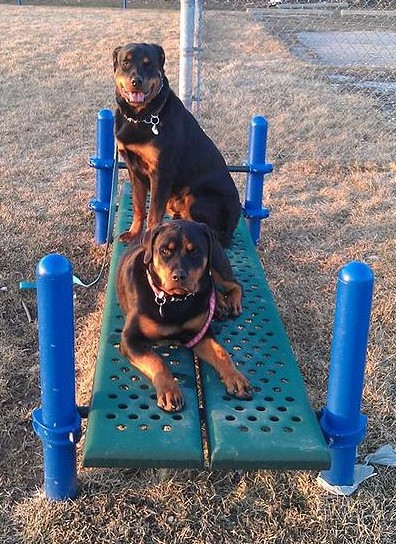 If you want a confident dog who can go places with you, start introducing your puppy to the world in thoughtful ways.
Here are some examples:
- Take your puppy to dog-friendly stores and practice calm behaviour.
- Use a long line to let your puppy safely explore parks, trails, and fields.
- Encourage your puppy to explore unique surfaces such as bridges, tarps, steps, platforms, or playground-style surfaces where appropriate.
- Let your puppy observe people, dogs, bikes, strollers, and vehicles from a safe distance.
- Practice calm focus and obedience in new environments.
The goal is not to overwhelm your puppy. The goal is to build confidence through successful experiences.
Confidence Is the Goal
A well-socialized puppy is not a puppy who runs up to every dog and person.
A well-socialized puppy is calm, confident, curious, and able to handle new situations without panic or chaos.
When puppies are exposed to different environments in a safe and positive way, they are more likely to grow into dogs who can handle what life throws their way.
Training Support for Puppy Socialization
If you are unsure how to socialize your puppy safely, structured training can help.
Our dog training programs can help you choose the right training option for your puppy or dog.
For puppies who need one-on-one help with confidence, manners, leash skills, or exposure work, our Private Training programs may be the best fit.
For puppies and dogs ready to learn in a structured environment around other people and dogs, our Group Classes are a great option.
If your dog needs more healthy outlets for confidence and enrichment, activities like Agility, Scent Detection, or structured Day Camp may also be helpful.
Book a Consultation
Puppy socialization is not about throwing your puppy into a dog park and hoping for the best.
It is about creating positive, productive, and controlled experiences that build confidence. Your puppy should learn how to handle dogs, people, places, sounds, surfaces, and new environments in a calm and safe way.
If you only rely on dog parks for socialization, your puppy may struggle when introduced to new real-world situations. But if you build confidence through thoughtful exposure and training, you can help your puppy grow into a more balanced and happy dog.
Contact us today if you need help socializing your puppy or building your dog’s confidence.
Happy Training!
Katherine
FAQ:
What does puppy socialization mean?
Puppy socialization means helping your puppy experience people, dogs, places, sounds, surfaces, and environments in a positive and controlled way so they can become confident and well-rounded.
Are dog parks good for puppy socialization?
Dog parks can be risky for puppies because not all dogs there are appropriate, balanced, or well supervised. One bad experience can affect a puppy’s confidence and behaviour.
How should I socialize my puppy with other dogs?
Choose calm, stable dogs, structured group classes, supervised puppy classes, or controlled play with dogs you know and trust.
What should I expose my puppy to?
Expose your puppy to different places, sounds, smells, surfaces, people, objects, and calm experiences around other dogs. Keep the exposure positive and manageable.
Can puppy training classes help with socialization?
Yes. Group classes can help puppies learn around other dogs and people in a structured environment while building confidence, focus, and manners.
Jan 4, 2016 | Puppy Training
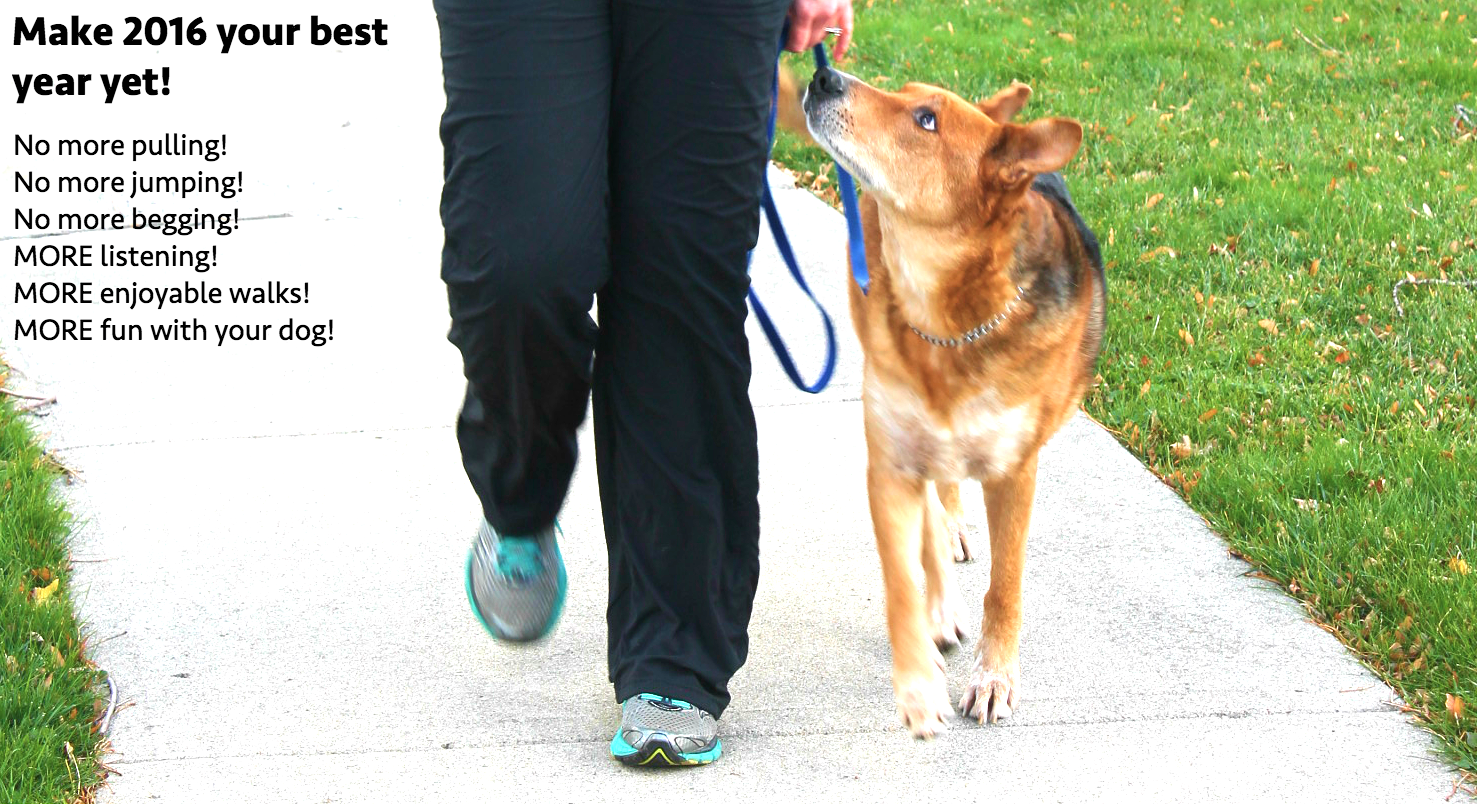 Happy New Year! Have you thought about your New Year’s Resolutions yet? Maybe your dog needs a resolution too? Pulling on leash? Jumping on guests? Excessive barking? Begging at the table? Not listening? If this sounds a little too familiar then it might just be time to make a joint resolution with your dog. While we hope training becomes an all year thing for you and your dog, why not take this opportunity to start the year off right? We have a variety of options when it comes to training to suit the needs of everyone. Whether you are looking for group class, private one on one training, or want us to do the training for you at Day School, we’ve got the solution to help you get your dog’s issues under control. Our gentle and effective training methods actually work! Just check out what our clients have to say here!
Not sure you want to commit to training just yet? Here are some FREE easy dog training tips to get you started on your own!
Adult Group Dog Training & Group Puppy Training
We now have two locations for Adult Group Dog Training and Group Puppy Training classes to serve you better! DogDen in Burlington on Monday and Wednesdays, and Temple of the Dog in Beamsville on Tuesdays and Saturdays.
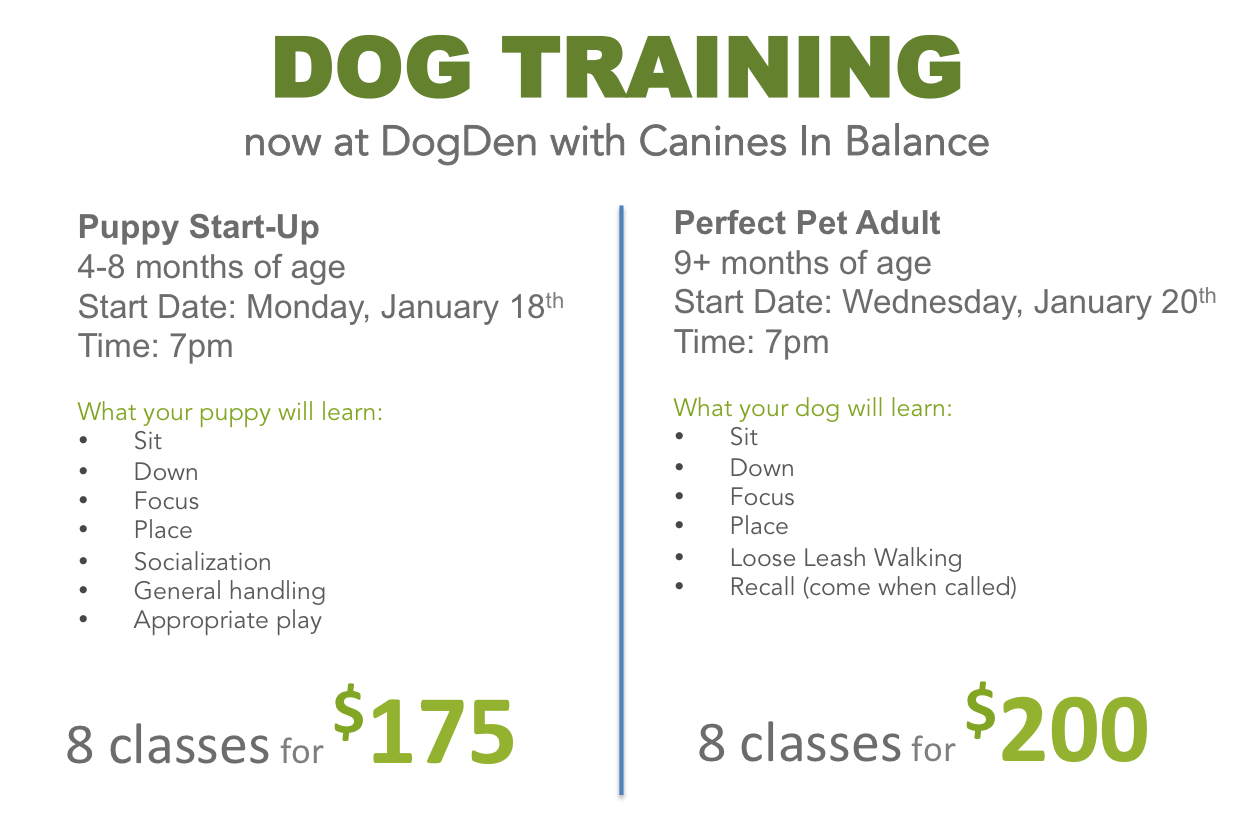
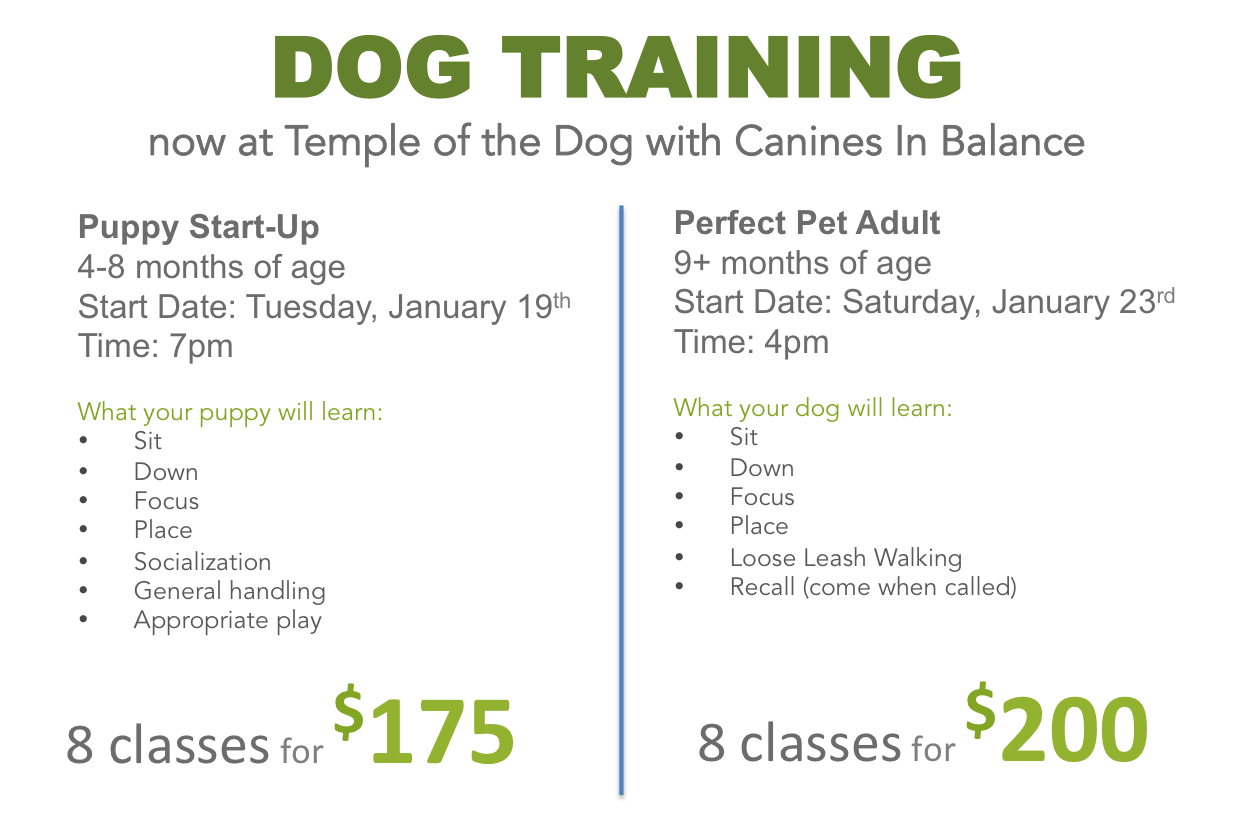
We’d love to hear about your dog training goals! Contact us to reserve your spot in group class or to book a FREE evaluation for private training!
[contact-form to=’info@caninesinbalance.ca’ subject=’Contact from caninesinbalance.ca’][contact-field label=’Name’ type=’name’ required=’1’/][contact-field label=’Email’ type=’email’ required=’1’/][contact-field label=’How did you hear about us?’ type=’text’/][contact-field label=’Comment’ type=’textarea’ required=’1’/][/contact-form]
Dec 23, 2015 | TESTIMONIALS
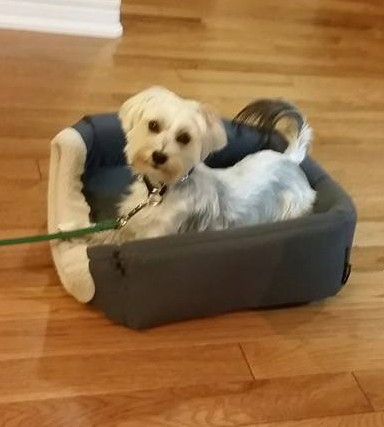 “Jack is doing amazing. We are using place all the time and he honestly appears to be a different dog. We are using the leash in the house and he is getting a minimum of 1 walk per day but for the most part he is getting 2 walks. The groomer asked what is different about Jack as she stated he appeared calmer and well behaved.” Lisa with Jack
Beamsville, Ontario
If you are looking for Dog Training in Beamsville, contact us for a FREE evaluation – 905-869-1170
Dec 16, 2015 | TESTIMONIALS
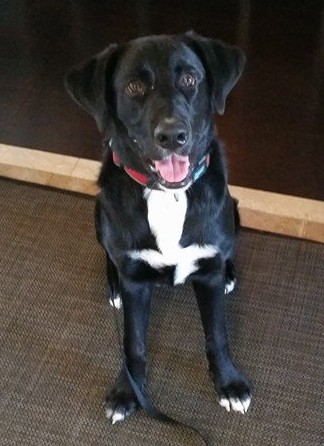
Seamus is a young Lab/Bernese mix who was struggling with over excitement and typical puppy behaviours like pulling on leash, jumping, mouthing, and begging at the table. We worked with his owners to teach them how to better communicate with Seamus what was expected of him and the behaviours we wanted to stop. Dog training in Binbrook, Ontario
“My dog started behaving differently the moment we started. He is calmer, more focused and more able to understand the direction we are trying to give him. I love your methodology as it creates good behaviours and doesn’t just focus on rewards. Thank you!”
Kristin with Seamus
Binbrook, Ontario
If you are looking for Dog Training in Binbrook, Ontario contact us for a FREE evaluation – 905-869-1170
Dog Training in Binbrook, Ontario