Mar 4, 2016 | TESTIMONIALS
Name: Bentley
Problem: Resource Guarding (bones and other items)
Solution: 2 week Day School with remote collar to teach Bentley to drop items without guarding.
“Bentley did not have any discipline problems, except when it came to resource guarding high value treats (i.e., bones). Being a new dog owner I thought giving Bentley these treats would be a great way to entertain and minimize the tartar buildup around his gums. However, it was not an enjoyable task because he would guard, growl, become still, and sometimes bite when you attempted to take it away. The only way you could safely remove the bone (or high value treat) was when he was finished or when there was a greater distraction. With the e-collar and the help of Katherine, I can now give Bentley any high value treat without him resource guarding. As soon as I tell him to “out” or drop, Bentley  is able to walk away from the treat that was given, without growling or trying to resource guard.”
Sophia with Bentley
Stoney Creek, Ontario
If you are looking for Dog Training in Stoney Creek, contact us for a FREE evaluation – 905-869-1170
resource guarding
Feb 21, 2016 | TESTIMONIALS
 “Canines in Balance is great! They understand that each dog is different and use a variety of techniques/tools to help you and the dog achieve the desired results. They explain why they are using a certain technique and are very knowledgeable of dog behaviour. We are extremely happy with them and the results we have seen in our dogs.”
dog training grimsby
Sherri with Blue and Kenya
Grimsby, Ontario
If you are looking for Dog Training in Grimsby, contact us for a FREE evaluation – 905-869-1170
Feb 11, 2016 | Puppy Training
 Cold weather can make dog exercise difficult. When the temperature drops, long walks may not be ideal, especially during extreme winter weather.
But if you have a high-energy dog, skipping exercise and mental stimulation can quickly become a problem. A dog with too much energy and not enough structure can become restless, demanding, or difficult to manage inside the home.
That is why it helps to have creative ways to make dog training in Hamilton, ON fun, even when the weather is not perfect for long walks.
Dog Training Hamilton, ON: Having Fun While Training
Training does not always have to feel formal or serious. Some of the best training can happen through structured play.
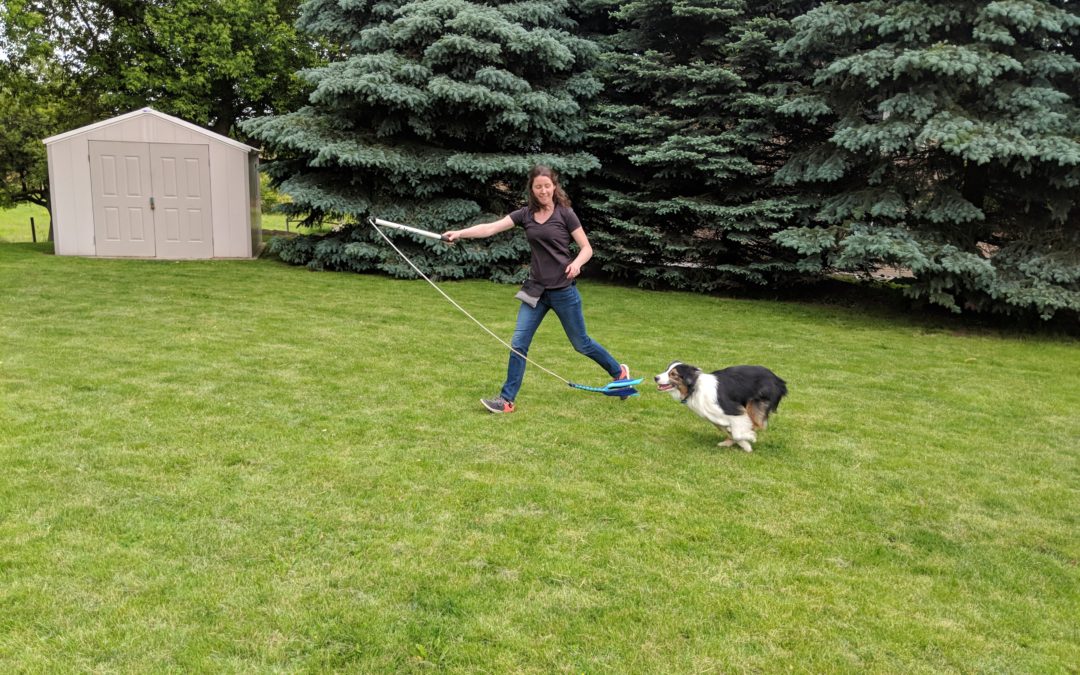
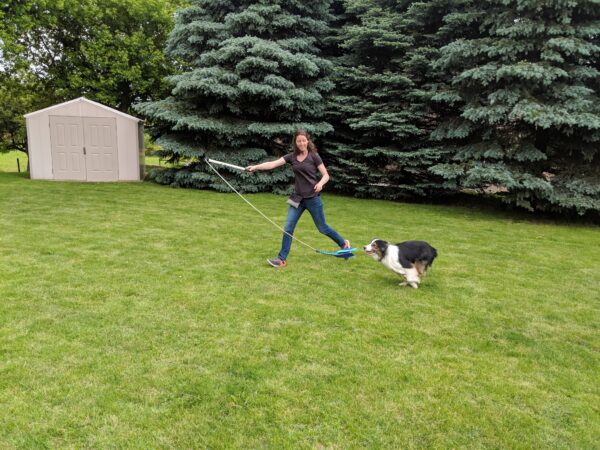
When the weather is extremely cold, I like to change up the games we play so we are not always relying on fetch. One of my favourite tools for training and burning energy is the flirt pole.
What Is a Flirt Pole?
A flirt pole is a simple training and play tool. It is usually made with a long pole or lunge whip and a toy attached to the end by a line.
You can often make one using a lunge whip for horses, which can be found at a local tack shop or farm supply store, and then tie a toy to the end.
The flirt pole allows your dog to chase, move, and engage with the toy while you still control the game.
Why Flirt Pole Training Is Helpful
A flirt pole is a fantastic way to train while playing and helping your dog burn energy.
It can be especially useful for high-energy dogs who need both physical activity and mental engagement. Instead of simply letting your dog run wild, the flirt pole gives the game structure.
When used properly, flirt pole training can help with:
- Burning extra energy
- Improving impulse control
- Teaching commands during play
- Building focus around excitement
- Practicing start and stop behaviours
- Creating a fun training outlet during cold weather
Book a Consultation
Use the Flirt Pole for Impulse Control
The flirt pole should not be a free-for-all. It works best when rules are included.
You can ask your dog to wait before chasing, release the toy when asked, come back to you, or perform simple commands before the game continues.
This turns play into training. Your dog gets to have fun, but they also learn that listening and self-control are part of the game.
Training Through Play
Dogs often learn well when training feels enjoyable. If your dog loves movement, toys, chasing, or tugging, those interests can be used to build better behaviour.
Structured play can help your dog learn to think even when excited. That is an important skill for daily life, especially for dogs who struggle with over-arousal, jumping, pulling, or ignoring commands when something fun is happening.
Need Help With High-Energy Dog Training?
If your dog has a lot of energy, struggles with impulse control, or needs better structure during play, training can help.
Our dog training programs can help you choose the right training option for your dog’s needs.
For dogs who need one-on-one support with overexcitement, leash manners, impulse control, or behaviour concerns, our Private Training programs may be the best fit.
If your dog is ready to learn around other dogs and people, our Group Classes can help build focus and obedience in a structured environment.
For dogs who enjoy movement and active learning, Agility can be a great outlet. If your dog needs more mental stimulation, Scent Detection can help them use their brain and nose in a productive way.
For dogs who need structured activity during the day, our Day Camp may also provide routine, enrichment, and supervised activity.
Final Thoughts
Extreme cold weather can make long walks more difficult, but your dog still needs exercise, structure, and mental stimulation.
A flirt pole is a great tool to keep in your training toolbox. It allows your dog to burn energy, have fun, and work on impulse control at the same time.
Training can be super fun when you let it be. Use games, structure, and creativity to help your dog learn while enjoying time with you.
Contact us today if you would like help with training, impulse control, or creating better outlets for your high-energy dog.
Happy Training!
Katherine
Book a Consultation
FAQ:
What is flirt pole training?
Flirt pole training uses a pole or lunge whip with a toy attached to the end. It allows the dog to chase and play while also practicing impulse control, listening, and commands.
Is a flirt pole good for high-energy dogs?
Yes. A flirt pole can be a great outlet for high-energy dogs because it provides physical exercise and mental stimulation when used with structure and rules.
Can I use a flirt pole indoors?
It depends on your space and your dog. Many people use flirt poles outdoors or in a safe open area. If used indoors, make sure there is enough room and nothing breakable nearby.
Does flirt pole training help with impulse control?
Yes. You can teach your dog to wait, release, listen to commands, and control themselves around excitement during the game.
Can private training help with a high-energy dog?
Yes. Private training can help create structure, teach impulse control, improve manners, and give your dog better outlets for energy.
Jan 28, 2016 | Puppy Training
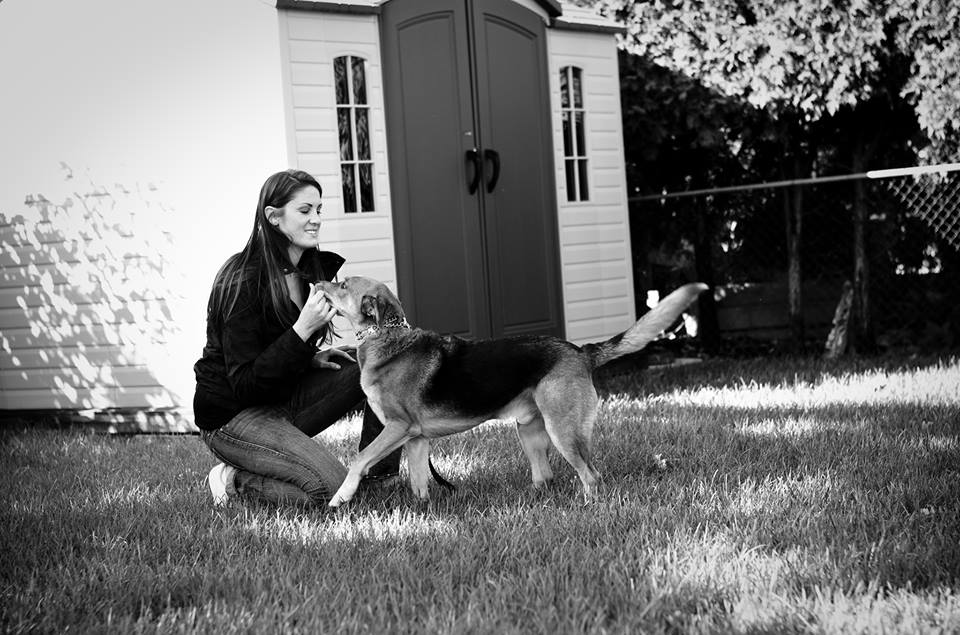
Who would not want to have a happy dog?
We love our dogs like family, but do we always know what truly makes them happy? Many people believe love and affection are all a dog needs. While affection is important, it should not be the only thing we give them.
A truly happy dog needs balance. Dogs need structure, exercise, training, rest, health, and purpose. When those needs are met, affection becomes even more meaningful.
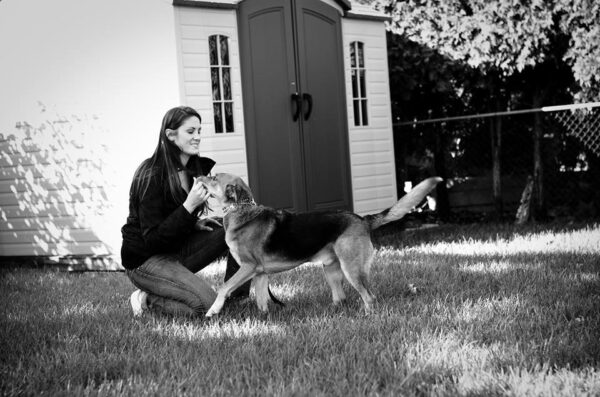
10 Ingredients to a Happy Dog
Take an honest look at your current routine and see where each of these points falls. If you make a few adjustments and rearrange your priorities, you may see significant changes in your dog’s behaviour and in your relationship.
1. A Good Quality Diet
What your dog eats matters. A healthy, balanced diet can support your dog’s energy, coat, digestion, focus, and overall well-being.
Dogs learn and behave better when they feel their best, so nutrition should be part of the bigger picture when thinking about behaviour and training.
2. Playtime
Play is important for bonding, confidence, and enrichment. Structured play can also be used as part of training.
Games like fetch, tug, or controlled toy play can help your dog burn energy while also practicing impulse control, listening, and engagement.
3. Exercise
Dogs need regular physical exercise to stay healthy and fulfilled. For most dogs, daily walks are a basic need, not a luxury.
A dog who does not get enough exercise may become restless, pushy, demanding, or difficult to manage at home.
4. Quiet Time and Down Time
A happy dog also needs to know how to relax.
Some dogs get plenty of exercise but still struggle to settle. Teaching calm behaviour, crate time, place command, and structured down time can help create balance.
5. Socialization
Socialization does not mean letting your dog meet every person or dog they see. Good socialization means helping your dog experience the world in a calm, controlled, and positive way.
Dogs should learn how to be neutral around people, dogs, sounds, places, and distractions.
Book a Consultation
6. Give Your Dog a Job
Dogs are happier when they have purpose. A job can be as simple as working for meals, practicing obedience, walking politely, holding place, or learning scent work.
When dogs have something productive to do, they are less likely to create their own unwanted jobs, such as barking, digging, chewing, or demanding attention.
7. Rest and Sleep
Rest is just as important as exercise. Dogs need enough sleep to recover, process learning, and remain balanced.
Overtired dogs can become cranky, mouthy, hyper, or harder to train, especially puppies and young dogs.
8. Training
Training gives your dog clarity. It teaches them what is expected and helps build better communication between dog and owner.
Training can help with obedience, manners, leash walking, impulse control, recall, confidence, and behaviour concerns.
If you need help choosing the right training option, explore our dog training programs.
9. Maintaining Good Health
Your dog’s physical health can affect behaviour. Pain, discomfort, allergies, digestive problems, or other health concerns may make training harder.
Regular veterinary care, grooming, dental care, weight management, and appropriate exercise all play a role in keeping your dog happy and healthy.
10. Love and Affection
Love and affection are important, but notice that they are listed last for a reason.
If affection becomes the only thing your dog receives, and structure, training, exercise, and boundaries are missing, behavioural issues can begin.
Give your dog affection, but make sure it is part of a balanced life that includes all the other ingredients too.
What Does a Happy Dog Really Need?
What humans view as “happy” is not always what dogs need to feel fulfilled.
A dog who receives only affection may still feel bored, under-exercised, anxious, or frustrated. A dog who receives structure, purpose, training, exercise, rest, and affection is more likely to become calm, confident, and well behaved.
Small Changes Can Make a Big Difference
You do not need to change everything overnight. Start with small changes.
Add one more walk. Practice a few minutes of training. Give your dog a job during mealtime. Build quiet time into the day. Improve your dog’s routine one step at a time.
Small changes made consistently can transform your dog’s behaviour and improve your relationship.
Need Help Creating a Happier, Better Balanced Dog?
If your dog is struggling with behaviour, manners, energy, focus, or confidence, structured training can help.
Our Private Training programs are a great option for dogs who need one-on-one support with behaviour, obedience, leash manners, or home structure.
If your dog would benefit from learning around other people and dogs, our Group Classes can help build focus and confidence in a structured environment.
For dogs who need fun physical and mental outlets, Agility and Scent Detection can be excellent activities.
If your dog needs more structure, routine, and activity during the day, our Day Camp may also be a helpful option.
Book a Consultation
A happy dog needs more than love alone.
Diet, playtime, exercise, quiet time, socialization, purpose, rest, training, health, and affection all work together to create a more balanced dog.
Make small changes today and continue building better habits each day. Your dog will thank you for it.
Contact us today if you would like help creating a better training and lifestyle plan for your dog.
Happy Training!
Katherine
FAQ:
What makes a dog happy?
A happy dog needs a balanced life that includes good food, exercise, play, training, rest, health care, socialization, purpose, and affection.
Is love enough to make a dog happy?
Love is important, but it is not enough on its own. Dogs also need structure, boundaries, exercise, training, and mental stimulation.
Why does my dog need a job?
Dogs benefit from having purpose. A job can include obedience, working for meals, place command, scent work, structured play, or learning new skills.
Can lack of exercise cause behaviour problems?
Yes. Dogs who do not get enough exercise or mental stimulation may become restless, demanding, destructive, or difficult to manage.
Can training help my dog become happier?
Yes. Training gives dogs clarity, structure, communication, and confidence. A well-trained dog is often easier to live with and more fulfilled.
Jan 19, 2016 | Puppy Training
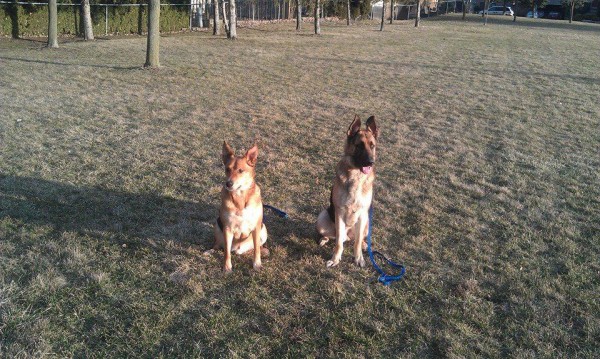
When training your puppy or dog, the tool you use should be efficient and effective. Just as importantly, the way you use that tool should be clear, consistent, and humane.
There are many different dog training collars and leash tools available, and each one provides information to the dog in a different way. The right tool can make training clearer, while the wrong tool can make communication confusing or ineffective.
Dog Training Collars: Choosing the Right One
This post is not about discussing one specific collar or tool. In training, different dogs may need different tools depending on their behaviour, size, sensitivity, goals, and the handler’s skill level.
At The Crunchy Canine, we may use a variety of training collars depending on the dog and the training plan. The point is not that one tool is perfect for every dog. The point is that the tool should help you communicate clearly and fairly.
Training Tools Should Provide Information
When training your dog, your leash and training collar should help provide information. They should help your dog understand what is being asked and how to respond.
How clear that information is depends on several things:
- The training tool being used
- The handler’s timing
- The handler’s skill level
- The dog’s understanding of the training
- The consistency of the communication
A training collar is not a magic solution. It only works well when it is introduced properly and used with good timing, clear expectations, and fair handling.
The Right Tool Can Make Training More Effective
Think about building a wooden box.
You could try to build it with a dull hand saw, some nails, and a rock. You may eventually get the job done, but it would likely be slow, messy, and frustrating.
Now imagine using a table saw and a drill. You can cut straighter lines, work more efficiently, and build something cleaner and stronger.
Dog training tools can be viewed the same way. The wrong tool may still get some results, but it may not be efficient, clear, or effective. The right tool, used properly, can make the training process smoother for both the dog and the owner.
Book a Consultation
The Tool Is Only Part of the Equation
Some people can train a dog with very little equipment because they have years of experience, excellent timing, and strong handling skills. However, most dog owners benefit from using tools that help make communication clearer.
That does not mean a tool should be used harshly or carelessly. It means the tool should support the training, not replace good training.
Tools Can Be Used Correctly or Incorrectly
Some training collars may look intimidating to people who are unfamiliar with them. A common example is the prong collar.
Like many tools, a training collar can be used incorrectly or even with the intent to cause pain. But that comes down to the person holding the leash, not the tool itself.
A table saw and drill can also be dangerous if used incorrectly. But when used properly, they help build something strong, useful, and beautiful.
The same idea applies to dog training collars. When used properly, fairly, and humanely, the right tool can help create clearer communication and better training results.
Choosing the Right Dog Training Collar
The right training collar depends on the dog in front of you and the training goals you are working toward.
Before choosing a tool, consider:
- Your dog’s size and strength
- Your dog’s temperament and sensitivity
- Your dog’s current training level
- The behaviour you are trying to improve
- Your own handling skills
- Whether you have proper guidance on how to use the tool
If you are unsure what tool is appropriate for your dog, it is best to work with a knowledgeable trainer who can show you how to use it clearly and safely.
When Your Current Tool Is Not Working
If the tool you are using is giving you frustrating, unclear, or messy results, it may be time to reconsider your approach.
Sometimes the issue is the tool. Sometimes the issue is timing, consistency, or the training plan. Often, it is a combination of all three.
The goal should always be clear communication, better understanding, and humane training.
Need Help Choosing the Right Training Tool?
If you are struggling with leash manners, pulling, reactivity, obedience, or general behaviour, structured training can help you choose the right tool and learn how to use it properly.
Our dog training programs can help you find the right training option for your dog’s needs.
For dogs who need one-on-one support with leash skills, behaviour concerns, impulse control, or training tools, our Private Training programs may be the best fit.
If your dog is ready to learn around other dogs and people in a structured environment, our Group Classes can help improve focus and obedience around distractions.
For dogs who need healthy outlets for energy and confidence, Agility, Scent Detection, or structured Day Camp may also be helpful options.
Book a Consultation
Dog training collars are tools. They are not good or bad on their own. What matters is how they are chosen, introduced, and used.
The right tool, used clearly and humanely, can help you communicate more effectively with your dog. The wrong tool, or the right tool used poorly, can create confusion and frustration.
If your current training tool is giving you dull-saw-and-rock results, it may be time to get professional help and find a clearer, more effective approach.
Contact us today if you would like help choosing the right training plan and tools for your dog.
Happy Training!
Katherine
FAQ:
What is the best dog training collar?
The best dog training collar depends on the dog, the behaviour being trained, the handler’s skill level, and the training goals. There is no single tool that is right for every dog.
Are dog training collars humane?
Dog training collars can be humane when they are chosen appropriately, introduced properly, and used clearly and fairly. Any tool can be misused, so proper guidance matters.
Can a training collar fix pulling?
A training collar may help provide clearer communication, but it does not replace training. Dogs still need to be taught leash manners, focus, and how to respond to pressure or guidance.
Should I use a training collar without professional help?
If you are unsure how to use a tool correctly, it is best to work with a qualified trainer. Proper timing, fit, and technique are important for safe and effective training.
Why does the right training tool matter?
The right tool can make communication clearer and training more efficient. The wrong tool may make training harder, slower, or more confusing for both the dog and owner.