Jun 17, 2016 | Dog Training
Dogs are bred to work, but many pet dogs live unfulfilled lives because they are never given a real job.
We often do everything for our dogs without asking them to earn anything. Just like people who are handed everything, dogs who are not given structure or purpose can become pushy, entitled, demanding, or poorly behaved.
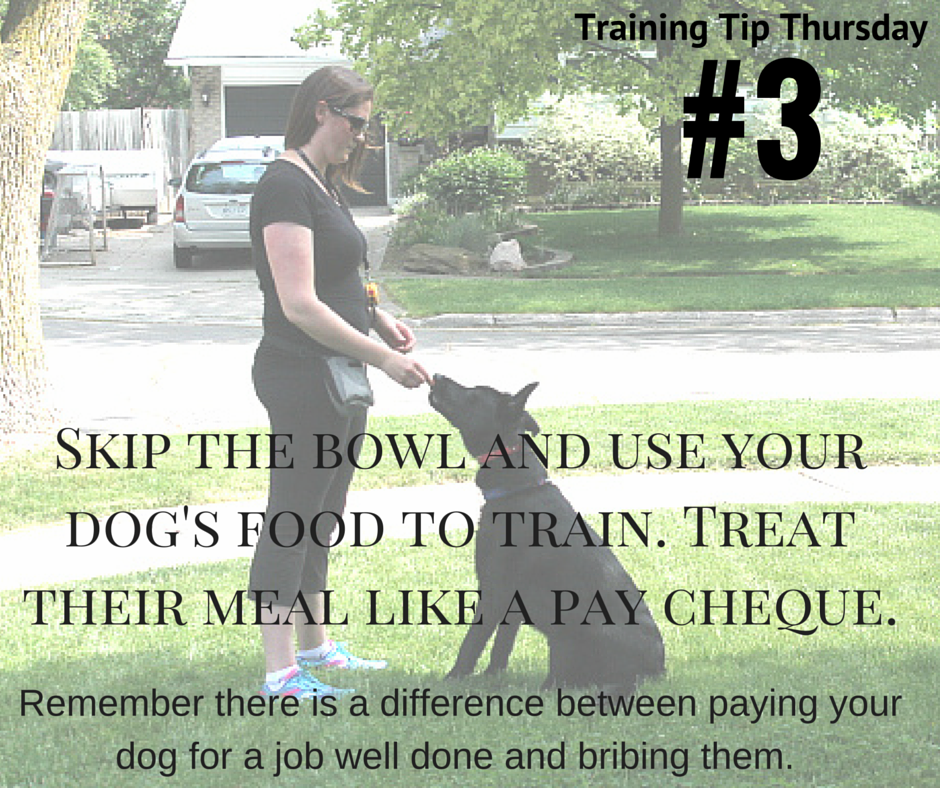
One simple way to give your dog a job is to use food for dog training. Instead of giving your dog their meal for free in a bowl, you can use that food like a paycheque.
Use Food Like a Paycheque for Dog Training
Your dog does not need extra treats to benefit from food training. You can use their regular meal to reward good choices, build obedience, and create more structure throughout the day.
Your dog will still receive the same amount of food. The difference is that they now have the opportunity to work for it, think, focus, and earn their paycheque.
For many dogs, this small change can make a big difference in behaviour.
Why Dogs Benefit From Working for Their Meals
Dogs need more than food, water, and affection. They also need purpose, structure, and mental stimulation.
When you ask your dog to work for their food, you are giving them something productive to do. This can help reduce boredom, improve focus, and create better daily habits.
Using meals for training can also help dogs become more engaged with their owners because food becomes part of a structured routine instead of something that simply appears in a bowl.
Ways to Use Food for Training
There are many simple ways to use your dog’s food as a training tool.
You can use food for:
- Basic obedience
- Loose leash walking
- Recall practice
- Impulse control
- The place command
- Rewarding calm behaviour
- Focus around distractions
- Food toys, such as a Kong Wobbler
- Enrichment games, such as scattering kibble in the grass
These options allow your dog to use both their body and their brain.
Try the “Feeding the Chickens” Method
One easy way to make mealtime more enriching is the “Feeding the Chickens” method.
This simply means scattering your dog’s kibble through the grass and allowing them to search for it. This turns a basic meal into a sniffing and problem-solving activity.
For many dogs, using their nose is mentally tiring in a healthy way. It gives them a job and can help them feel more fulfilled.
Use Food for the Place Command
Food can also be very helpful when teaching the place command.
The place command teaches your dog to go to a specific spot, such as a dog bed or mat, and remain there calmly. You can use pieces of your dog’s meal to reward them for going to place, staying there, and relaxing.
This is a great way to build calmness, structure, and better manners inside the home.
Use Food During Walks
Your dog’s meal can also be used during walks to reward attention, polite leash behaviour, and good choices around distractions.
Instead of your dog pulling, scanning the environment, or ignoring you, food can help create more engagement and better communication.
If your dog struggles with leash manners, focus, or overexcitement outside, structured training can help. Our Private Training programs are a good option for dogs who need one-on-one support.
Get Rid of the Food Bowl for One Week
If you want to see how powerful this can be, try removing the food bowl for one full week.
Instead of feeding meals from the bowl, have your dog earn their food through training, walking, place work, food toys, or enrichment games.
By giving your dog purpose, you may find that they become happier, more focused, and better behaved.
Training Should Give Your Dog Purpose
Using food as a paycheque is not about withholding food or making life difficult for your dog. It is about giving your dog a productive job and making mealtime more meaningful.
When your dog has structure and purpose, they are often easier to live with and more willing to work with you.
If you would like help learning how to use food, structure, and obedience in your dog’s daily routine, explore our dog training programs.
For dogs who enjoy learning around other dogs and people, our Group Classes can help build focus and obedience in a structured setting.
If your dog needs more mental or physical outlets, activities like Agility, Scent Detection, or structured Day Camp may also be helpful options.
Book a Consultation
Watch: Using Food for Training
The video below shows an example of using food as part of training and structure.
Food can be a powerful training tool when it is used correctly.
Instead of using food as a bribe, use it like a paycheque. Ask your dog to work, think, focus, and earn their meals through good choices and useful behaviours.
Try it for at least one full week. Get rid of the food bowl and have your dog earn their paycheque. You may be surprised by how much your dog’s behaviour improves.
Contact us today if you would like help using food, structure, and training to improve your dog’s behaviour.
FAQ:
Should I use food for dog training?
Yes. Food can be a very useful training tool when it is used correctly. It can help reward good choices, build obedience, and give your dog a productive job.
What does it mean to use food like a paycheque?
Using food like a paycheque means your dog earns their regular meal through training, obedience, walks, place work, or enrichment instead of receiving it for free in a bowl.
Is using food for training the same as bribing my dog?
No. A bribe is shown before the dog listens. A reward or paycheque is given after the dog makes a good choice. The goal is to reinforce behaviour, not make your dog dependent on seeing food first.
Can I use my dog’s regular kibble for training?
Yes. Your dog’s regular kibble can be used for training, food toys, place work, leash walking, and enrichment games.
How long should I try removing the food bowl?
Try using your dog’s meals for training and enrichment for at least one full week. This gives you time to see how your dog responds to having a daily job.
Jun 8, 2016 | Dog Training
What you feed your dog matters.
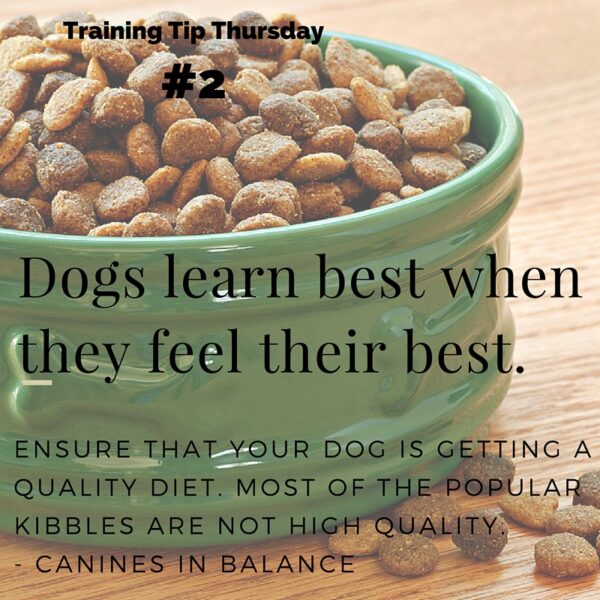
Before you begin training, it is important to make sure your dog is eating a healthy, balanced diet. Dogs learn best when they feel their best, and good nutrition can make training easier.
When we talk about dog food and training, we are not saying food will magically fix every behaviour problem. However, diet can affect your dog’s energy, focus, digestion, coat health, and overall well-being. A dog who feels better is often in a better position to learn.
Dog Training Tip #2: Food Matters
Training is not only about commands, leash skills, and behaviour work. Your dog’s daily health also matters.
Think about a child going to school after eating only fast food. They may struggle to focus, feel sluggish, or lack the energy they need to learn well. Dogs are no different. They need quality nutrition to thrive.
Why Diet Can Affect Dog Training
A healthy diet can support your dog’s ability to learn and participate in training. If your dog is uncomfortable, itchy, low-energy, or not feeling their best, training may be harder than it needs to be.
Good nutrition may help support:
- Better focus during training
- More balanced energy levels
- Healthier skin and coat
- Better digestion
- Improved overall well-being
- A more comfortable and motivated dog
Of course, every dog is different. If your dog has allergies, digestive issues, medical concerns, or sudden behaviour changes, it is always best to speak with your veterinarian.
Check the Quality of Your Dog’s Food
Many pet owners assume that big-name dog food brands are always the best choice, but it is worth doing your research.
We suggest reviewing your dog’s current food and learning more about the ingredients, quality, and rating. One helpful resource many dog owners use is Dog Food Advisor.
If your dog’s food ranks poorly, you may want to consider switching to a higher-quality option that better supports your dog’s health and training goals.
Choosing a Better Dog Food
There are many different ways to feed a dog, and the best choice can depend on your dog’s age, health, activity level, allergies, and individual needs.
Some dog owners choose higher-quality kibble. Others choose fresh food, gently cooked food, or a complete raw diet. The most important thing is to choose a food that is appropriate, balanced, and works well for your dog.
Some brands that are often discussed by dog owners looking for higher-quality food include Acana, Orijen, Nature’s Variety, and Carna4.
Raw Feeding and Dog Health
We feed our own dogs a complete raw diet and strongly suggest looking into it if you are interested in learning more.
Many raw-fed dog owners report benefits such as shinier coats, cleaner ears and eyes, less shedding, and fewer allergy-related concerns. However, raw feeding must be done properly and safely to ensure the dog receives a complete and balanced diet.
If you are considering raw feeding, do your research and speak with a knowledgeable professional or veterinarian so you can make an informed decision for your dog.
Food Is Only One Part of Training
Food matters, but it is only one piece of the puzzle.
Your dog also needs structure, exercise, clear communication, consistency, and proper training. A healthy diet can help your dog feel better, but training still requires time and effort.
If your dog struggles with behaviour, leash manners, puppy issues, or obedience, our dog training programs can help you choose the right path.
For dogs who need one-on-one support, our Private Training programs can help with behaviour, structure, and training goals at home.
If your dog is ready to learn around other dogs and people, our Group Classes can help build focus and obedience in a structured environment.
For dogs who need more physical and mental outlets, activities like Agility, Scent Detection, or structured Day Camp may also be helpful options.
Book a Consultation
Before you begin training, take a look at what your dog is eating.
A healthy, balanced diet can help your dog feel better, focus better, and participate more successfully in training. Food will not replace training, but it can support the process.
If you want better results, start with the whole dog: nutrition, exercise, structure, and consistent training.
Contact us today if you would like help building a training plan that supports your dog’s behaviour, health, and daily routine.
FAQ:
Does dog food affect training?
Yes, food can affect training because nutrition can influence energy, comfort, focus, digestion, and overall well-being. A dog who feels better may be more ready to learn.
Should I change my dog’s food before starting training?
If your dog is doing well on their current food, a change may not be necessary. However, if your dog has poor digestion, low energy, skin issues, or other concerns, it may be worth reviewing their diet and speaking with a professional.
What is the best food for dog training?
The best food depends on your dog’s individual needs. Choose a balanced, quality diet that supports your dog’s health, energy, and digestion.
Can I feed raw food to my dog?
Some owners choose a complete raw diet for their dogs. Raw feeding must be properly balanced and handled safely, so it is important to research carefully and speak with a knowledgeable professional.
Is food enough to fix dog behaviour problems?
No. Food can support health and training, but behaviour change still requires structure, exercise, consistency, and proper training.
Oct 30, 2015 | Dog Training
Does it feel like your dog ignores everything you say? You’re not alone. One of the most common frustrations dog owners experience is asking their dog to do something and getting no response at all.
The good news is that your dog is not being stubborn or trying to challenge you. In most cases, there is a simple explanation for why your dog isn’t listening.
Whether you have a young puppy or an older dog, understanding the reasons behind their behaviour can help you communicate more effectively and build a stronger relationship.
Here are the top three reasons your dog may not be listening to you—and what you can do about it.
1. Your Dog Doesn’t Understand What You’re Asking
Imagine travelling to a country where you don’t speak the language. You step off the plane, and someone immediately starts giving you instructions in a language you’ve never heard before.
You would probably look confused. If they repeated the same words louder or more often, you still wouldn’t understand.
That’s exactly how your dog feels when you ask for a behaviour they haven’t learned yet.
If you tell your dog to “sit” before teaching them what the word means, you’re essentially speaking a foreign language.
Dogs don’t automatically understand verbal commands. They learn through repetition, consistency, and clear communication.
When introducing a new cue:
- Teach the behaviour first using a lure, hand signal, or reward.
- Say the verbal cue only after your dog consistently performs the behaviour.
- Reward your dog immediately when they get it right.
- Keep training sessions short and positive.
Remember, your dog isn’t ignoring you—they may simply not understand what you’re asking.
2. Your Dog Doesn’t Think You Mean It
Have you ever asked your child to clean their room while they continued watching television?
You ask once. Nothing happens. You ask again. Still nothing.
If there are no consequences for ignoring the request, your child quickly learns that they don’t need to respond right away.
Dogs learn in much the same way.
If you ask your dog to sit and they walk away, but you don’t follow through, they learn that the cue is optional.
Consistency is one of the most important parts of dog training.
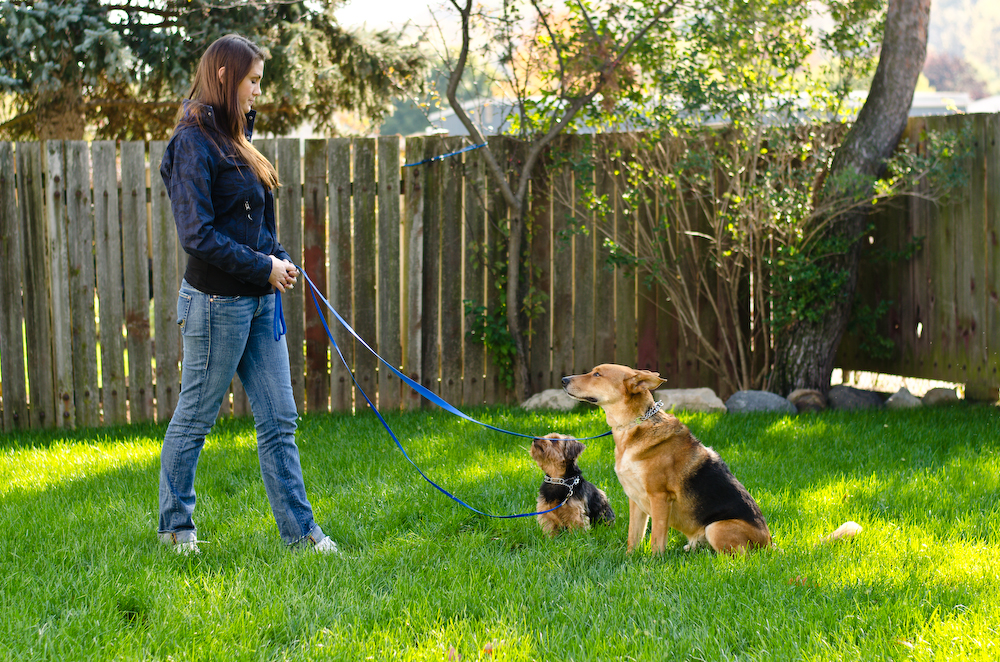
When you give a cue, make sure you’re in a position to help your dog succeed. If your dog tends to wander off or ignore commands, use a leash during training sessions so you can gently guide them into the correct behaviour.
This doesn’t mean forcing or punishing your dog. Instead, it means setting clear expectations and following through every time.
Here are a few ways to build consistency:
- Only give a cue once.
- Avoid repeating commands over and over.
- Practice in a low-distraction environment.
- Reward successful responses consistently.
- Use a leash when necessary to prevent your dog from disengaging.
When you say a cue, make sure you mean it. Over time, your dog will learn that listening pays off.
3. You’re Asking for Too Much Too Soon
Even when your dog understands a command and knows you expect them to respond, they may still struggle if the situation is too challenging.
This is where the three D’s of dog training come into play:
- Duration: How long your dog can perform a behaviour.
- Distance: How far away you are from your dog.
- Distraction: What’s happening around your dog.
For example, your dog may sit perfectly in your living room. However, asking for the same behaviour at a busy park surrounded by people, dogs, and exciting smells is a completely different challenge.
Successful training happens gradually.
Start by practising new skills in a quiet environment with minimal distractions. Once your dog is successful, slowly increase the difficulty by adjusting only one of the three D’s at a time.
You might:
- Increase the length of time your dog holds a sit.
- Take a few steps farther away before rewarding.
- Add mild distractions, such as practising outdoors.
If you increase duration, distance, and distraction all at once, your dog is more likely to fail.
Be patient and progress at your dog’s pace.
Book a Consultation
Practice Makes Progress
Training isn’t a one-time event. It’s an ongoing process that requires consistency, patience, and repetition.
The more opportunities your dog has to practise in different environments, the more reliable their responses will become.
If your dog isn’t listening, ask yourself these questions:
- Do they understand what I’m asking?
- Have I been consistent with my expectations?
- Am I asking for more than they can handle right now?
By addressing these three common issues, you’ll set your dog up for success and strengthen your communication.
With time, practice, and positive reinforcement, your dog can become a more attentive and responsive companion.
Happy training!
Katherine
The Crunchy Canine
Hamilton, Ontario