Jun 17, 2016 | Dog Training
Dogs are bred to work, but many pet dogs live unfulfilled lives because they are never given a real job.
We often do everything for our dogs without asking them to earn anything. Just like people who are handed everything, dogs who are not given structure or purpose can become pushy, entitled, demanding, or poorly behaved.
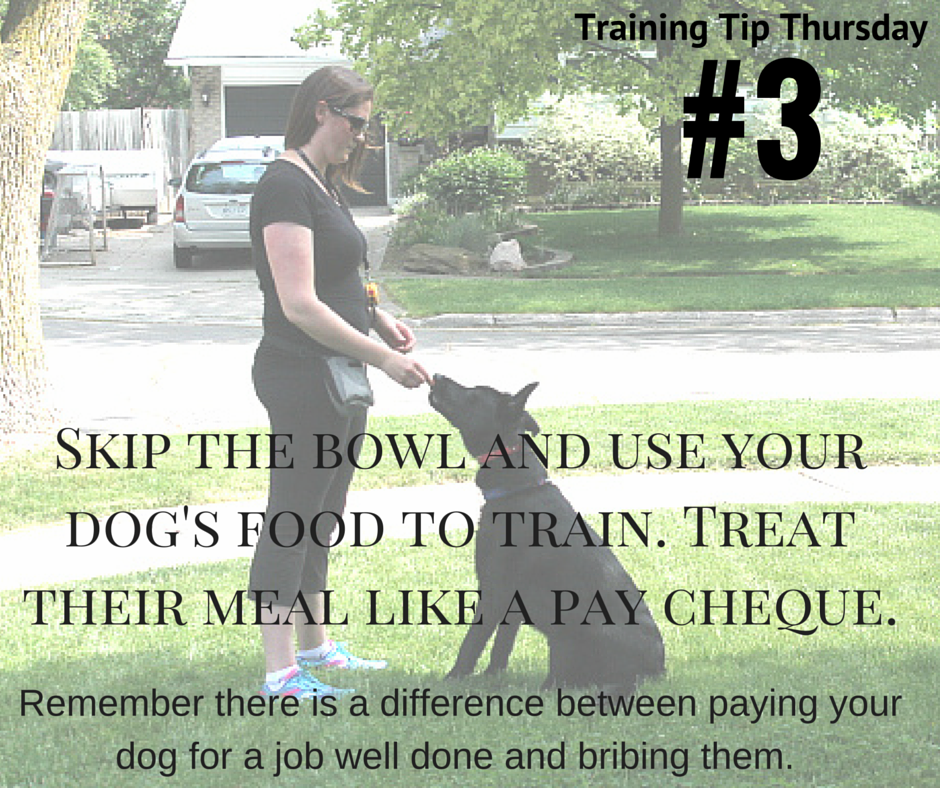
One simple way to give your dog a job is to use food for dog training. Instead of giving your dog their meal for free in a bowl, you can use that food like a paycheque.
Use Food Like a Paycheque for Dog Training
Your dog does not need extra treats to benefit from food training. You can use their regular meal to reward good choices, build obedience, and create more structure throughout the day.
Your dog will still receive the same amount of food. The difference is that they now have the opportunity to work for it, think, focus, and earn their paycheque.
For many dogs, this small change can make a big difference in behaviour.
Why Dogs Benefit From Working for Their Meals
Dogs need more than food, water, and affection. They also need purpose, structure, and mental stimulation.
When you ask your dog to work for their food, you are giving them something productive to do. This can help reduce boredom, improve focus, and create better daily habits.
Using meals for training can also help dogs become more engaged with their owners because food becomes part of a structured routine instead of something that simply appears in a bowl.
Ways to Use Food for Training
There are many simple ways to use your dog’s food as a training tool.
You can use food for:
- Basic obedience
- Loose leash walking
- Recall practice
- Impulse control
- The place command
- Rewarding calm behaviour
- Focus around distractions
- Food toys, such as a Kong Wobbler
- Enrichment games, such as scattering kibble in the grass
These options allow your dog to use both their body and their brain.
Try the “Feeding the Chickens” Method
One easy way to make mealtime more enriching is the “Feeding the Chickens” method.
This simply means scattering your dog’s kibble through the grass and allowing them to search for it. This turns a basic meal into a sniffing and problem-solving activity.
For many dogs, using their nose is mentally tiring in a healthy way. It gives them a job and can help them feel more fulfilled.
Use Food for the Place Command
Food can also be very helpful when teaching the place command.
The place command teaches your dog to go to a specific spot, such as a dog bed or mat, and remain there calmly. You can use pieces of your dog’s meal to reward them for going to place, staying there, and relaxing.
This is a great way to build calmness, structure, and better manners inside the home.
Use Food During Walks
Your dog’s meal can also be used during walks to reward attention, polite leash behaviour, and good choices around distractions.
Instead of your dog pulling, scanning the environment, or ignoring you, food can help create more engagement and better communication.
If your dog struggles with leash manners, focus, or overexcitement outside, structured training can help. Our Private Training programs are a good option for dogs who need one-on-one support.
Get Rid of the Food Bowl for One Week
If you want to see how powerful this can be, try removing the food bowl for one full week.
Instead of feeding meals from the bowl, have your dog earn their food through training, walking, place work, food toys, or enrichment games.
By giving your dog purpose, you may find that they become happier, more focused, and better behaved.
Training Should Give Your Dog Purpose
Using food as a paycheque is not about withholding food or making life difficult for your dog. It is about giving your dog a productive job and making mealtime more meaningful.
When your dog has structure and purpose, they are often easier to live with and more willing to work with you.
If you would like help learning how to use food, structure, and obedience in your dog’s daily routine, explore our dog training programs.
For dogs who enjoy learning around other dogs and people, our Group Classes can help build focus and obedience in a structured setting.
If your dog needs more mental or physical outlets, activities like Agility, Scent Detection, or structured Day Camp may also be helpful options.
Book a Consultation
Watch: Using Food for Training
The video below shows an example of using food as part of training and structure.
Food can be a powerful training tool when it is used correctly.
Instead of using food as a bribe, use it like a paycheque. Ask your dog to work, think, focus, and earn their meals through good choices and useful behaviours.
Try it for at least one full week. Get rid of the food bowl and have your dog earn their paycheque. You may be surprised by how much your dog’s behaviour improves.
Contact us today if you would like help using food, structure, and training to improve your dog’s behaviour.
FAQ:
Should I use food for dog training?
Yes. Food can be a very useful training tool when it is used correctly. It can help reward good choices, build obedience, and give your dog a productive job.
What does it mean to use food like a paycheque?
Using food like a paycheque means your dog earns their regular meal through training, obedience, walks, place work, or enrichment instead of receiving it for free in a bowl.
Is using food for training the same as bribing my dog?
No. A bribe is shown before the dog listens. A reward or paycheque is given after the dog makes a good choice. The goal is to reinforce behaviour, not make your dog dependent on seeing food first.
Can I use my dog’s regular kibble for training?
Yes. Your dog’s regular kibble can be used for training, food toys, place work, leash walking, and enrichment games.
How long should I try removing the food bowl?
Try using your dog’s meals for training and enrichment for at least one full week. This gives you time to see how your dog responds to having a daily job.
Jun 15, 2016 | Puppy Training
We have all been there: walking our dog, minding our own business, when suddenly an off-leash dog comes running straight toward us.
Somewhere in the distance, the owner calls out, “Don’t worry, he’s friendly!”
But here is the problem: you do not know that dog. Your dog does not know that dog. And even if the other dog is friendly, that does not mean the interaction is safe, polite, or appropriate.
 What to Do If an Off-Leash Dog Runs Up to Your Dog
If an off-leash dog runs up to your dog while you are walking, your job is to advocate for your dog and prevent an unsafe face-to-face interaction whenever possible.
Too often, people allow the rushing dog to approach and simply hope for the best. However, hoping for the best is not a training plan, and it is not always safe.
Why Off-Leash Dogs Running Up Can Be a Problem
A dog running directly toward another dog can be very rude in dog language. Even if the dog is social, the approach may be too intense, too fast, or too stressful for the dog on leash.
Leashed dogs can also feel trapped. They may not have the freedom to move away naturally, which can create tension, fear, frustration, or defensive behaviour.
This is why on-leash walks are not the best place for random dog-to-dog socialization.
What Are Your Options?
When an off-leash dog runs toward you and your dog, many people instinctively choose one of these options:
- Allow the dog to rush up and hope everything goes well
- Pick up their dog if the dog is small enough
- Run away and hope the dog loses interest
- Advocate for their dog and prevent the strange dog from getting face to face with them
In most situations, the safest choice is to advocate for your dog.
Advocate for Your Dog
As your dog’s person, you need to protect their space.
If you do not know the dog approaching, assume that the interaction may not be safe, even if the owner says the dog is friendly. Your responsibility is to your dog, not to the feelings of the other owner.
The other person may be offended. That can happen. But your priority should be preventing a stressful or dangerous situation before it turns into a dog fight.
How to Create Space From an Approaching Dog
If an off-leash dog is rushing toward you, you may need to create space quickly and clearly.
Depending on the situation, you can:
- Step in front of your dog and body block
- Use a firm, loud voice such as “Stop” or “Get back”
- Keep your dog behind you and move away calmly if possible
- Use an umbrella, walking stick, or pet deterrent to create distance
- Avoid letting the dogs meet face to face if you are unsure
The goal is not to hurt the other dog. The goal is to interrupt the approach and prevent an unsafe interaction.
Book a Consultation
Do Not Feel Guilty for Protecting Your Dog
Many people feel rude or embarrassed when they have to speak up. But allowing a strange dog to rush into your dog’s space can create a stressful situation very quickly.
If your dog is nervous, reactive, recovering from an injury, elderly, in training, or simply does not enjoy rude greetings, you have every right to create distance.
Even friendly dogs can create problems when they rush up to another dog on leash.
On-Leash Walks Are Not the Place for Random Socialization
If you want to socialize your dog, do it in a safe, controlled way with dogs you know and trust.
Random on-leash greetings with unknown dogs are not necessary and can sometimes create bad experiences. A calm walk should be about movement, structure, and connection with your dog.
If your dog struggles with leash manners, nervousness, reactivity, or overexcitement around other dogs, our Private Training programs can help build a safer and more structured plan.
A Message to Owners of Off-Leash Dogs
If you allow your dog to run up to other dogs, please stop.
It is rude, unsafe, and it puts the other person and their dog in a stressful situation. Not every dog wants to meet your dog. Not every dog is comfortable with a strange dog rushing toward them.
Being a good neighbour means keeping your dog under control and leashed where required.
Training Help for Safer Walks
If walks feel stressful because of pulling, reactivity, off-leash dogs, or poor focus, structured training can help.
Our dog training programs can help you choose the right training option for your dog’s needs.
For one-on-one help with leash manners, reactivity, confidence, or advocating for your dog in real-world situations, our Private Training programs may be the best fit.
If your dog is ready to learn around other people and dogs in a structured environment, our Group Classes can help build focus and obedience around distractions.
For dogs who need healthy mental and physical outlets, activities like Agility and Scent Detection can also be great options.
For dogs who need structured activity during the day, our Day Camp may provide helpful routine, enrichment, and supervised activity.
Book a Consultation
If an off-leash dog runs up to your dog, do not feel pressured to allow the interaction.
Advocate for your dog, create space, and prevent face-to-face greetings with unknown dogs when you are unsure. It is always better to prevent a bad situation than to deal with the consequences afterward.
And if you are the owner of the off-leash dog, please be considerate. Leash your dog and respect the space of other dogs and owners.
Contact us today if you need help with safer walks, leash manners, reactivity, or building your dog’s confidence around distractions.
FAQ:
What should I do if an off-leash dog runs up to my dog?
Step in front of your dog, create space, use a firm voice, and prevent the unknown dog from rushing face to face with your dog. Your goal is to protect your dog and avoid an unsafe interaction.
Is it okay if the owner says their dog is friendly?
Even if the owner says their dog is friendly, you still do not know that dog. Friendly does not always mean polite, safe, or appropriate for your dog.
Should I let my dog meet dogs while on leash?
Random on-leash greetings are not always a good idea. Leashed dogs can feel trapped, and face-to-face greetings can create tension. Controlled socialization with known dogs is usually a better option.
Can training help my dog stay calm around off-leash dogs?
Yes. Training can help improve leash manners, focus, confidence, and your ability to guide your dog through stressful situations.
Why is it rude to let a dog run up to another dog?
It puts pressure on the other dog and owner. Not every dog wants to meet, and some dogs may be nervous, reactive, injured, elderly, or in training.
“`
Jun 9, 2016 | TESTIMONIALS

Lisa and Matt contacted us to help with their young and energetic working line German Shepherd.With two young kids in the house, a senior Chocolate Lab, and busy lifestyle they needed some extra help getting Bear trained so they could enjoy him rather than be frustrated with him. They signed Bear up for our 8 week Freedom From the Leash program to get him trained and able to be off leash. Bear is a lovely young dog who simply didn’t know how to calm down. You can see in the below video the stages he went through to learn the art of “calm on command” by just relaxing on place. Many young and high energy breeds never learn how to “turn off” that energy and their owners think they need more exercise. While exercise is ABSOLUTELY important, some dogs even with all the exercise in the world still don’t know how to relax. So we taught Bear how to relax, as well as taught him to walk nicely on leash and gave him new found freedom by training him to be off leash so he can run and burn some of that energy off!
Bear learning the art of being calm
Bear learning to walk nicely on leash
Bear off leash
“Katherine is hands down the best dog trainer we have ever met and we have met many over the years. She loves dogs and they love her! She transformed our crazy, strong willed german shepherd puppy into an amazing family dog we can finally enjoy! If you want the best, you need Katherine! She is wonderful to work with and goes above and beyond to help you succeed. I would give 10 stars if I could.” – Lisa (Bear’s owner)
If you need help with your young energetic dog, we’d love to help!
Jun 8, 2016 | Dog Training
What you feed your dog matters.
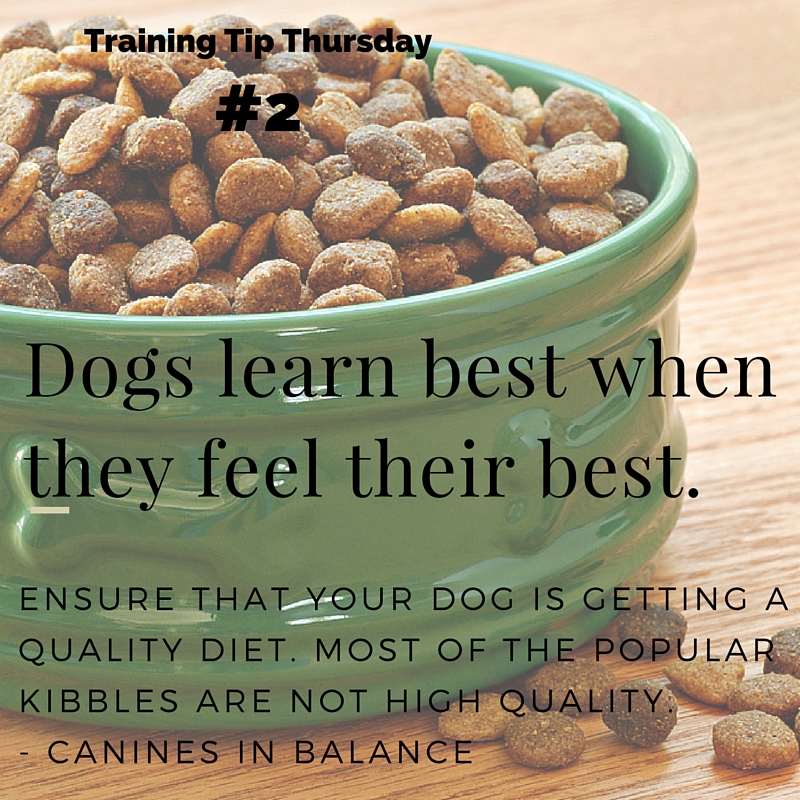
Before you begin training, it is important to make sure your dog is eating a healthy, balanced diet. Dogs learn best when they feel their best, and good nutrition can make training easier.
When we talk about dog food and training, we are not saying food will magically fix every behaviour problem. However, diet can affect your dog’s energy, focus, digestion, coat health, and overall well-being. A dog who feels better is often in a better position to learn.
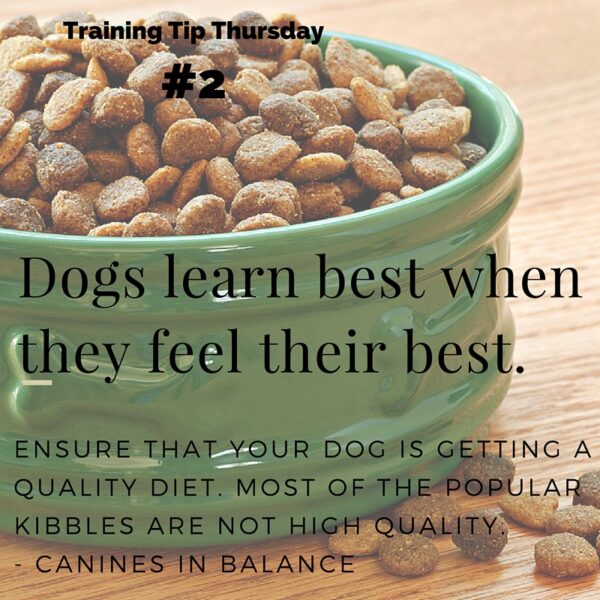
Dog Training Tip #2: Food Matters
Training is not only about commands, leash skills, and behaviour work. Your dog’s daily health also matters.
Think about a child going to school after eating only fast food. They may struggle to focus, feel sluggish, or lack the energy they need to learn well. Dogs are no different. They need quality nutrition to thrive.
Why Diet Can Affect Dog Training
A healthy diet can support your dog’s ability to learn and participate in training. If your dog is uncomfortable, itchy, low-energy, or not feeling their best, training may be harder than it needs to be.
Good nutrition may help support:
- Better focus during training
- More balanced energy levels
- Healthier skin and coat
- Better digestion
- Improved overall well-being
- A more comfortable and motivated dog
Of course, every dog is different. If your dog has allergies, digestive issues, medical concerns, or sudden behaviour changes, it is always best to speak with your veterinarian.
Check the Quality of Your Dog’s Food
Many pet owners assume that big-name dog food brands are always the best choice, but it is worth doing your research.
We suggest reviewing your dog’s current food and learning more about the ingredients, quality, and rating. One helpful resource many dog owners use is Dog Food Advisor.
If your dog’s food ranks poorly, you may want to consider switching to a higher-quality option that better supports your dog’s health and training goals.
Choosing a Better Dog Food
There are many different ways to feed a dog, and the best choice can depend on your dog’s age, health, activity level, allergies, and individual needs.
Some dog owners choose higher-quality kibble. Others choose fresh food, gently cooked food, or a complete raw diet. The most important thing is to choose a food that is appropriate, balanced, and works well for your dog.
Some brands that are often discussed by dog owners looking for higher-quality food include Acana, Orijen, Nature’s Variety, and Carna4.
Raw Feeding and Dog Health
We feed our own dogs a complete raw diet and strongly suggest looking into it if you are interested in learning more.
Many raw-fed dog owners report benefits such as shinier coats, cleaner ears and eyes, less shedding, and fewer allergy-related concerns. However, raw feeding must be done properly and safely to ensure the dog receives a complete and balanced diet.
If you are considering raw feeding, do your research and speak with a knowledgeable professional or veterinarian so you can make an informed decision for your dog.
Food Is Only One Part of Training
Food matters, but it is only one piece of the puzzle.
Your dog also needs structure, exercise, clear communication, consistency, and proper training. A healthy diet can help your dog feel better, but training still requires time and effort.
If your dog struggles with behaviour, leash manners, puppy issues, or obedience, our dog training programs can help you choose the right path.
For dogs who need one-on-one support, our Private Training programs can help with behaviour, structure, and training goals at home.
If your dog is ready to learn around other dogs and people, our Group Classes can help build focus and obedience in a structured environment.
For dogs who need more physical and mental outlets, activities like Agility, Scent Detection, or structured Day Camp may also be helpful options.
Book a Consultation
Before you begin training, take a look at what your dog is eating.
A healthy, balanced diet can help your dog feel better, focus better, and participate more successfully in training. Food will not replace training, but it can support the process.
If you want better results, start with the whole dog: nutrition, exercise, structure, and consistent training.
Contact us today if you would like help building a training plan that supports your dog’s behaviour, health, and daily routine.
FAQ:
Does dog food affect training?
Yes, food can affect training because nutrition can influence energy, comfort, focus, digestion, and overall well-being. A dog who feels better may be more ready to learn.
Should I change my dog’s food before starting training?
If your dog is doing well on their current food, a change may not be necessary. However, if your dog has poor digestion, low energy, skin issues, or other concerns, it may be worth reviewing their diet and speaking with a professional.
What is the best food for dog training?
The best food depends on your dog’s individual needs. Choose a balanced, quality diet that supports your dog’s health, energy, and digestion.
Can I feed raw food to my dog?
Some owners choose a complete raw diet for their dogs. Raw feeding must be properly balanced and handled safely, so it is important to research carefully and speak with a knowledgeable professional.
Is food enough to fix dog behaviour problems?
No. Food can support health and training, but behaviour change still requires structure, exercise, consistency, and proper training.
Jun 8, 2016 | Puppy Training
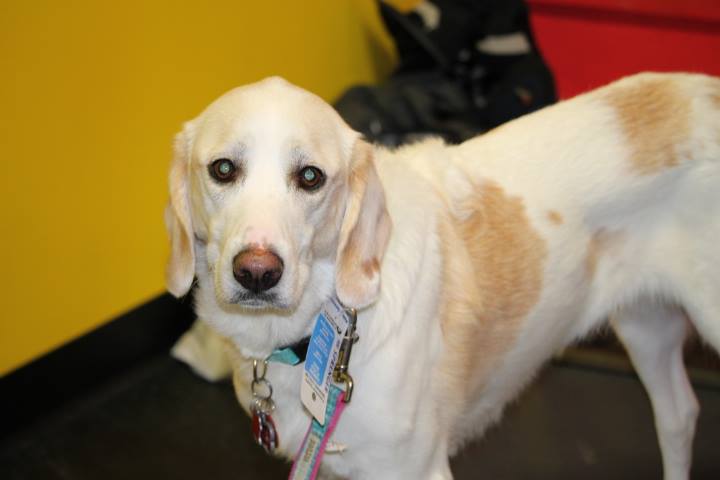
Fear is a common challenge for many dogs. Some dogs are nervous around strangers, while others become anxious around loud noises, unfamiliar places, other dogs, or new experiences. In some cases, dogs seem fearful of everyday life in general.
If you’re wondering how to help a fearful dog, it’s important to remember that fear is an emotional response—not a behaviour problem. Your dog isn’t trying to be difficult. They’re simply reacting to something they perceive as unsafe.
With patience, consistency, and the right training approach, you can help your dog feel more confident and secure.
Understanding Fear Responses in Dogs
When dogs feel afraid, their natural survival instincts take over. They typically respond in one of two ways: fight or flight.
Some fearful dogs try to increase distance from what scares them by barking, lunging, growling, or snapping. These behaviours are often described as “fear-based reactivity” because the dog is attempting to make the scary situation go away.
Other dogs choose to avoid the situation entirely by hiding, freezing, or trying to escape.
Although these responses look very different, both types of dogs share one thing in common: they lack confidence in the situation.
Understanding this can help you approach your dog’s behaviour with empathy rather than frustration.
Avoid Reinforcing Fearful Behaviour
When our dogs become scared, our natural instinct is often to comfort them by petting them, using a soothing voice, or repeatedly saying, “It’s okay.”
While offering calm support is important, excessive reassurance during moments of intense fear can sometimes increase your dog’s focus on the trigger.
Instead, aim to be a calm, confident presence.
Use a relaxed voice, maintain normal body language, and redirect your dog toward a simple behaviour they already know, such as making eye contact, touching your hand, or moving with you to a quieter space.
Your goal is not to ignore your dog’s emotions but to help them feel safe and supported without increasing their anxiety.
Respect Your Dog’s Threshold
One of the most important principles of fearful dog training is avoiding situations that overwhelm your dog.
Every dog has a threshold—the point at which a trigger becomes too intense for them to cope with calmly.
For example, if your dog reacts to other dogs during walks, pay attention to the distance at which they begin to bark, lunge, freeze, or show signs of stress.
If your dog reacts when another dog is 20 feet away, create more space and work at a distance where they can remain calm and focused.
Training below your dog’s threshold allows them to learn that they can feel safe around their triggers.
As your dog becomes more comfortable, gradually decrease the distance over time. Progress should always happen at your dog’s pace.
Remember:
- Never force your dog to approach something they fear.
- Give your dog enough space to stay calm.
- Watch for early signs of stress, such as lip licking, yawning, turning away, or a tucked tail.
- End training sessions before your dog becomes overwhelmed.
Book a Consultation
Build Confidence Through Training Games
Helping your dog become more confident in everyday life can make them more resilient when facing scary situations.
Instead of focusing only on the trigger itself, look for opportunities to build confidence in different ways.
Teaching new skills, solving simple challenges, and encouraging exploration can all help your dog feel more capable.
One effective confidence-building exercise is the “place” command. Encourage your dog to step onto different safe surfaces and objects, such as:
- A low platform or training cot
- A park bench
- A large rock
- A tree stump
Reward your dog for engaging with these new experiences at their own pace.
You can also try:
- Short training sessions with easy wins
- Food puzzles and enrichment activities
- Sniff walks in quiet environments
- Confidence-building obstacle courses
As your dog’s confidence grows, they’ll often become better equipped to handle situations that once felt overwhelming.
When to Seek Professional Help
If your dog’s fear leads to frequent barking, lunging, growling, snapping, or biting, it’s important to seek support from a qualified dog trainer or behaviour professional.
Early intervention can help prevent fearful behaviours from becoming more severe over time.
A professional can create a personalized training plan based on your dog’s specific triggers, body language, and comfort level.
Remember that progress with fearful dogs is rarely linear. Celebrate small successes and focus on steady improvement rather than quick fixes.
Helping Your Fearful Dog Thrive
Learning how to help a fearful dog starts with understanding their perspective.
By respecting your dog’s threshold, avoiding overwhelming situations, and building confidence through positive experiences, you can help them feel safer and more secure.
Patience, consistency, and compassion are the keys to long-term success.
Over time, your dog can learn that the world is a less scary place—and that they can rely on you for guidance and support.
Happy training!
Katherine
Canines In Balance
Hamilton, Ontario