
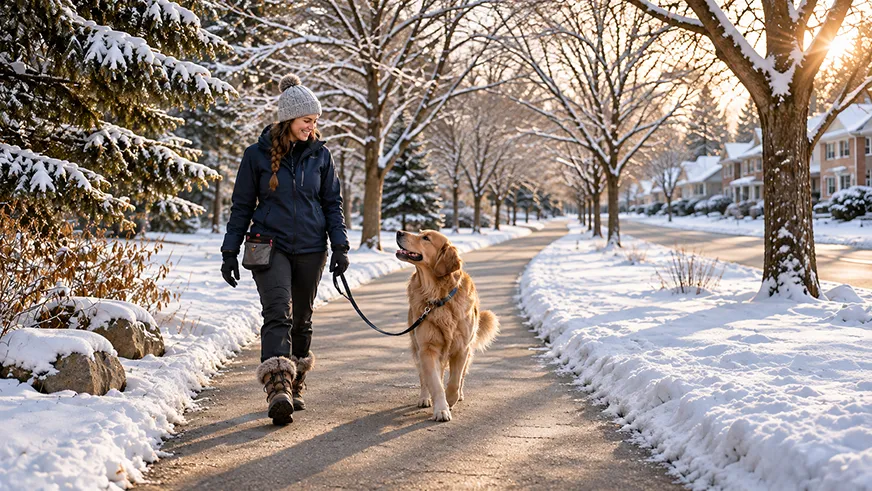
It starts with good intentions. You grab the leash, pull on your winter boots, and tell your dog it’s time for a walk. They spin in circles by the door, thrilled about the adventure ahead. Ten minutes later, you’re navigating a slippery sidewalk, your dog is pulling toward a snowbank, and one of you is wondering why you left the warm house.
If you’ve walked a dog through a Southern Ontario winter, you probably know this scene. Between icy patches, road salt, early sunsets and exciting new smells, a familiar route through Hamilton, Burlington or Simcoe can feel completely different in January.
But winter dog walking in Ontario doesn’t have to become a daily battle. With a little planning, a few training habits and the willingness to adjust expectations, cold-weather walks can still be something you and your dog enjoy.
Here’s how to make those winter outings safer, calmer and more rewarding—for both ends of the leash.
Why Does My Dog Seem Different on Winter Walks?
Your dog isn’t trying to make a difficult day harder. The world has changed.
Snowbanks alter familiar paths. Wind carries smells in new directions. Snowplows rumble past. People appear in bulky coats and hoods, and dogs you normally see across a park may suddenly be passing on a narrow cleared sidewalk.
For some dogs, this is thrilling. For others, it can feel overwhelming. Either way, the attention and self-control that looked so good in your living room may not transfer automatically to a cold, busy street.
We wrote about this exact challenge in our article why dogs listen at home but not outside. Training needs to travel with your dog, one manageable environment at a time.
A helpful change in perspective: Instead of judging the whole walk by whether your dog performed perfectly, ask whether you created a few opportunities for success. Did your dog check in with you once without being asked? Could they walk past a driveway on a loose leash? Did you notice when things were becoming too difficult and give them more space? Those are meaningful wins.
Before You Go: Five Winter Checks That Matter
Check the conditions, not just the temperature
A windy, wet day can be harder on your dog than a dry, crisp one. Look at the wind chill, precipitation, ice and visibility before deciding how far to go. Your dog’s size, coat, age, health and tolerance for cold matter too. Puppies, seniors and short-coated dogs may need extra protection or shorter outings.
There isn’t one universal temperature at which every dog must stop walking. Pay attention to your individual dog. If they’re shivering, repeatedly lifting their paws, slowing down, hunching up or trying to return home, head inside and get them warm. The Ontario SPCA’s winter walking guidance explains these warning signs and other cold-weather precautions.
Protect those paws
Road salt, ice-melting chemicals, packed snow and ice can make walks uncomfortable. Properly fitted dog boots can help, but many dogs need time to get used to them. Start indoors with a short, cheerful practice session rather than introducing boots for the first time when you’re already late for a walk.
After each outing, wipe or rinse paws with lukewarm water, carefully dry between the toes, and check for cracks or irritation. The Ontario SPCA’s paw-care tips offer further guidance on protecting feet in winter.
Make visibility part of your routine
In Ontario, an after-work dog walk can easily happen in darkness. Wear something reflective, add a light to your dog’s harness or collar, and choose routes with safe footing. A small flashlight is useful for spotting icy patches and sidewalk debris. Stay alert around driveways and snowbanks that may block a driver’s view.
Choose the right equipment
A properly fitted collar or harness and a comfortable, secure leash are more important than complicated gear. Inspect clips for wear and check that the fit still works over any winter clothing. Avoid retractable leashes on slippery or crowded sidewalks, where sudden movement is harder to manage.
Plan a shorter route with an easy exit
You don’t have to finish the usual neighbourhood loop just because that’s what you do in July. Choose a route with cleared sidewalks and a way to turn home quickly. On very cold or icy days, two short, comfortable outings may be better than one long, miserable walk.
How to Make Winter Dog Walks Calmer: Six Training Habits
Start training before you open the door
If your dog is already leaping, barking or dragging you toward the door, the walk is beginning at full speed. Before stepping outside, take a moment to get the leash on calmly. Reward a brief pause, a relaxed stance or a moment of attention. Then open the door when you can do so safely.
It won’t be perfect every morning. The goal is simply to begin with a little more clarity.
Reward the walk you want
When your dog walks near you and the leash softens, mark that moment with a warm “yes” and a small reward, if treats work for your dog. You can also reward with permission to sniff. Short repetitions on a quiet stretch of sidewalk are often more useful than trying to maintain a formal heel for an entire winter walk.
When pulling is the main struggle, The Crunchy Canine’s Master the Walk private training program focuses on leash handling, engagement and walking around distractions.
Make room for sniffing
Imagine your favourite neighbourhood suddenly covered in an entirely new collection of scent clues. That’s part of the winter experience for a dog.
Sniffing isn’t always a distraction to eliminate. It can be a satisfying part of a walk. Try alternating short, focused walking stretches with planned sniff breaks in safe areas. A simple cue such as “go sniff” can help make the difference clear.
For dogs who love following scent trails, this interest can also become a rewarding indoor activity. Our scent detection training explores ways to give a dog’s nose a purposeful job.
Give other dogs more space
Winter narrows the world. Snowbanks and icy shoulders may leave little room when another dog approaches. If your dog becomes tense, stares, barks or lunges, don’t insist on a close pass to prove a point. Cross safely, turn down a quieter street or increase the distance.
Some dogs are excited, some are worried and some are frustrated by the leash. Understanding what is driving the reaction helps you choose an appropriate plan. Our articles on leash reactivity and reactive versus aggressive behaviour are good places to start.
If your dog has a history of biting, intense fear or escalating reactions, work with a qualified professional on a plan suited to your dog rather than practising close encounters on crowded winter paths.
Practise one easy skill on every walk
Choose something small: responding to their name, checking in, waiting at a curb, or following you through a gentle change of direction. Start where the environment is quiet enough for success. Reward the response and move on.
One short, successful practice session is more valuable than repeating a cue ten times while your dog is distracted by a squirrel on the other side of the road.
Know when to call it a day
A good walk doesn’t need a mileage target. If the sidewalk becomes slippery, your dog’s paws are uncomfortable, or everyone is getting frustrated, head home. Safety matters more than finishing the route.
And if you’re dealing with persistent pulling or challenging behaviour, you don’t have to sort it out alone. Our private in-home training programs are designed around the situations owners face in their own homes and neighbourhoods.
What If It’s Too Cold or Icy for a Proper Walk?
Here’s something many Canadian dog owners need to hear in the middle of February: a shorter walk doesn’t mean you’ve let your dog down. Sometimes the smartest choice is to come inside and offer a different kind of activity.
A little mental work can be a wonderful addition to an adjusted exercise routine. Try one of these low-pressure options:
- Find it: Toss a few pieces of your dog’s regular food across a safe room or hide them in easy spots and let your dog search.
- Mini training sessions: Practise “place,” recall between two family members, or polite door greetings for three to five minutes.
- Food puzzles: Use a suitable puzzle feeder or a supervised enrichment toy, matched to your dog’s chewing habits.
- Hide-and-seek: Ask someone to hold your dog, hide nearby and call them for a fun recall game.
- Indoor scent games: Start with an easy treat search, then gradually build difficulty as your dog understands the game.
Choose activities that fit your dog’s health, age and mobility. They complement physical exercise rather than replacing all movement indefinitely. For another perspective on enrichment, read our article about why play matters for dogs.
A Simple 15-Minute Winter Walk Routine
For a dog who is comfortable outdoors and a day when conditions are safe, try this flexible example. The point is not to hit exact minutes—adjust the outing to your dog’s needs.
Minutes 0–2: Calm leash-up, a quick check of the weather, and a relaxed exit.
Minutes 2–5: Easy walking on a quiet, cleared stretch. Reward a few voluntary check-ins.
Minutes 5–9: Take a safe sniff break. Allow your dog to explore without pulling you onto icy ground.
Minutes 9–12: Practise a simple skill, such as a change of direction or responding to their name.
Minutes 12–15: Head home, avoiding unnecessary challenges. Wipe and inspect paws when you get inside.
If your dog is struggling, simplify the routine. A five-minute success on a calm street is a better training experience than a fifteen-minute argument on an icy sidewalk.
What Winter Walks Can Teach Us About Better Dog Training
Picture the end of a good winter outing. Your boots are damp, your dog has had a chance to sniff, and you make it home without a tug-of-war. Maybe they still pulled once when a rabbit darted across the road. Maybe you had to turn around when another dog appeared.
That’s okay. The progress wasn’t that every moment looked perfect. It was that you noticed what your dog could handle, helped them succeed and went home with a little more confidence in each other.
That’s what practical training is about: not an impressive performance in an empty room, but skills that make everyday life more enjoyable.
Frequently Asked Questions About Winter Dog Walking in Ontario
How cold is too cold to walk a dog in Ontario?
There is no single safe cutoff for every dog. Size, coat type, age, health, wind, wetness and time outdoors all matter. Watch for shivering, paw lifting, slowed movement or signs of discomfort, and shorten or skip the walk when conditions aren’t appropriate. Ask your veterinarian about your dog’s individual cold-weather risks.
Should dogs wear boots in Canadian winters?
Boots can help protect paws from salt, ice and harsh surfaces, especially for dogs with sensitive feet. A comfortable fit and gradual introduction are important. Even with boots, inspect and clean your dog’s paws after walking.
How can I stop my dog pulling on icy sidewalks?
Practise loose-leash walking on cleared, quiet surfaces first. Reward moments when the leash is relaxed, use short training sessions and avoid routes where sudden pulling could cause a fall. If pulling is ongoing or strong, individualized leash coaching can help.
Can I replace a winter walk with indoor enrichment?
On dangerously cold or icy days, it can make sense to shorten or skip a walk and offer safe indoor games, training and enrichment. Dogs still need appropriate physical activity, so plan a routine that fits their needs and the weather.
Where can I get dog walking or behaviour training in Southern Ontario?
The Crunchy Canine offers private dog training for owners in Hamilton, Burlington, Oakville, Norfolk County and surrounding communities, along with group classes in Simcoe. The best option depends on your dog’s behaviour and your goals.
Ready for Walks You Both Enjoy?
Whether your dog pulls toward every snowbank, struggles around other dogs or only listens when you’re back inside, training can help you build the skills that matter in everyday life—not just during class.
The Crunchy Canine works with dog owners across Hamilton, Halton, Haldimand and Norfolk County. Tell us what your walks look like, and we’ll help you explore the right next step.
Safety note: This article provides general training and winter-care information, not veterinary advice. Contact your veterinarian if your dog has cold-related symptoms, injury, persistent paw irritation or a medical condition affecting exercise.