Jun 3, 2016 | Puppy Training
Dog training should not feel like a chore. One of the best things you can do for your dog is simple: have fun with your dog.
Everything your dog does depends on you. You let them out of their crate in the morning. You feed them. You let them outside. Hopefully, you walk them, play with them, and give them opportunities to enjoy life with you.
You control your dog’s daily activities, resources, and environment. In many ways, you are your dog’s whole world.
Dog Training Tip #1: Have Fun With Your Dog
Your dog deserves to have fun with you. But having fun is not only about entertainment. It is also an important part of relationship building, exercise, training, and behaviour.
Dogs who get out and enjoy activities with their owners are often more well-rounded and easier to live with. They are more likely to be fulfilled, engaged, and connected to their people.
Why Fun Matters in Dog Training
Training is easier when your dog enjoys working with you. If your dog sees you as someone who provides guidance, structure, play, adventure, and rewards, they are more likely to want to engage with you.
Having fun together can help build:
- A stronger relationship
- Better focus
- More confidence
- Improved engagement
- Better obedience during real-life activities
- A healthier outlet for energy
Fun does not replace training, but it can make training more natural and enjoyable for both you and your dog.
Bored Dogs Often Create Their Own Fun
Dogs who are bored, under-exercised, or rarely given fun outlets may begin creating their own entertainment.
Unfortunately, that entertainment may show up as unwanted behaviours such as barking, chewing, digging, jumping, stealing items, pestering people, or running around the house with too much energy.
Many behaviour issues can be improved when dogs receive enough exercise, enrichment, structure, and enjoyable time with their owners.
Training Can Happen While You Have Fun
Fun activities are also great opportunities to practice training.
For example, you can practice leash manners during a walk, recall during a hike, impulse control before throwing a ball, or calm behaviour before starting a game of tug.
Training does not always have to happen in a formal session. Some of the best training happens during everyday activities your dog already enjoys.
Fun Activities You Can Do With Your Dog
Find something that both you and your dog enjoy doing together. The activity does not need to be complicated. It just needs to be safe, appropriate, and consistent.
Some fun ideas include:
- Going for a long walk
- Taking your dog on a hike
- Visiting the beach where dogs are allowed
- Playing fetch with rules
- Playing tug in a structured way
- Practicing obedience games
- Going for a bike ride if your dog is trained and physically ready
- Rollerblading with your dog if it is safe and your dog has the right training
- Trying a dog sport or activity
The goal is to get out, enjoy your dog, and build a stronger relationship through shared experiences.
Make Fun Part of Your Dog’s Daily Routine
If you make it a goal to get out and have fun with your dog every day, you will likely have a happier and more fulfilled dog.
This does not mean every day needs to be a big adventure. Some days it may be a long walk. Other days it may be a short training game, a structured play session, or a calm outing together.
Consistency matters. Your dog benefits from regular time with you.
Book a Consultation
Need Ideas for Training and Enrichment?
If you want to build a better relationship with your dog while also improving behaviour, structured training can help.
Our dog training programs can help you choose the right option for your dog’s needs and personality.
If your dog needs one-on-one help with behaviour, manners, leash walking, impulse control, or engagement, our Private Training programs may be the best fit.
For dogs who enjoy learning around other dogs and people, our Group Classes can help build focus, obedience, and confidence in a structured environment.
If your dog loves movement and active challenges, Agility can be a fun way to use their body and brain. For dogs who love to sniff and problem-solve, Scent Detection can be a great outlet.
For dogs who need structured activity during the day, our Day Camp can provide routine, enrichment, and supervised activity.
Book a Consultation
Your dog may not be your whole world, but you are certainly theirs.
Get out, have fun, and enjoy your dog. A dog who gets enough exercise, enrichment, training, and quality time with their owner is often happier, healthier, and better behaved.
Training should include structure, but it should also include joy. So find something you both enjoy and make fun part of your daily routine.
Contact us today if you would like help building a training plan that makes life with your dog more enjoyable.
FAQ:
Why is having fun with my dog important?
Having fun with your dog helps build your relationship, provides exercise and enrichment, improves engagement, and can make training more enjoyable.
Can fun activities help with dog behaviour?
Yes. Dogs who are bored or under-exercised may develop unwanted behaviours. Fun activities, training, and enrichment can help create a more fulfilled dog.
What are good activities to do with my dog?
Good activities include walks, hikes, beach trips, structured fetch, tug, obedience games, agility, scent work, and safe outdoor adventures.
Can I train my dog while playing?
Yes. Play can be a great training opportunity. You can practice impulse control, recall, leash manners, focus, and calm behaviour during fun activities.
What if my dog has too much energy?
If your dog has too much energy, they may need more exercise, mental stimulation, structure, and training. Private training, group classes, agility, scent detection, or day camp may help provide better outlets.
May 24, 2016 | Puppy Training
Bear is a 9-month-old German Shepherd Dog who is with us for a two-week board and train program. One of the goals of his training is to build reliable off-leash obedience and communication.
When done properly, off-leash dog training in Burlington, Ontario can give dogs more freedom while still keeping safety, structure, and communication in place.
Freedom From the Leash
Off-leash freedom does not happen by accident. It is built through training, consistency, clear communication, and practice around real-life distractions.
Bear is still early in his training, but by the second day, we were already able to drop the leash while working on his off-leash heel command.
Using Low-Level Remote Collar Training
We are using low-level remote collar training to teach Bear how to understand and respond to off-leash communication.
Remote collar training is often misunderstood. When used correctly, the collar is not used to hurt or scare the dog. It is used as a communication tool to give the dog clear information.
Bear is working on a level 3 out of 100. For comparison, the average human usually does not feel anything until around level 10 on the collar. This is why we refer to this as low-level remote collar training.
Remote Collar Training Is About Communication
The goal is not to correct Bear harshly. The goal is to communicate with him, motivate him, and help him understand what we are asking.
As you can see in the video, Bear is not in pain, and he is not upset. In fact, he is happy, engaged, and enjoying his new level of freedom.
Proper remote collar training should always be introduced carefully and fairly. The dog should understand the training, respond confidently, and remain comfortable throughout the process.
Why Off-Leash Reliability Matters
Many dog owners want their dog to have more freedom, but freedom must come with responsibility. A dog who is off leash needs to be able to listen, stay connected, return when called, and respond around distractions.
Book a Consultation
Off-leash training can help with:
- Recall and coming when called
- Off-leash heel work
- Focus around distractions
- Impulse control
- Better communication at a distance
- Safe freedom in appropriate environments
Is Off-Leash Training Right for Your Dog?
Off-leash training is not simply about removing the leash. It is about building enough obedience, confidence, and communication that your dog can safely handle more freedom.
Some dogs may need to begin with foundation obedience, leash manners, impulse control, or recall before moving into off-leash work.
Our dog training programs can help you choose the right path for your dog’s needs.
For dogs who need one-on-one support with recall, leash manners, behaviour concerns, or remote collar foundations, our Private Training programs may be the best fit.
If your dog is ready to work around other dogs and people in a structured setting, our Group Classes can help build better focus and obedience around distractions.
For active dogs who need healthy outlets, Agility and Scent Detection can also provide fun ways to use their body and brain.
For dogs who need structured activity during the day, our Day Camp may also be a helpful option.
Book a Consultation
Off-leash freedom can be a wonderful goal, but it must be built through responsible training.
Bear’s progress shows how clear communication, low-level remote collar training, and structured obedience can help a dog begin to understand off-leash expectations.
If you are interested in helping your dog become more reliable off leash, contact us today to learn more about our training options.
FAQ:
What is off-leash dog training?
Off-leash dog training teaches a dog to listen, respond, and stay connected without relying only on the leash. It often includes recall, heel work, impulse control, and focus around distractions.
Is remote collar training the same as shock collar training?
No. Responsible low-level remote collar training is used as a communication tool, not to hurt or scare the dog. The goal is clear information and better reliability.
Can remote collar training help with off-leash reliability?
Yes, when introduced correctly, remote collar training can help improve communication at a distance and support off-leash reliability.
Does every dog need remote collar training to be off leash?
Not every dog needs the same training tools. The right approach depends on the dog, the owner’s goals, the environment, and the dog’s current level of obedience.
Can private training help with off-leash goals?
Yes. Private training can help build the foundation needed for off-leash work, including recall, leash manners, impulse control, and remote collar communication if appropriate.
Mar 22, 2016 | Puppy Training
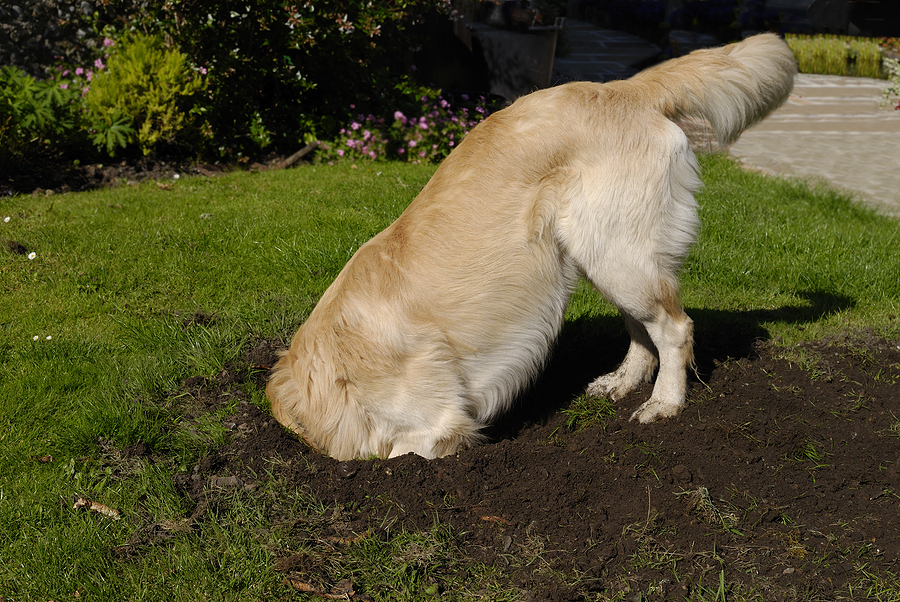
Is Your Dog Digging in the Yard?
Is your dog digging in the yard every chance they get? Do you feel like you cannot leave your dog outside for even two minutes without finding another fresh hole in the grass?
The good news is that dog digging can be improved with the right training plan. The bad news is that it is usually not a quick fix. Digging is often a symptom of a bigger issue, not the main problem itself.
For many dogs, digging is natural, enjoyable, and self-rewarding. Some breeds were even developed to dig, hunt, chase, or work independently. So before we try to stop the behaviour, we need to understand why it is happening.
Why Dogs Dig in the Yard
Dogs may dig for several reasons. Some are bored. Some have too much energy. Some are trying to escape. Others may be looking for a cool place to lie down, chasing smells, or simply entertaining themselves.
The mistake many dog owners make is thinking backyard time counts as exercise. It usually does not. In fact, the backyard is often where the digging problem starts.
If your dog is left outside with nothing structured to do, digging can quickly become their favourite activity.
1. Look at Your Dog’s Exercise Routine
The first question to ask is simple: how much proper exercise does your dog get every day?
Backyard time does not count as structured exercise. Dogs need walks, movement, mental stimulation, and interaction with their owner. A young, high-energy dog who spends most of the day inside, then gets placed in the yard alone, will often find their own way to burn energy.
That is where digging comes in.
Many dogs benefit from at least one long daily walk or two shorter walks, depending on age, breed, health, and energy level. Some dogs also need extra activities like fetch, tug, training games, scent work, or structured play.
If your dog is digging regularly, try increasing their daily exercise and mental stimulation first. Even a 25 percent increase in structured activity can make a noticeable difference for some dogs.
2. Give Your Dog a Job
Dogs need something to do. When we do not give them an appropriate job, they may create one themselves.
Instead of leaving your dog alone in the yard with no direction, give them a task or activity. This could include:
- A game of fetch
- A short obedience training session
- A safe puzzle toy
- A food-dispensing toy
- A supervised game of tug
- A designated digging area
A designated digging area can work well for dogs who truly love to dig. Choose one area of the yard, encourage digging there, and reward your dog for using that space instead of the lawn or garden.
Book a Consultation
3. Supervise Outdoor Time
If your dog has been practicing the digging habit for a while, you will need to manage the behaviour closely.
For the next couple of weeks, go outside with your dog instead of letting them out alone. You can use a leash if needed. The goal is to stop the digging before it becomes rewarding.
If your dog starts to dig, calmly interrupt the behaviour and redirect them to something appropriate. Ask for a simple command, start a game, or bring them back inside for a short reset.
Do not wait until your dog has already dug a large hole. By that point, the behaviour has already rewarded them.
4. Do Not Rely on Punishment After the Fact
Many owners discover the hole later and then try to correct the dog. Unfortunately, this usually does not work.
Your dog may not connect your correction with the digging that happened earlier. Instead, they may simply become confused or anxious. Training works better when you manage the situation, interrupt the behaviour in the moment, and reward better choices.
Prevention is much more effective than punishment.
5. Make the Yard Less Tempting
If your dog digs in the same spot repeatedly, there may be something interesting there. It could be a smell, soft soil, shade, a fence line, or even small animals moving underneath the ground.
You can try blocking access to favourite digging spots, filling holes properly, placing safe barriers around garden beds, or changing the layout of the area.
Some owners use deterrents, but they should be safe and humane. Avoid anything that could irritate your dog’s nose, eyes, paws, or skin. If you are unsure, speak with a professional trainer before using any deterrent in your yard.
6. Check for Escape Behaviour
If your dog is digging near the fence, the goal may be escape. This needs to be handled carefully.
Fence-line digging can happen because of boredom, separation stress, other animals, people walking by, or excitement outside the yard. In this case, supervision and environmental management are very important.
You may need to block the fence line, reduce visual triggers, increase structured exercise, and work on calm behaviour outdoors.
When to Get Professional Help
If your dog continues digging even after better exercise, supervision, enrichment, and management, it may be time to get help from a trainer.
A professional can look at the full picture and help identify the real reason behind the behaviour. Once the cause is understood, the training plan becomes much clearer.
Final Thoughts
Dog digging is frustrating, but it is also very common. Most dogs are not digging to be bad. They are usually bored, under-exercised, overstimulated, or simply doing something that feels natural and rewarding.
The best approach is to increase exercise, provide mental stimulation, supervise outdoor time, redirect the behaviour, and make the yard easier for your dog to succeed in.
If you need help with training your dog not to dig, contact us for a free evaluation.
Call (226) 641-6832 or email info@thecrunchycanine.ca.
Happy Training!
Katherine
Mar 13, 2016 | Puppy Training
Imagine taking a walk, minding your own business, and enjoying your day. Suddenly, someone runs straight toward you, shouting, getting into your personal space, and possibly even touching you.
How would that make you feel?
 You probably would not like it. You might even react in a way you normally would not, just to get that person to back off.
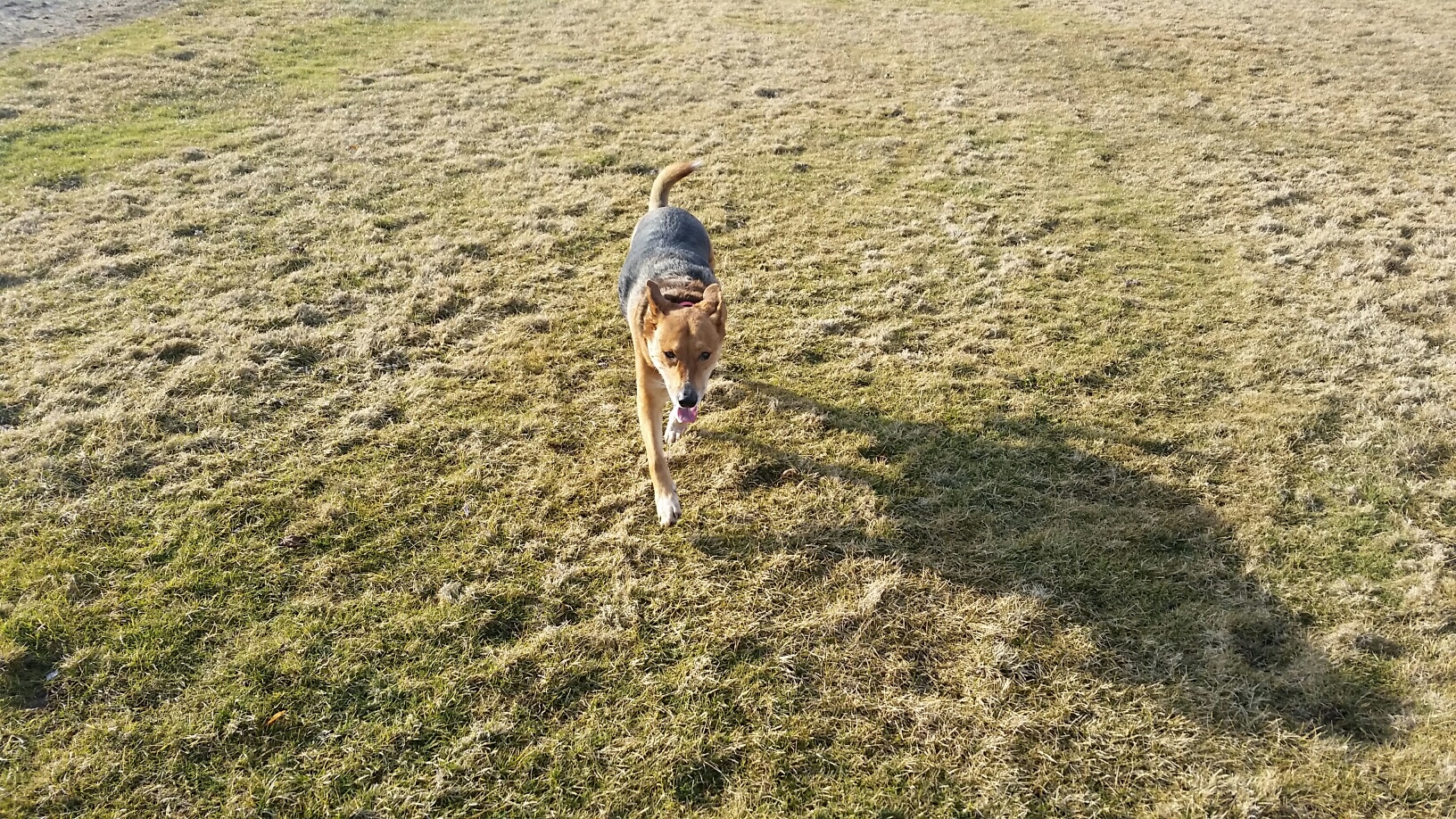
Now replace yourself with your dog, and replace that person with an off-leash dog. See where I am going with this?
Why Off-Leash Dogs Rushing Other Dogs Is a Problem
It would be nice to walk our dogs on leash through the neighbourhood without having to worry about being charged by off-leash dogs.
Unfortunately, many dog owners have experienced this. You are walking calmly with your dog, following the rules, and then a loose dog rushes toward you. Sometimes the dog is loose on a front lawn. Other times, the dog has been intentionally let off leash without having a reliable recall.
Either way, it is stressful, rude, and potentially dangerous.
Book a Consultation
Accidents Happen, But Responsibility Still Matters
Of course, accidents can happen. Dogs may accidentally slip out the front door or sneak through a gap in the fence that the owner did not know was there.
That is different from intentionally allowing an untrained dog to run loose and rush people or dogs who are walking on leash.
The real issue is when owners allow their dogs to run up to others with no control, no recall, and no apology. That is unfair to the person walking their dog responsibly, and it can put both dogs in a dangerous situation.
Common Off-Leash Dog Problems
There are two common situations where people often get rushed by off-leash dogs.
1. Dogs Loose on the Front Lawn
Some owners allow their dogs to hang out on the front lawn without a leash or reliable control.
Even if the dog technically stays on the property, it is still unacceptable if they run to the edge of the lawn barking at people and dogs passing by.
This can quickly become dangerous if the dog runs across the street to charge another dog. Not only could this cause a dog fight, but the loose dog could also be hit by a car.
2. Dogs Off Leash at the Park Without Recall
The second common situation is the owner who wants to let their dog “have fun” at the park, but the dog has not been trained to come when called.
Everything may seem fine until the dog sees another dog and takes off like a rocket. The owner may casually call the dog’s name or yell, “Don’t worry, he’s friendly!”
But friendly does not mean controlled. Friendly does not mean polite. Friendly does not mean safe.
Friendly Dogs Can Still Cause Problems
Even the friendliest dogs can create a stressful situation when they rush directly toward another dog.
This is especially true when one dog is on leash and the other is not. A leashed dog may feel trapped and unable to move away naturally. That pressure can cause fear, frustration, reactivity, or defensive behaviour.
Dogs do not need random face-to-face greetings with unknown dogs while on leash. In many cases, those interactions are unnecessary and risky.
Do Not Be That Person
If you choose to have your dog off leash, you must consider your surroundings and show basic courtesy to other people and dogs.
If your dog cannot stay calmly on the front lawn without barking at people passing by, do not let them out off leash.
If your dog cannot be off leash at the park without running up to other dogs, do not let them off leash there.
If your dog does not have a reliable recall, they are not ready for off-leash freedom in public spaces.
Reliable Recall Is Essential for Off-Leash Freedom
Off-leash freedom is a privilege that must be earned through training.
A dog who is off leash should be able to come when called, ignore distractions, stay connected with the handler, and respect the space of other dogs and people.
Reliable recall is not optional. It is a safety skill.
Need Help With Off-Leash Training?
If you need help teaching your dog to listen, come when called, or behave politely around distractions, structured training can help.
Our dog training programs can help you choose the right training option for your dog’s needs.
For dogs who need one-on-one help with recall, leash manners, reactivity, or off-leash foundations, our Private Training programs may be the best fit.
If your dog is ready to learn around other dogs and people in a structured environment, our Group Classes can help build focus and obedience around distractions.
For dogs who need productive outlets for energy and confidence, Agility and Scent Detection can be great options.
For dogs who need structured activity during the day, our Day Camp may also provide helpful routine, enrichment, and supervised activity.
Book a Consultation
Off-leash dogs rushing leashed dogs can be stressful, rude, and dangerous.
If your dog does not have reliable recall, please do not allow them to run loose in areas where they may rush people or other dogs. Be respectful. Be responsible. Be a good neighbour.
And if you want your dog to have safe off-leash freedom, invest in the training first.
Contact us today if you need help with recall, leash manners, off-leash training, or safer walks.
Happy Training!
Katherine
FAQ:
Why is it a problem if my friendly dog runs up to another dog?
Even if your dog is friendly, the other dog may be nervous, reactive, injured, elderly, or in training. A direct rush can feel threatening and may cause stress or conflict.
Can my dog be off leash if they do not have reliable recall?
No. If your dog cannot come when called around distractions, they are not ready to be off leash in public or uncontrolled spaces.
Is it okay for my dog to bark from the front lawn?
No. If your dog rushes to the edge of the property barking at people or dogs, that is stressful for others and can become dangerous if the dog leaves the property.
What should I train before letting my dog off leash?
Your dog should have a reliable recall, good focus, impulse control, and the ability to ignore distractions before being trusted off leash.
Can private training help with off-leash reliability?
Yes. Private training can help build recall, leash manners, focus, and off-leash foundations based on your dog’s current skills and behaviour.
Feb 11, 2016 | Puppy Training
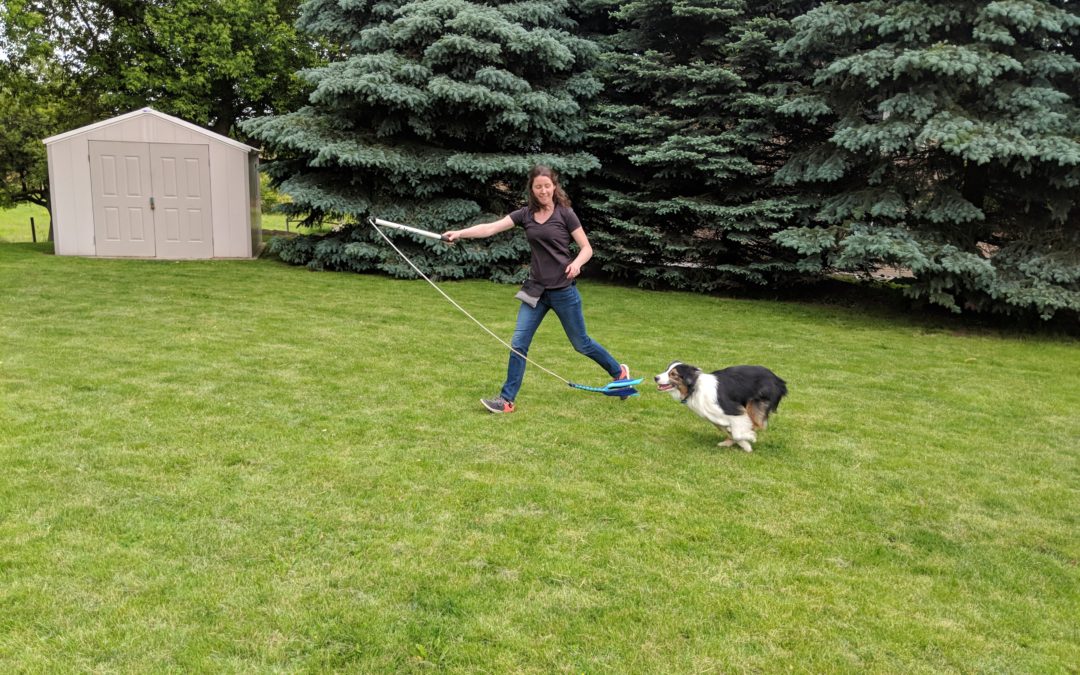
 Cold weather can make dog exercise difficult. When the temperature drops, long walks may not be ideal, especially during extreme winter weather.
But if you have a high-energy dog, skipping exercise and mental stimulation can quickly become a problem. A dog with too much energy and not enough structure can become restless, demanding, or difficult to manage inside the home.
That is why it helps to have creative ways to make dog training in Hamilton, ON fun, even when the weather is not perfect for long walks.
Dog Training Hamilton, ON: Having Fun While Training
Training does not always have to feel formal or serious. Some of the best training can happen through structured play.
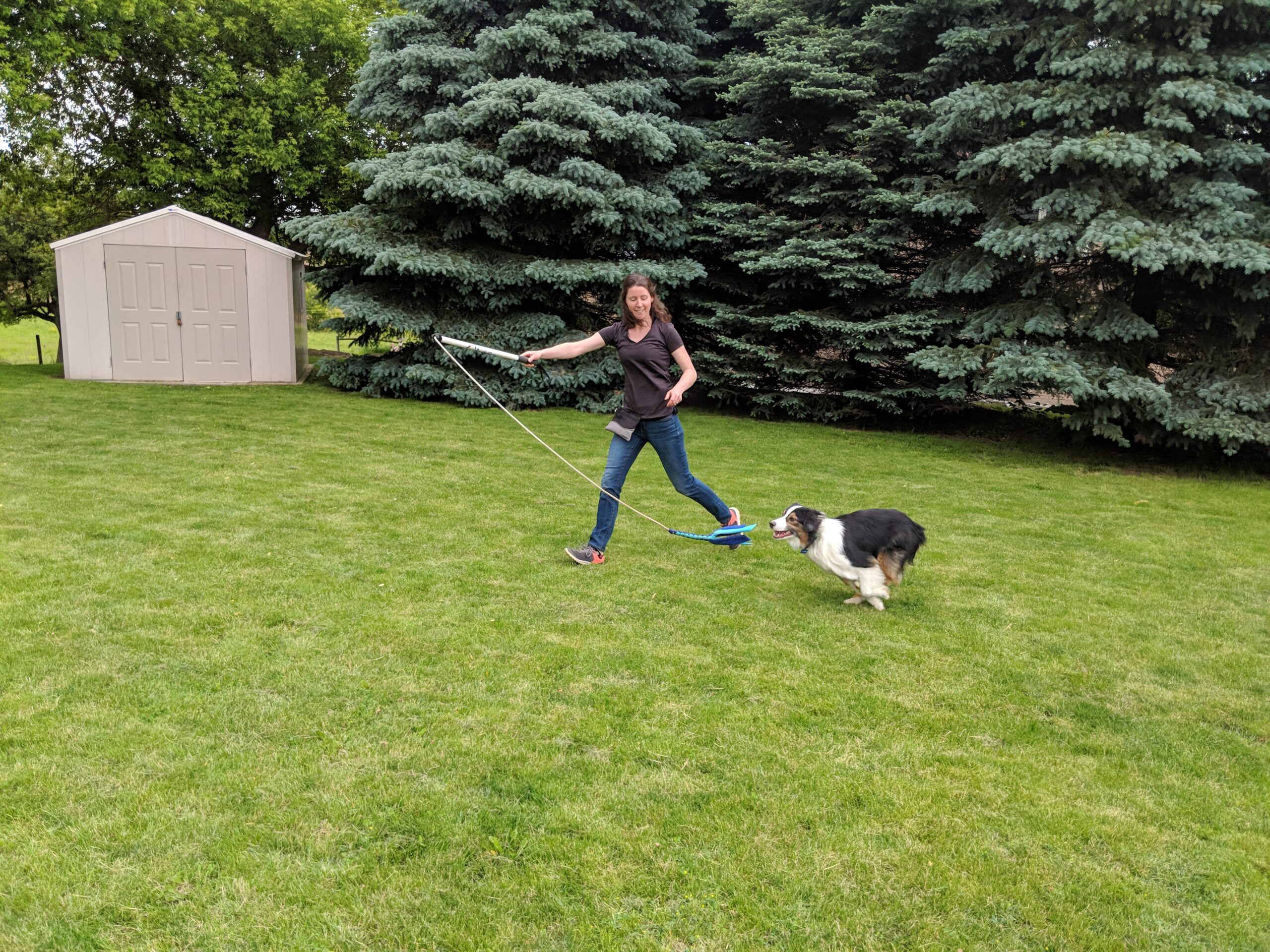
When the weather is extremely cold, I like to change up the games we play so we are not always relying on fetch. One of my favourite tools for training and burning energy is the flirt pole.
What Is a Flirt Pole?
A flirt pole is a simple training and play tool. It is usually made with a long pole or lunge whip and a toy attached to the end by a line.
You can often make one using a lunge whip for horses, which can be found at a local tack shop or farm supply store, and then tie a toy to the end.
The flirt pole allows your dog to chase, move, and engage with the toy while you still control the game.
Why Flirt Pole Training Is Helpful
A flirt pole is a fantastic way to train while playing and helping your dog burn energy.
It can be especially useful for high-energy dogs who need both physical activity and mental engagement. Instead of simply letting your dog run wild, the flirt pole gives the game structure.
When used properly, flirt pole training can help with:
- Burning extra energy
- Improving impulse control
- Teaching commands during play
- Building focus around excitement
- Practicing start and stop behaviours
- Creating a fun training outlet during cold weather
Book a Consultation
Use the Flirt Pole for Impulse Control
The flirt pole should not be a free-for-all. It works best when rules are included.
You can ask your dog to wait before chasing, release the toy when asked, come back to you, or perform simple commands before the game continues.
This turns play into training. Your dog gets to have fun, but they also learn that listening and self-control are part of the game.
Training Through Play
Dogs often learn well when training feels enjoyable. If your dog loves movement, toys, chasing, or tugging, those interests can be used to build better behaviour.
Structured play can help your dog learn to think even when excited. That is an important skill for daily life, especially for dogs who struggle with over-arousal, jumping, pulling, or ignoring commands when something fun is happening.
Need Help With High-Energy Dog Training?
If your dog has a lot of energy, struggles with impulse control, or needs better structure during play, training can help.
Our dog training programs can help you choose the right training option for your dog’s needs.
For dogs who need one-on-one support with overexcitement, leash manners, impulse control, or behaviour concerns, our Private Training programs may be the best fit.
If your dog is ready to learn around other dogs and people, our Group Classes can help build focus and obedience in a structured environment.
For dogs who enjoy movement and active learning, Agility can be a great outlet. If your dog needs more mental stimulation, Scent Detection can help them use their brain and nose in a productive way.
For dogs who need structured activity during the day, our Day Camp may also provide routine, enrichment, and supervised activity.
Final Thoughts
Extreme cold weather can make long walks more difficult, but your dog still needs exercise, structure, and mental stimulation.
A flirt pole is a great tool to keep in your training toolbox. It allows your dog to burn energy, have fun, and work on impulse control at the same time.
Training can be super fun when you let it be. Use games, structure, and creativity to help your dog learn while enjoying time with you.
Contact us today if you would like help with training, impulse control, or creating better outlets for your high-energy dog.
Happy Training!
Katherine
Book a Consultation
FAQ:
What is flirt pole training?
Flirt pole training uses a pole or lunge whip with a toy attached to the end. It allows the dog to chase and play while also practicing impulse control, listening, and commands.
Is a flirt pole good for high-energy dogs?
Yes. A flirt pole can be a great outlet for high-energy dogs because it provides physical exercise and mental stimulation when used with structure and rules.
Can I use a flirt pole indoors?
It depends on your space and your dog. Many people use flirt poles outdoors or in a safe open area. If used indoors, make sure there is enough room and nothing breakable nearby.
Does flirt pole training help with impulse control?
Yes. You can teach your dog to wait, release, listen to commands, and control themselves around excitement during the game.
Can private training help with a high-energy dog?
Yes. Private training can help create structure, teach impulse control, improve manners, and give your dog better outlets for energy.
Jan 28, 2016 | Puppy Training
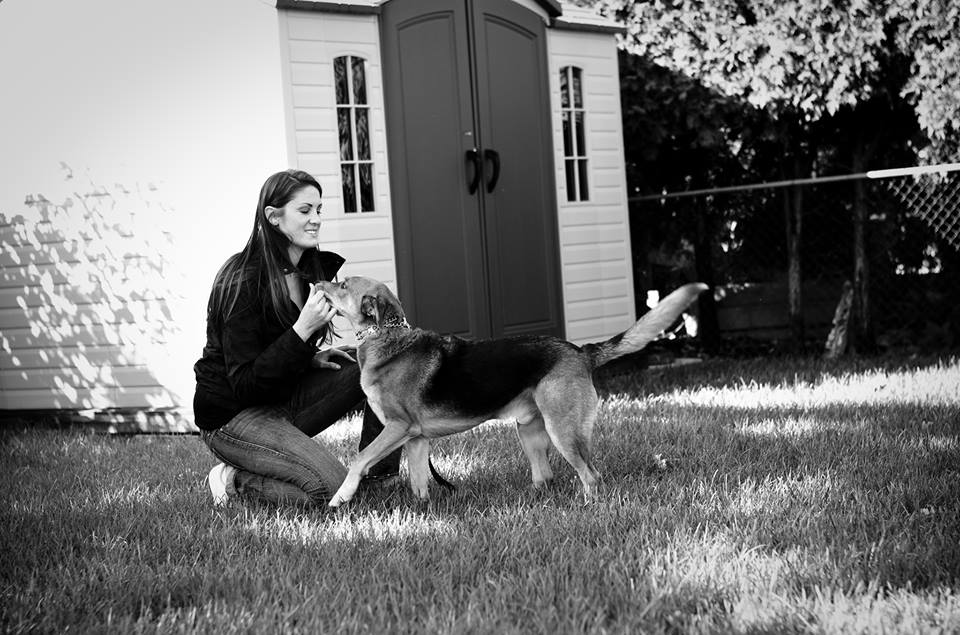
Who would not want to have a happy dog?
We love our dogs like family, but do we always know what truly makes them happy? Many people believe love and affection are all a dog needs. While affection is important, it should not be the only thing we give them.
A truly happy dog needs balance. Dogs need structure, exercise, training, rest, health, and purpose. When those needs are met, affection becomes even more meaningful.
10 Ingredients to a Happy Dog
Take an honest look at your current routine and see where each of these points falls. If you make a few adjustments and rearrange your priorities, you may see significant changes in your dog’s behaviour and in your relationship.
1. A Good Quality Diet
What your dog eats matters. A healthy, balanced diet can support your dog’s energy, coat, digestion, focus, and overall well-being.
Dogs learn and behave better when they feel their best, so nutrition should be part of the bigger picture when thinking about behaviour and training.
2. Playtime
Play is important for bonding, confidence, and enrichment. Structured play can also be used as part of training.
Games like fetch, tug, or controlled toy play can help your dog burn energy while also practicing impulse control, listening, and engagement.
3. Exercise
Dogs need regular physical exercise to stay healthy and fulfilled. For most dogs, daily walks are a basic need, not a luxury.
A dog who does not get enough exercise may become restless, pushy, demanding, or difficult to manage at home.
4. Quiet Time and Down Time
A happy dog also needs to know how to relax.
Some dogs get plenty of exercise but still struggle to settle. Teaching calm behaviour, crate time, place command, and structured down time can help create balance.
5. Socialization
Socialization does not mean letting your dog meet every person or dog they see. Good socialization means helping your dog experience the world in a calm, controlled, and positive way.
Dogs should learn how to be neutral around people, dogs, sounds, places, and distractions.
Book a Consultation
6. Give Your Dog a Job
Dogs are happier when they have purpose. A job can be as simple as working for meals, practicing obedience, walking politely, holding place, or learning scent work.
When dogs have something productive to do, they are less likely to create their own unwanted jobs, such as barking, digging, chewing, or demanding attention.
7. Rest and Sleep
Rest is just as important as exercise. Dogs need enough sleep to recover, process learning, and remain balanced.
Overtired dogs can become cranky, mouthy, hyper, or harder to train, especially puppies and young dogs.
8. Training
Training gives your dog clarity. It teaches them what is expected and helps build better communication between dog and owner.
Training can help with obedience, manners, leash walking, impulse control, recall, confidence, and behaviour concerns.
If you need help choosing the right training option, explore our dog training programs.
9. Maintaining Good Health
Your dog’s physical health can affect behaviour. Pain, discomfort, allergies, digestive problems, or other health concerns may make training harder.
Regular veterinary care, grooming, dental care, weight management, and appropriate exercise all play a role in keeping your dog happy and healthy.
10. Love and Affection
Love and affection are important, but notice that they are listed last for a reason.
If affection becomes the only thing your dog receives, and structure, training, exercise, and boundaries are missing, behavioural issues can begin.
Give your dog affection, but make sure it is part of a balanced life that includes all the other ingredients too.
What Does a Happy Dog Really Need?
What humans view as “happy” is not always what dogs need to feel fulfilled.
A dog who receives only affection may still feel bored, under-exercised, anxious, or frustrated. A dog who receives structure, purpose, training, exercise, rest, and affection is more likely to become calm, confident, and well behaved.
Small Changes Can Make a Big Difference
You do not need to change everything overnight. Start with small changes.
Add one more walk. Practice a few minutes of training. Give your dog a job during mealtime. Build quiet time into the day. Improve your dog’s routine one step at a time.
Small changes made consistently can transform your dog’s behaviour and improve your relationship.
Need Help Creating a Happier, Better Balanced Dog?
If your dog is struggling with behaviour, manners, energy, focus, or confidence, structured training can help.
Our Private Training programs are a great option for dogs who need one-on-one support with behaviour, obedience, leash manners, or home structure.
If your dog would benefit from learning around other people and dogs, our Group Classes can help build focus and confidence in a structured environment.
For dogs who need fun physical and mental outlets, Agility and Scent Detection can be excellent activities.
If your dog needs more structure, routine, and activity during the day, our Day Camp may also be a helpful option.
Book a Consultation
A happy dog needs more than love alone.
Diet, playtime, exercise, quiet time, socialization, purpose, rest, training, health, and affection all work together to create a more balanced dog.
Make small changes today and continue building better habits each day. Your dog will thank you for it.
Contact us today if you would like help creating a better training and lifestyle plan for your dog.
Happy Training!
Katherine
FAQ:
What makes a dog happy?
A happy dog needs a balanced life that includes good food, exercise, play, training, rest, health care, socialization, purpose, and affection.
Is love enough to make a dog happy?
Love is important, but it is not enough on its own. Dogs also need structure, boundaries, exercise, training, and mental stimulation.
Why does my dog need a job?
Dogs benefit from having purpose. A job can include obedience, working for meals, place command, scent work, structured play, or learning new skills.
Can lack of exercise cause behaviour problems?
Yes. Dogs who do not get enough exercise or mental stimulation may become restless, demanding, destructive, or difficult to manage.
Can training help my dog become happier?
Yes. Training gives dogs clarity, structure, communication, and confidence. A well-trained dog is often easier to live with and more fulfilled.