Jun 8, 2016 | Dog Training
What you feed your dog matters.
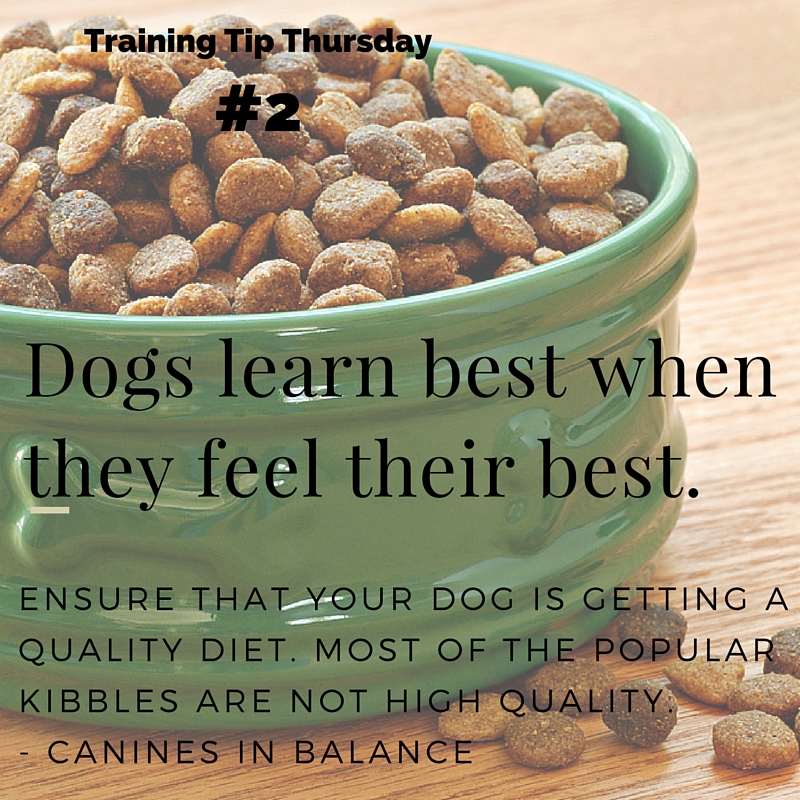
Before you begin training, it is important to make sure your dog is eating a healthy, balanced diet. Dogs learn best when they feel their best, and good nutrition can make training easier.
When we talk about dog food and training, we are not saying food will magically fix every behaviour problem. However, diet can affect your dog’s energy, focus, digestion, coat health, and overall well-being. A dog who feels better is often in a better position to learn.
Dog Training Tip #2: Food Matters
Training is not only about commands, leash skills, and behaviour work. Your dog’s daily health also matters.
Think about a child going to school after eating only fast food. They may struggle to focus, feel sluggish, or lack the energy they need to learn well. Dogs are no different. They need quality nutrition to thrive.
Why Diet Can Affect Dog Training
A healthy diet can support your dog’s ability to learn and participate in training. If your dog is uncomfortable, itchy, low-energy, or not feeling their best, training may be harder than it needs to be.
Good nutrition may help support:
- Better focus during training
- More balanced energy levels
- Healthier skin and coat
- Better digestion
- Improved overall well-being
- A more comfortable and motivated dog
Of course, every dog is different. If your dog has allergies, digestive issues, medical concerns, or sudden behaviour changes, it is always best to speak with your veterinarian.
Check the Quality of Your Dog’s Food
Many pet owners assume that big-name dog food brands are always the best choice, but it is worth doing your research.
We suggest reviewing your dog’s current food and learning more about the ingredients, quality, and rating. One helpful resource many dog owners use is Dog Food Advisor.
If your dog’s food ranks poorly, you may want to consider switching to a higher-quality option that better supports your dog’s health and training goals.
Choosing a Better Dog Food
There are many different ways to feed a dog, and the best choice can depend on your dog’s age, health, activity level, allergies, and individual needs.
Some dog owners choose higher-quality kibble. Others choose fresh food, gently cooked food, or a complete raw diet. The most important thing is to choose a food that is appropriate, balanced, and works well for your dog.
Some brands that are often discussed by dog owners looking for higher-quality food include Acana, Orijen, Nature’s Variety, and Carna4.
Raw Feeding and Dog Health
We feed our own dogs a complete raw diet and strongly suggest looking into it if you are interested in learning more.
Many raw-fed dog owners report benefits such as shinier coats, cleaner ears and eyes, less shedding, and fewer allergy-related concerns. However, raw feeding must be done properly and safely to ensure the dog receives a complete and balanced diet.
If you are considering raw feeding, do your research and speak with a knowledgeable professional or veterinarian so you can make an informed decision for your dog.
Food Is Only One Part of Training
Food matters, but it is only one piece of the puzzle.
Your dog also needs structure, exercise, clear communication, consistency, and proper training. A healthy diet can help your dog feel better, but training still requires time and effort.
If your dog struggles with behaviour, leash manners, puppy issues, or obedience, our dog training programs can help you choose the right path.
For dogs who need one-on-one support, our Private Training programs can help with behaviour, structure, and training goals at home.
If your dog is ready to learn around other dogs and people, our Group Classes can help build focus and obedience in a structured environment.
For dogs who need more physical and mental outlets, activities like Agility, Scent Detection, or structured Day Camp may also be helpful options.
Book a Consultation
Before you begin training, take a look at what your dog is eating.
A healthy, balanced diet can help your dog feel better, focus better, and participate more successfully in training. Food will not replace training, but it can support the process.
If you want better results, start with the whole dog: nutrition, exercise, structure, and consistent training.
Contact us today if you would like help building a training plan that supports your dog’s behaviour, health, and daily routine.
FAQ:
Does dog food affect training?
Yes, food can affect training because nutrition can influence energy, comfort, focus, digestion, and overall well-being. A dog who feels better may be more ready to learn.
Should I change my dog’s food before starting training?
If your dog is doing well on their current food, a change may not be necessary. However, if your dog has poor digestion, low energy, skin issues, or other concerns, it may be worth reviewing their diet and speaking with a professional.
What is the best food for dog training?
The best food depends on your dog’s individual needs. Choose a balanced, quality diet that supports your dog’s health, energy, and digestion.
Can I feed raw food to my dog?
Some owners choose a complete raw diet for their dogs. Raw feeding must be properly balanced and handled safely, so it is important to research carefully and speak with a knowledgeable professional.
Is food enough to fix dog behaviour problems?
No. Food can support health and training, but behaviour change still requires structure, exercise, consistency, and proper training.
Jan 19, 2016 | Puppy Training
When training your puppy or dog, the tool you use should be efficient and effective. Just as importantly, the way you use that tool should be clear, consistent, and humane.
There are many different dog training collars and leash tools available, and each one provides information to the dog in a different way. The right tool can make training clearer, while the wrong tool can make communication confusing or ineffective.
Dog Training Collars: Choosing the Right One
This post is not about discussing one specific collar or tool. In training, different dogs may need different tools depending on their behaviour, size, sensitivity, goals, and the handler’s skill level.
At The Crunchy Canine, we may use a variety of training collars depending on the dog and the training plan. The point is not that one tool is perfect for every dog. The point is that the tool should help you communicate clearly and fairly.
Training Tools Should Provide Information
When training your dog, your leash and training collar should help provide information. They should help your dog understand what is being asked and how to respond.
How clear that information is depends on several things:
- The training tool being used
- The handler’s timing
- The handler’s skill level
- The dog’s understanding of the training
- The consistency of the communication
A training collar is not a magic solution. It only works well when it is introduced properly and used with good timing, clear expectations, and fair handling.
The Right Tool Can Make Training More Effective
Think about building a wooden box.
You could try to build it with a dull hand saw, some nails, and a rock. You may eventually get the job done, but it would likely be slow, messy, and frustrating.
Now imagine using a table saw and a drill. You can cut straighter lines, work more efficiently, and build something cleaner and stronger.
Dog training tools can be viewed the same way. The wrong tool may still get some results, but it may not be efficient, clear, or effective. The right tool, used properly, can make the training process smoother for both the dog and the owner.
Book a Consultation
The Tool Is Only Part of the Equation
Some people can train a dog with very little equipment because they have years of experience, excellent timing, and strong handling skills. However, most dog owners benefit from using tools that help make communication clearer.
That does not mean a tool should be used harshly or carelessly. It means the tool should support the training, not replace good training.
Tools Can Be Used Correctly or Incorrectly
Some training collars may look intimidating to people who are unfamiliar with them. A common example is the prong collar.
Like many tools, a training collar can be used incorrectly or even with the intent to cause pain. But that comes down to the person holding the leash, not the tool itself.
A table saw and drill can also be dangerous if used incorrectly. But when used properly, they help build something strong, useful, and beautiful.
The same idea applies to dog training collars. When used properly, fairly, and humanely, the right tool can help create clearer communication and better training results.
Choosing the Right Dog Training Collar
The right training collar depends on the dog in front of you and the training goals you are working toward.
Before choosing a tool, consider:
- Your dog’s size and strength
- Your dog’s temperament and sensitivity
- Your dog’s current training level
- The behaviour you are trying to improve
- Your own handling skills
- Whether you have proper guidance on how to use the tool
If you are unsure what tool is appropriate for your dog, it is best to work with a knowledgeable trainer who can show you how to use it clearly and safely.
When Your Current Tool Is Not Working
If the tool you are using is giving you frustrating, unclear, or messy results, it may be time to reconsider your approach.
Sometimes the issue is the tool. Sometimes the issue is timing, consistency, or the training plan. Often, it is a combination of all three.
The goal should always be clear communication, better understanding, and humane training.
Need Help Choosing the Right Training Tool?
If you are struggling with leash manners, pulling, reactivity, obedience, or general behaviour, structured training can help you choose the right tool and learn how to use it properly.
Our dog training programs can help you find the right training option for your dog’s needs.
For dogs who need one-on-one support with leash skills, behaviour concerns, impulse control, or training tools, our Private Training programs may be the best fit.
If your dog is ready to learn around other dogs and people in a structured environment, our Group Classes can help improve focus and obedience around distractions.
For dogs who need healthy outlets for energy and confidence, Agility, Scent Detection, or structured Day Camp may also be helpful options.
Book a Consultation
Dog training collars are tools. They are not good or bad on their own. What matters is how they are chosen, introduced, and used.
The right tool, used clearly and humanely, can help you communicate more effectively with your dog. The wrong tool, or the right tool used poorly, can create confusion and frustration.
If your current training tool is giving you dull-saw-and-rock results, it may be time to get professional help and find a clearer, more effective approach.
Contact us today if you would like help choosing the right training plan and tools for your dog.
Happy Training!
Katherine
FAQ:
What is the best dog training collar?
The best dog training collar depends on the dog, the behaviour being trained, the handler’s skill level, and the training goals. There is no single tool that is right for every dog.
Are dog training collars humane?
Dog training collars can be humane when they are chosen appropriately, introduced properly, and used clearly and fairly. Any tool can be misused, so proper guidance matters.
Can a training collar fix pulling?
A training collar may help provide clearer communication, but it does not replace training. Dogs still need to be taught leash manners, focus, and how to respond to pressure or guidance.
Should I use a training collar without professional help?
If you are unsure how to use a tool correctly, it is best to work with a qualified trainer. Proper timing, fit, and technique are important for safe and effective training.
Why does the right training tool matter?
The right tool can make communication clearer and training more efficient. The wrong tool may make training harder, slower, or more confusing for both the dog and owner.
Jan 15, 2016 | Puppy Training
What does puppy socialization really mean?
When people get a new puppy or dog, they are often told, “You need to socialize them right away.” While that advice is well-intentioned, many people misunderstand what socialization actually means.
Somewhere along the way, puppy socialization became associated with taking a puppy to the dog park and putting them around as many dogs as possible. But that is not the best way to build a confident, well-rounded dog.
Puppy Socialization Is More Than Dog Parks
I love the idea of a dog park in theory. Dogs running off leash, enjoying the company of other dogs and people sounds wonderful.
Unfortunately, many dogs who should not be at the dog park are there regularly. Many owners do not know what to look for in healthy dog-to-dog interaction. Many dogs are not being advocated for, and many owners may not know when they should step in.
This can lead to dogs being bullied, dog fights, over-aroused behaviour, humping, chaos, and puppies leaving the park more fearful or insecure than when they arrived.
Why Dog Parks Can Be Risky for Puppies
A puppy’s early experiences matter. One bad experience can affect a puppy for a long time.
Many dogs who become reactive, fearful, or dog-aggressive were not necessarily born that way. Often, there was at least one negative experience that contributed to the behaviour. In many cases, owners can point to the exact event that changed how their dog felt about other dogs.
That is why dog parks are not always worth the risk, especially for puppies or dogs who are still building confidence.
Book a Consultation
What Puppy Socialization Should Actually Mean
Socialization should be productive, positive, and controlled.
Yes, getting your puppy around other dogs is important. However, it should be around the right dogs. Your puppy should meet calm, stable, appropriate dogs who can help create good experiences, not overwhelm or bully them.
Good socialization is not about flooding your puppy with as many dogs, people, sounds, and places as possible. It is about helping your puppy experience the world in a calm, confident, and safe way.
Safe Ways to Socialize Your Puppy With Other Dogs
If you want your puppy to have healthy experiences with other dogs, choose safer and more structured options.
Good options may include:
- Group training classes with controlled supervision
- Puppy socialization classes run by a knowledgeable trainer
- Carefully selected play sessions with calm, balanced dogs
- Friends or family members who have stable, appropriate dogs
- Structured walks around other dogs without forced greetings
Our Group Classes can help puppies and dogs learn around other dogs and people in a more structured environment than a dog park.
Socialization Also Means Exposure to the World
Getting your puppy around other dogs is only one part of socialization.
Many behaviour issues come from fear, lack of confidence, lack of trust in the handler, and not learning how to follow guidance in new situations.
More important than simply letting your puppy play with dogs is exposing them to different experiences in positive, controlled ways.
Your puppy should learn about different:
- Places
- Sounds
- Smells
- Surfaces
- People
- Environments
- Objects
- Movements and distractions
Examples of Good Puppy Socialization
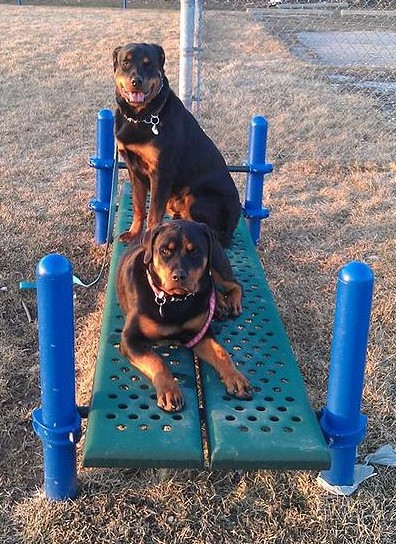 If you want a confident dog who can go places with you, start introducing your puppy to the world in thoughtful ways.
Here are some examples:
- Take your puppy to dog-friendly stores and practice calm behaviour.
- Use a long line to let your puppy safely explore parks, trails, and fields.
- Encourage your puppy to explore unique surfaces such as bridges, tarps, steps, platforms, or playground-style surfaces where appropriate.
- Let your puppy observe people, dogs, bikes, strollers, and vehicles from a safe distance.
- Practice calm focus and obedience in new environments.
The goal is not to overwhelm your puppy. The goal is to build confidence through successful experiences.
Confidence Is the Goal
A well-socialized puppy is not a puppy who runs up to every dog and person.
A well-socialized puppy is calm, confident, curious, and able to handle new situations without panic or chaos.
When puppies are exposed to different environments in a safe and positive way, they are more likely to grow into dogs who can handle what life throws their way.
Training Support for Puppy Socialization
If you are unsure how to socialize your puppy safely, structured training can help.
Our dog training programs can help you choose the right training option for your puppy or dog.
For puppies who need one-on-one help with confidence, manners, leash skills, or exposure work, our Private Training programs may be the best fit.
For puppies and dogs ready to learn in a structured environment around other people and dogs, our Group Classes are a great option.
If your dog needs more healthy outlets for confidence and enrichment, activities like Agility, Scent Detection, or structured Day Camp may also be helpful.
Book a Consultation
Puppy socialization is not about throwing your puppy into a dog park and hoping for the best.
It is about creating positive, productive, and controlled experiences that build confidence. Your puppy should learn how to handle dogs, people, places, sounds, surfaces, and new environments in a calm and safe way.
If you only rely on dog parks for socialization, your puppy may struggle when introduced to new real-world situations. But if you build confidence through thoughtful exposure and training, you can help your puppy grow into a more balanced and happy dog.
Contact us today if you need help socializing your puppy or building your dog’s confidence.
Happy Training!
Katherine
FAQ:
What does puppy socialization mean?
Puppy socialization means helping your puppy experience people, dogs, places, sounds, surfaces, and environments in a positive and controlled way so they can become confident and well-rounded.
Are dog parks good for puppy socialization?
Dog parks can be risky for puppies because not all dogs there are appropriate, balanced, or well supervised. One bad experience can affect a puppy’s confidence and behaviour.
How should I socialize my puppy with other dogs?
Choose calm, stable dogs, structured group classes, supervised puppy classes, or controlled play with dogs you know and trust.
What should I expose my puppy to?
Expose your puppy to different places, sounds, smells, surfaces, people, objects, and calm experiences around other dogs. Keep the exposure positive and manageable.
Can puppy training classes help with socialization?
Yes. Group classes can help puppies learn around other dogs and people in a structured environment while building confidence, focus, and manners.
Jan 4, 2016 | Puppy Training
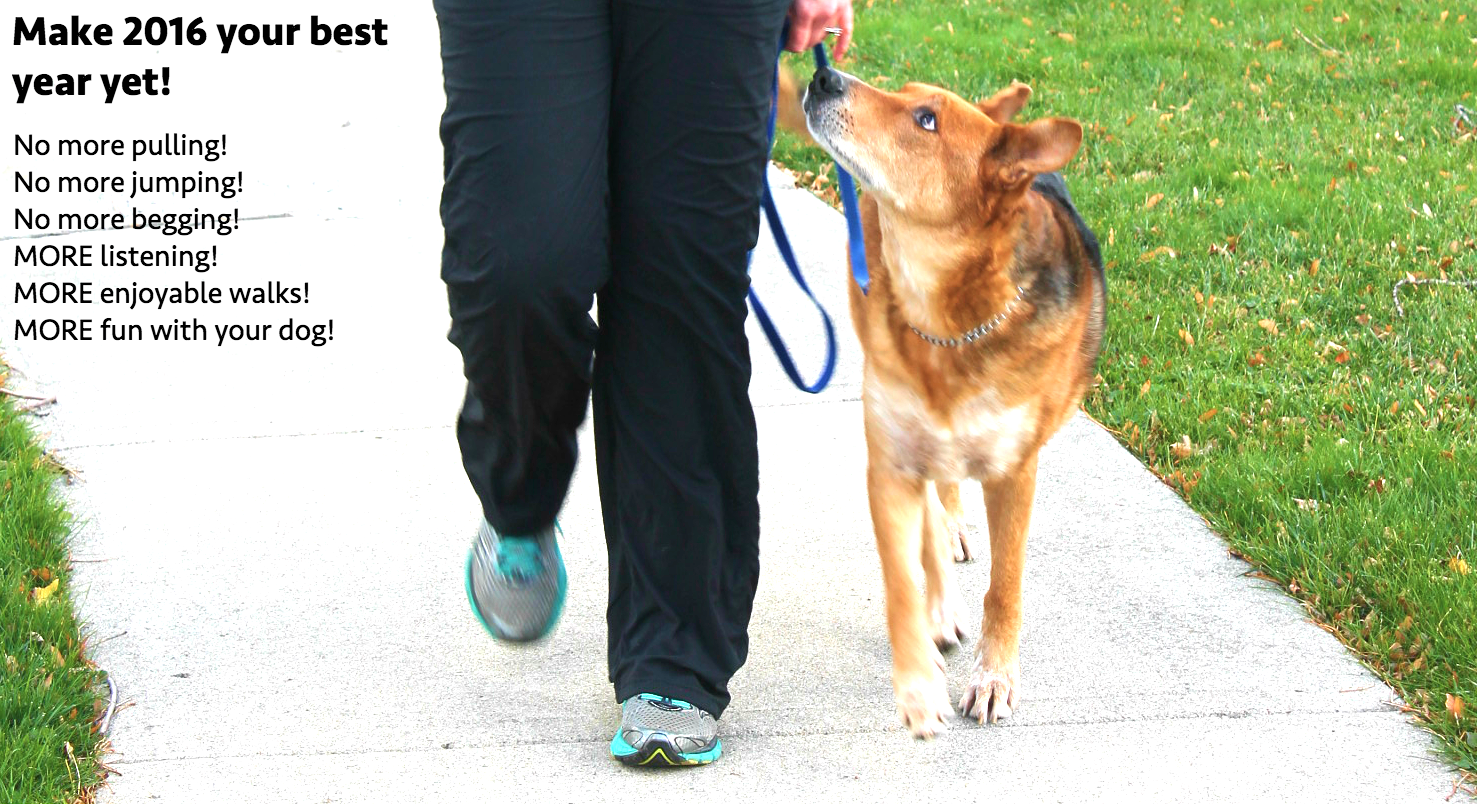 Happy New Year! Have you thought about your New Year’s Resolutions yet? Maybe your dog needs a resolution too? Pulling on leash? Jumping on guests? Excessive barking? Begging at the table? Not listening? If this sounds a little too familiar then it might just be time to make a joint resolution with your dog. While we hope training becomes an all year thing for you and your dog, why not take this opportunity to start the year off right? We have a variety of options when it comes to training to suit the needs of everyone. Whether you are looking for group class, private one on one training, or want us to do the training for you at Day School, we’ve got the solution to help you get your dog’s issues under control. Our gentle and effective training methods actually work! Just check out what our clients have to say here!
Not sure you want to commit to training just yet? Here are some FREE easy dog training tips to get you started on your own!
Adult Group Dog Training & Group Puppy Training
We now have two locations for Adult Group Dog Training and Group Puppy Training classes to serve you better! DogDen in Burlington on Monday and Wednesdays, and Temple of the Dog in Beamsville on Tuesdays and Saturdays.
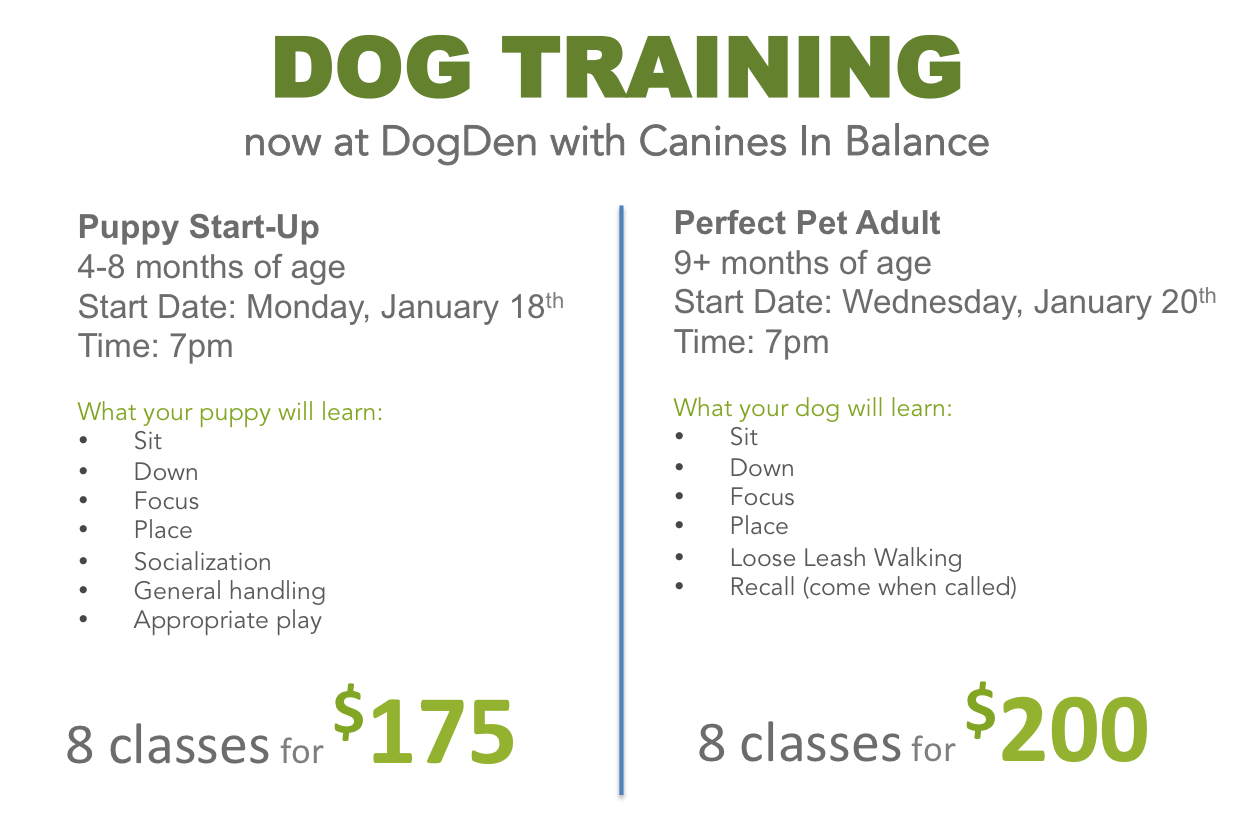
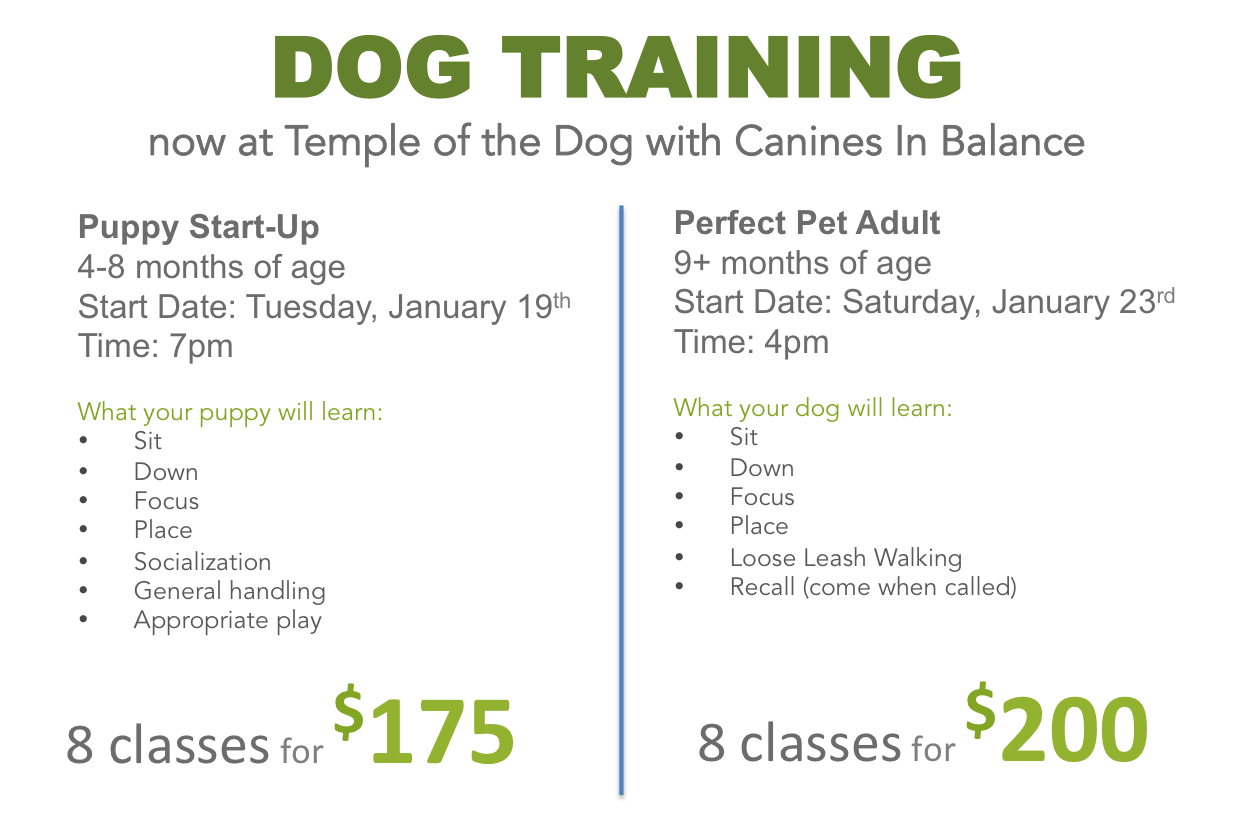
We’d love to hear about your dog training goals! Contact us to reserve your spot in group class or to book a FREE evaluation for private training!
[contact-form to=’info@thecrunchycanine.ca’ subject=’Contact from thecrunchycanine.ca’][contact-field label=’Name’ type=’name’ required=’1’/][contact-field label=’Email’ type=’email’ required=’1’/][contact-field label=’How did you hear about us?’ type=’text’/][contact-field label=’Comment’ type=’textarea’ required=’1’/][/contact-form]
Dec 16, 2015 | TESTIMONIALS
 Seamus is a young Lab/Bernese mix who was struggling with over-excitement and common puppy behaviours, including leash pulling, jumping, mouthing, and begging at the table.
We worked with his owners to teach them how to better communicate with Seamus, set clear expectations, and build the behaviours they wanted to see.
“My dog started behaving differently the moment we started. He is calmer, more focused, and better able to understand the direction we are trying to give him.
I love your methodology because it creates good behaviours and doesn’t just focus on rewards. Thank you!”
Kristin with Seamus, Binbrook, Ontario