Jan 4, 2016 | Puppy Training
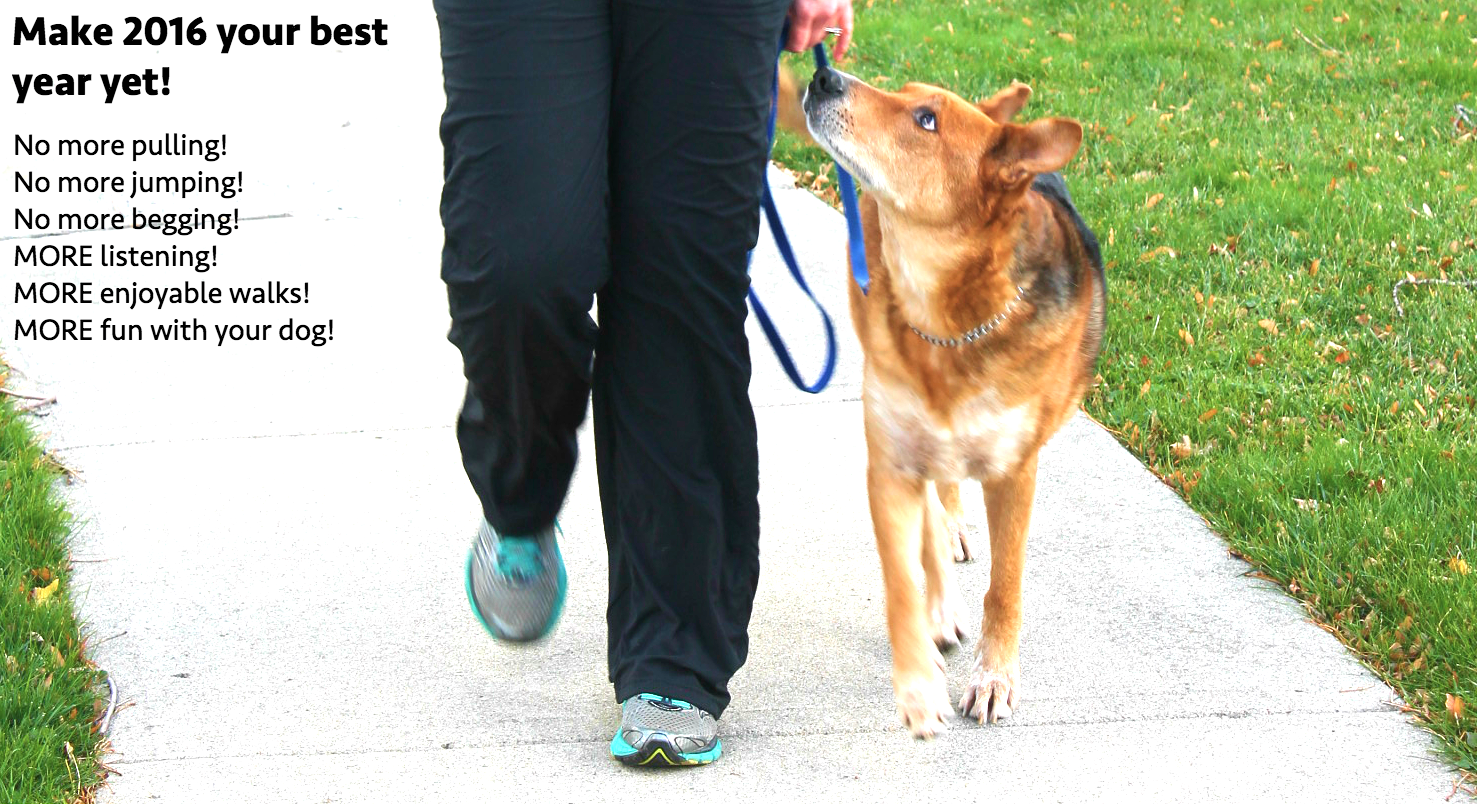 Happy New Year! Have you thought about your New Year’s Resolutions yet? Maybe your dog needs a resolution too? Pulling on leash? Jumping on guests? Excessive barking? Begging at the table? Not listening? If this sounds a little too familiar then it might just be time to make a joint resolution with your dog. While we hope training becomes an all year thing for you and your dog, why not take this opportunity to start the year off right? We have a variety of options when it comes to training to suit the needs of everyone. Whether you are looking for group class, private one on one training, or want us to do the training for you at Day School, we’ve got the solution to help you get your dog’s issues under control. Our gentle and effective training methods actually work! Just check out what our clients have to say here!
Not sure you want to commit to training just yet? Here are some FREE easy dog training tips to get you started on your own!
Adult Group Dog Training & Group Puppy Training
We now have two locations for Adult Group Dog Training and Group Puppy Training classes to serve you better! DogDen in Burlington on Monday and Wednesdays, and Temple of the Dog in Beamsville on Tuesdays and Saturdays.
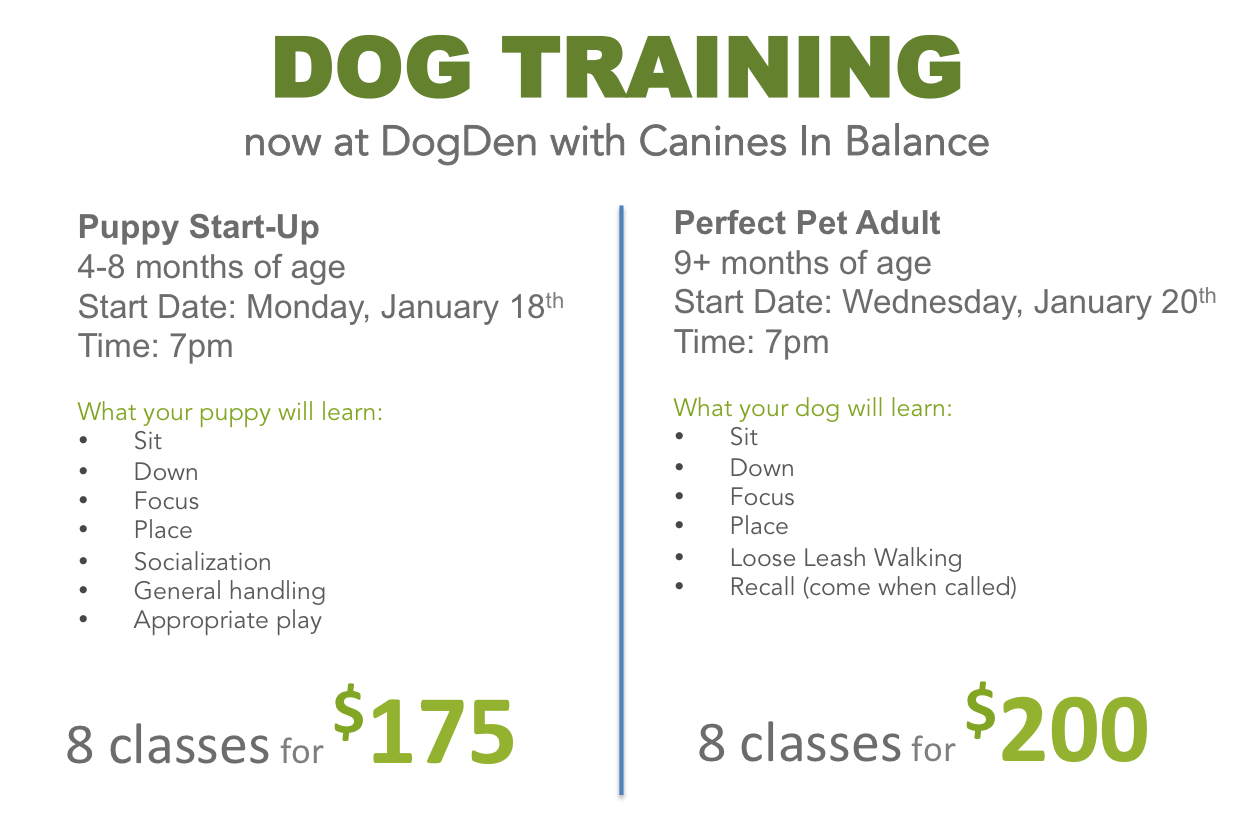
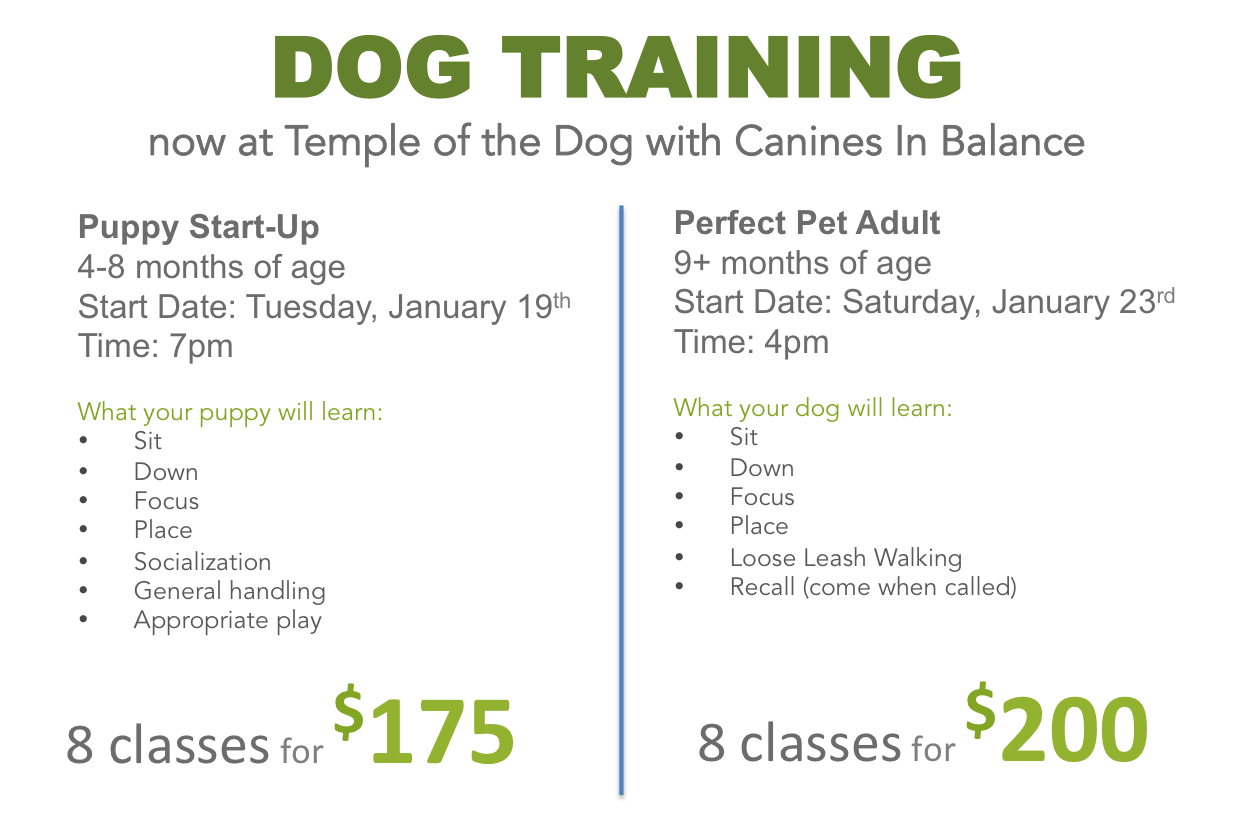
We’d love to hear about your dog training goals! Contact us to reserve your spot in group class or to book a FREE evaluation for private training!
[contact-form to=’info@thecrunchycanine.ca’ subject=’Contact from thecrunchycanine.ca’][contact-field label=’Name’ type=’name’ required=’1’/][contact-field label=’Email’ type=’email’ required=’1’/][contact-field label=’How did you hear about us?’ type=’text’/][contact-field label=’Comment’ type=’textarea’ required=’1’/][/contact-form]
Nov 20, 2015 | Puppy Training
Dog training does not always need to be a formal 30-minute session every day.
One of the first things I tell clients is that they do not necessarily need to set aside a specific block of time for training. What they do need to do is start incorporating training exercises into everyday life.
These easy dog training tips can help you build better behaviour, better manners, and better habits without feeling like training is one more thing on your to-do list.
Easy Dog Training Tips for Everyday Life
Many people fail at training their dog because they feel like they do not have time to train every day.
But training does not have to be separate from your normal routine. In fact, real-life training is often more useful than teaching your dog a set of tricks just for a cookie.
There are opportunities to train your dog throughout the day. If you move away from the idea that you must train for 30 minutes every day and instead make training part of your lifestyle, life can become easier for everyone in your home.
Book a Consultation
Make Dog Training a Lifestyle
Dogs are creatures of habit. If you build good behaviours into your dog’s daily routine, those behaviours can naturally become habits.
Instead of only practicing commands during formal training sessions, start asking your dog for useful behaviours during normal daily activities.
This helps your dog understand that training applies everywhere, not just during “training time.”
How to Train Your Dog Without Feeling Like You Are Training
Here are a few simple ways to start incorporating training into your everyday life.
1. Practice Down Stay During Dinner
Have your dog hold a down stay outside of the kitchen while you prepare and eat dinner.
This can help prevent begging, reduce excitement around food, and stop your dog from getting underfoot while you are cooking.
It also teaches your dog how to relax while normal household activity is happening.
2. Add Sits During Your Walk
During your walk, stop occasionally and ask your dog to sit.
This helps build the automatic sit, so over time your dog learns to sit when you stop. It also creates more structure during the walk and improves focus.
3. Practice Sit-Stays on Walks
Once your dog understands sit, begin adding short sit-stays during your walk.
This allows your dog to practice staying in position around real-life distractions while still safely on leash.
Start in easier environments and gradually increase the challenge as your dog improves.
4. Teach Your Dog to Wait at Doors
Ask your dog to wait before being released to go outside.
This simple habit can reduce the risk of your dog running out the front door and helps teach impulse control, respect for space, and better doorway manners.
Doorway training is one of those small lifestyle changes that can make a big difference in safety and behaviour.
Book a Consultation
Small Lifestyle Changes Can Create Big Results
Simple changes like these can create noticeable improvements in your dog’s behaviour.
When training becomes part of everyday life, your dog gets more practice, more clarity, and more consistency. You do not need to wait for a perfect training session. You can train during meals, walks, doorways, playtime, and daily routines.
Need Help Building Better Daily Training Habits?
If you are struggling with your dog’s behaviour or are unsure how to apply training in real life, structured support can help.
Our dog training programs can help you choose the right training option for your dog’s needs.
For dogs who need one-on-one help with manners, leash walking, impulse control, or behaviour concerns, our Private Training programs may be the best fit.
If your dog is ready to learn around other dogs and people, our Group Classes can help build focus and obedience in a structured environment.
For dogs who need more mental and physical outlets, Agility and Scent Detection can provide fun ways to build confidence and engagement.
If your dog needs structured activity during the day, our Day Camp may also be a helpful option.
Final Thoughts
Training your dog does not have to feel complicated or time-consuming.
By adding small training exercises into your daily routine, you can build better habits without setting aside a huge amount of extra time.
Practice down stays during dinner, sits during walks, sit-stays around distractions, and waiting at doors. These simple exercises can create big changes in your dog’s manners and behaviour.
Contact us today if you would like help creating a practical training plan that fits your everyday life.
Happy Training!
Katherine
FAQ:
What are easy dog training tips I can use every day?
Simple daily training tips include asking your dog to wait at doors, practicing sits during walks, using down stay during meals, and adding short obedience exercises into your normal routine.
Do I need to train my dog for 30 minutes every day?
Not necessarily. Short training moments throughout the day can be very effective when they are consistent and built into everyday life.
How can I stop my dog from begging during dinner?
Teach your dog to hold a down stay outside of the kitchen or dining area while you prepare and eat dinner. This helps create calm behaviour around food.
Why should my dog wait before going outside?
Waiting at doors teaches impulse control and can help prevent door rushing. It also teaches your dog to respect space and wait for permission.
Can private training help with everyday dog manners?
Yes. Private training can help you build a realistic training plan for manners, leash walking, impulse control, household structure, and behaviour concerns.
Nov 20, 2015 | TESTIMONIALS
“The Crunchy Canine has transformed my dog.
I’m thankful for the guidance and find the training to be very straightforward and easy for us to practice on our own between sessions.
My dog is also much happier because he has a clear understanding of what we expect from him.
Thank you for all of the help!”
Jenna with Heisenberg, Binbrook, Ontario

Nov 2, 2015 | Puppy Training
People often call their dogs their “fur babies” or “four-legged kids.” I understand why. Dogs are family, and they bring so much love into our homes. But as dog trainers, we sometimes hear those phrases and worry that the dog is being treated more like a baby than a dog.
That usually means too much affection, not enough structure, and very few clear expectations. And while love is important, love alone does not create a calm, confident, well-mannered dog.
So here is the funny part: I actually do wish more people would treat their dogs like their kids. Not by humanizing them, but by giving them guidance, routine, boundaries, and accountability.
Kids Are Loved, But They Still Have Rules
Think about the average day of a 10-year-old child. They wake up, get ready for school, eat breakfast, brush their teeth, get dressed, pack their bag, and head out for the day. At school, they learn, listen, socialize, and follow rules. When they come home, they may have homework, chores, dinner, and a bedtime routine.
As children get older, their responsibilities grow. They are expected to make better choices. They are held accountable when they behave inappropriately. We do not let children run through life doing whatever they want simply because we love them.
Now compare that to the average day of many young dogs. The dog wakes up, gets let outside, gets fed, pulls their human around the block, sniffs everything, jumps on people, barks out the window, and receives affection whenever they ask for it.
Then the human goes to work, and the dog is either left loose to make their own choices or, hopefully, given a safe crate or structured space. In the evening, the same pattern repeats.
Somewhere in that routine, many dogs receive plenty of love, but not enough leadership.
Dogs Need Structure To Feel Secure
Dogs are not children, and they should not be treated exactly like humans. However, they do need many of the same things children need: consistency, clear rules, calm guidance, and predictable routines.
A dog who is never asked to wait, settle, walk politely, or control their impulses will often become frustrated, pushy, anxious, or reactive. Not because they are bad, but because no one has taught them how to live calmly in a human world.
Life is not always a party. Your dog does not need constant entertainment or unlimited freedom. Your dog needs to understand when it is time to play, when it is time to relax, and what behaviour is expected in different situations.
If your dog struggles with manners, confidence, leash walking, or calm behaviour at home, professional support can help. You can learn more about our private in-home dog training or explore our dog training programs.
It Is Okay To Ask More From Your Dog
It is okay to ask your dog to be calm while you eat dinner. It is okay to ask your dog not to jump on guests. It is okay to ask your dog to wait at the door instead of rushing outside. It is okay to expect polite leash walking instead of being dragged down the street.
These expectations are not mean. In fact, they are kind. Structure helps dogs relax because they know what to do.
When dogs have no rules, they make their own decisions. And many of those decisions are not the ones we want inside a busy household.
Book a Consultation
Four Simple Ways To Add More Structure Today
1. Use the “Nothing In Life Is Free” approach
This means your dog should offer calm, polite behaviour before receiving something they want. Before meals, ask for a sit and wait. Before affection, ask your dog to sit quietly instead of pushing into your space. Before getting on furniture, your dog should be invited.
This does not mean removing affection. It means teaching your dog that good choices create good things.
2. Add two structured walks every day
A structured walk is not the same as being pulled around the block. Your dog should learn to walk calmly beside you, pay attention, and follow your pace.
Sniffing and exploring can still be part of the walk, but it should not be the entire walk. A balanced walk gives your dog both mental and physical exercise.
3. Teach your dog to relax on “place”
The “place” command teaches your dog to go to a bed, mat, or raised cot and stay there calmly. This is extremely useful when you are cooking, eating dinner, answering the door, having guests over, or simply needing your dog to settle.
Teaching place can completely change life at home because it gives your dog a clear job: go there, stay there, and relax.
If your puppy or adult dog needs help learning calm behaviour, our online dog training courses may be a helpful place to start.
4. Ask your dog to wait at thresholds
Doors, gates, crates, cars, and stairs are all great places to practice impulse control. Instead of letting your dog bolt through, ask them to sit and wait. Open the door only when they are calm.
This small habit builds patience and teaches your dog to look to you for direction.
Love Your Dog, But Lead Your Dog Too
Your dog can be deeply loved and still have rules. Your dog can be part of the family and still be expected to behave politely. In fact, the more structure you give your dog, the more freedom they can safely earn.
So yes, treat your dog more like your kid. Give them love, but also give them boundaries. Give them affection, but also give them responsibility. Give them freedom, but only after they have learned how to handle it.
That is how you raise a calmer, happier, more confident dog.
If you are unsure where to begin, visit our dog training FAQ or contact The Crunchy Canine to find the right training option for your dog.
Oct 30, 2015 | Dog Training
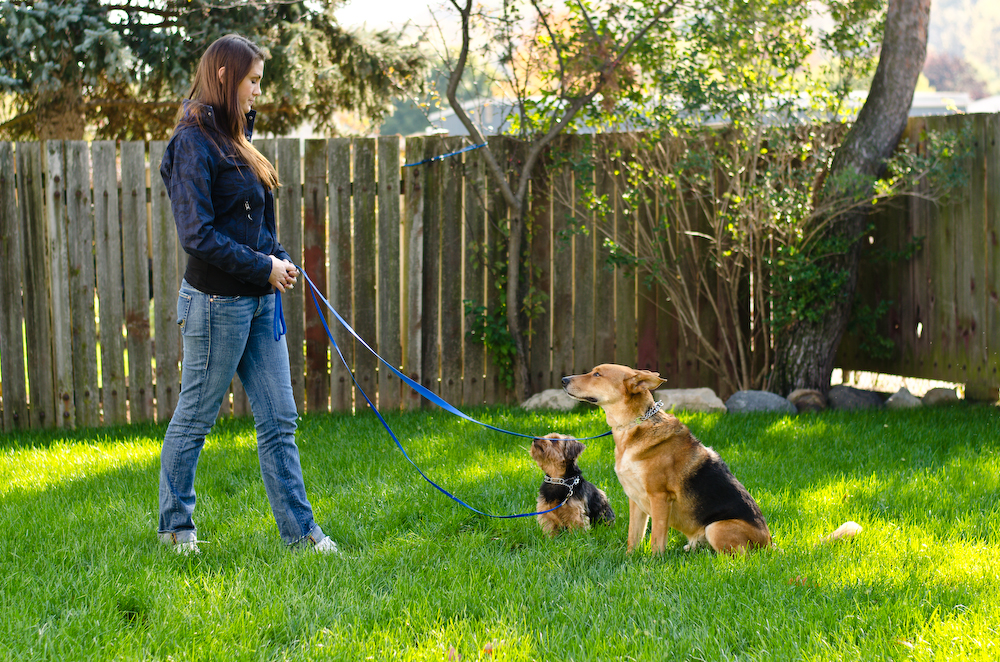
Does it feel like your dog ignores everything you say? You’re not alone. One of the most common frustrations dog owners experience is asking their dog to do something and getting no response at all.
The good news is that your dog is not being stubborn or trying to challenge you. In most cases, there is a simple explanation for why your dog isn’t listening.
Whether you have a young puppy or an older dog, understanding the reasons behind their behaviour can help you communicate more effectively and build a stronger relationship.
Here are the top three reasons your dog may not be listening to you—and what you can do about it.
1. Your Dog Doesn’t Understand What You’re Asking
Imagine travelling to a country where you don’t speak the language. You step off the plane, and someone immediately starts giving you instructions in a language you’ve never heard before.
You would probably look confused. If they repeated the same words louder or more often, you still wouldn’t understand.
That’s exactly how your dog feels when you ask for a behaviour they haven’t learned yet.
If you tell your dog to “sit” before teaching them what the word means, you’re essentially speaking a foreign language.
Dogs don’t automatically understand verbal commands. They learn through repetition, consistency, and clear communication.
When introducing a new cue:
- Teach the behaviour first using a lure, hand signal, or reward.
- Say the verbal cue only after your dog consistently performs the behaviour.
- Reward your dog immediately when they get it right.
- Keep training sessions short and positive.
Remember, your dog isn’t ignoring you—they may simply not understand what you’re asking.
2. Your Dog Doesn’t Think You Mean It
Have you ever asked your child to clean their room while they continued watching television?
You ask once. Nothing happens. You ask again. Still nothing.
If there are no consequences for ignoring the request, your child quickly learns that they don’t need to respond right away.
Dogs learn in much the same way.
If you ask your dog to sit and they walk away, but you don’t follow through, they learn that the cue is optional.
Consistency is one of the most important parts of dog training.
When you give a cue, make sure you’re in a position to help your dog succeed. If your dog tends to wander off or ignore commands, use a leash during training sessions so you can gently guide them into the correct behaviour.
This doesn’t mean forcing or punishing your dog. Instead, it means setting clear expectations and following through every time.
Here are a few ways to build consistency:
- Only give a cue once.
- Avoid repeating commands over and over.
- Practice in a low-distraction environment.
- Reward successful responses consistently.
- Use a leash when necessary to prevent your dog from disengaging.
When you say a cue, make sure you mean it. Over time, your dog will learn that listening pays off.
3. You’re Asking for Too Much Too Soon
Even when your dog understands a command and knows you expect them to respond, they may still struggle if the situation is too challenging.
This is where the three D’s of dog training come into play:
- Duration: How long your dog can perform a behaviour.
- Distance: How far away you are from your dog.
- Distraction: What’s happening around your dog.
For example, your dog may sit perfectly in your living room. However, asking for the same behaviour at a busy park surrounded by people, dogs, and exciting smells is a completely different challenge.
Successful training happens gradually.
Start by practising new skills in a quiet environment with minimal distractions. Once your dog is successful, slowly increase the difficulty by adjusting only one of the three D’s at a time.
You might:
- Increase the length of time your dog holds a sit.
- Take a few steps farther away before rewarding.
- Add mild distractions, such as practising outdoors.
If you increase duration, distance, and distraction all at once, your dog is more likely to fail.
Be patient and progress at your dog’s pace.
Book a Consultation
Practice Makes Progress
Training isn’t a one-time event. It’s an ongoing process that requires consistency, patience, and repetition.
The more opportunities your dog has to practise in different environments, the more reliable their responses will become.
If your dog isn’t listening, ask yourself these questions:
- Do they understand what I’m asking?
- Have I been consistent with my expectations?
- Am I asking for more than they can handle right now?
By addressing these three common issues, you’ll set your dog up for success and strengthen your communication.
With time, practice, and positive reinforcement, your dog can become a more attentive and responsive companion.
Happy training!
Katherine
The Crunchy Canine
Hamilton, Ontario